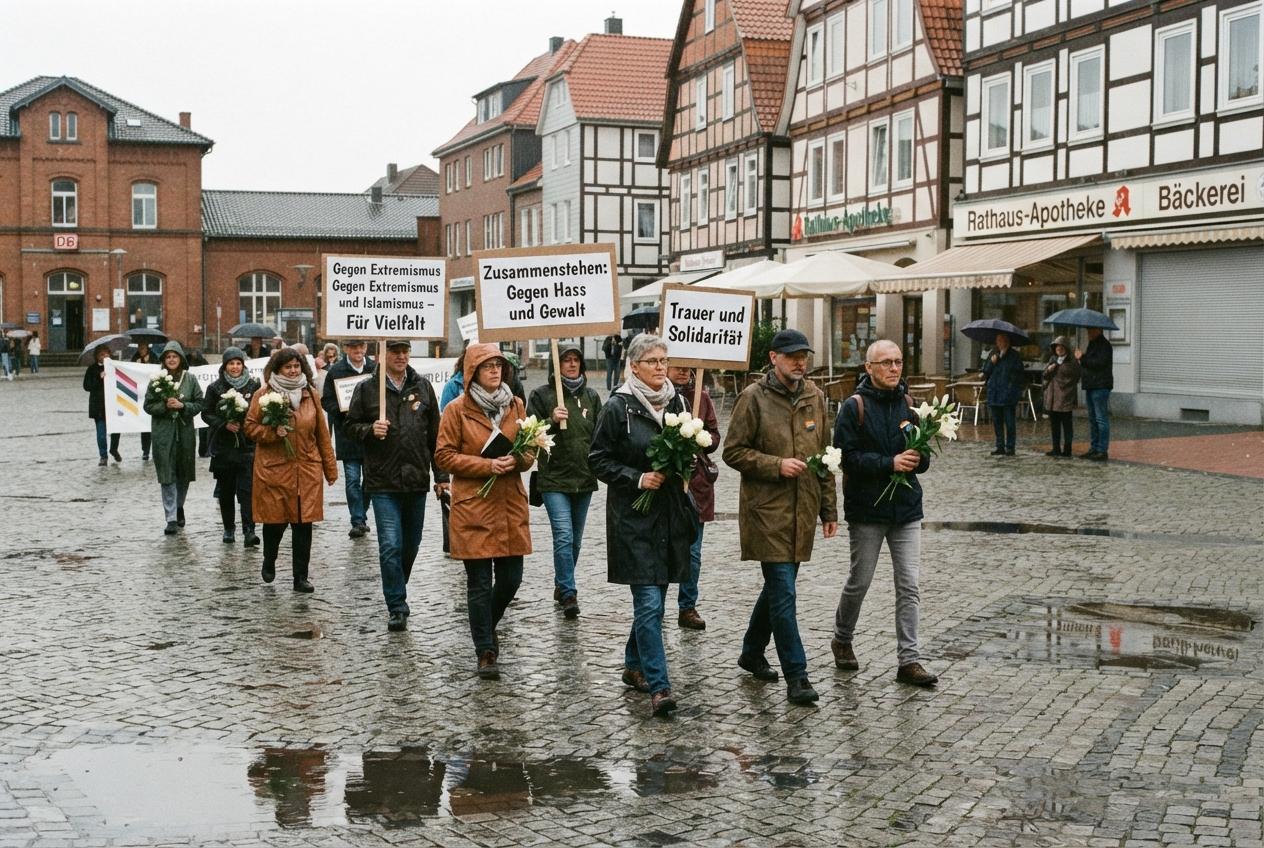
Shoppers and residents in small towns have been gathering to remember the victims of the Berlin CSD attack; local groups and councils are organising quiet marches, vigils and floral tributes so communities can show solidarity, condemn violence and discuss the wider threats posed by extremism.
Essential Takeaways
- Quiet turnout: Small memorials drew modest crowds, with some gatherings held in the rain yet marked by calm resolve.
- Early hostility: Organisers reported verbal attacks and intimidation before some events began, making solidarity feel urgent.
- Shared danger: Community leaders warned that Islamist and far‑right extremism can share tactics and rhetoric, and both threaten open society.
- Local action: Councils, civic groups and Muslim organisations publicly condemned the violence and helped arrange vigils and security measures.
- Practical support: Events mixed remembrance with information , where to report hate, how to support survivors, and where to find counselling.
Small but steady: why tiny vigils mattered on the day
A drizzle didn't stop people from turning out, and that matters: when eleven townspeople walk through wet streets laying flowers, the image feels intimate and serious. According to local reports, organisers from community group Stadt Land Queer in Burgstädt set the tone by keeping the programme simple , a walk, a few words, flowers, and quiet solidarity. That pared‑back approach reflects how many smaller towns respond: no big staging, just neighbours and friends showing up. For many attendees the act of being seen together is soothing, and it sends a clear message to those who would intimidate minorities that communities will not be silent.
Hostility at the margins: organisers faced abuse before they even started
In several places, gatherings were preceded by hostile comments and attempts to disrupt the event. That underlines a tricky reality: even tiny public acts of remembrance can attract antagonism. Reporters and local groups noted verbal attacks and intimidation at the edges of processions. This makes simple security measures sensible , meet in a visible public place, tell a friend where you’re going, and consider letting organisers or police know in advance. There’s dignity in showing up, but organisers are also wise to be pragmatic about safety and to brief volunteers on how to respond to provocation.
The bigger picture: why experts say Islamist and far‑right threats sometimes converge
Commentators and analysts are now emphasising a worrying overlap in the methods and worldviews of different extremist movements. Coverage from national outlets and city authorities suggests Islamist and far‑right groups can be “intellectual cousins” in how they dehumanise minorities and use violence to intimidate. That comparison matters for communities planning prevention and education. Local councils and civic organisations are increasingly linking hate‑crime reporting, deradicalisation resources and public education in one practical response. It’s not about equating ideologies, but about recognising shared dangers and closing off spaces where hatred can grow.
Institutions stepping up: councils, Muslim groups and civil society speak out
Across cities and regions, local administrations and religious organisations publicly condemned the attack and helped organise memorials. Statements from municipal offices and the Zentralrat der Muslime showed a consistent rejection of violence and a call for joint mourning. Those public denouncements are more than words: they help survivors feel seen and provide legitimacy to grassroots events. If you’re organising or attending a memorial, look for support from local institutions , they can help with publicity, permissions and sometimes safety arrangements.
What you can do: simple, practical ways to support remembrance and safety
If you want to help, there's no need for grand gestures. Join a vigil, contribute flowers, or share accurate information on social channels instead of speculation. Report hate speech when you see it and point people to counselling or legal help if they need it. Organisers should plan accessible routes, publicise start times clearly, and work with local authorities where possible. For communities worried about escalation, preventive steps like volunteer marshals and clear communication lines make the difference between a tense assembly and a peaceful act of solidarity.
It's a small, steady work to keep public spaces safe and welcoming , but every quiet vigil helps.
Source Reference Map
Story idea inspired by: [1]
Sources by paragraph: