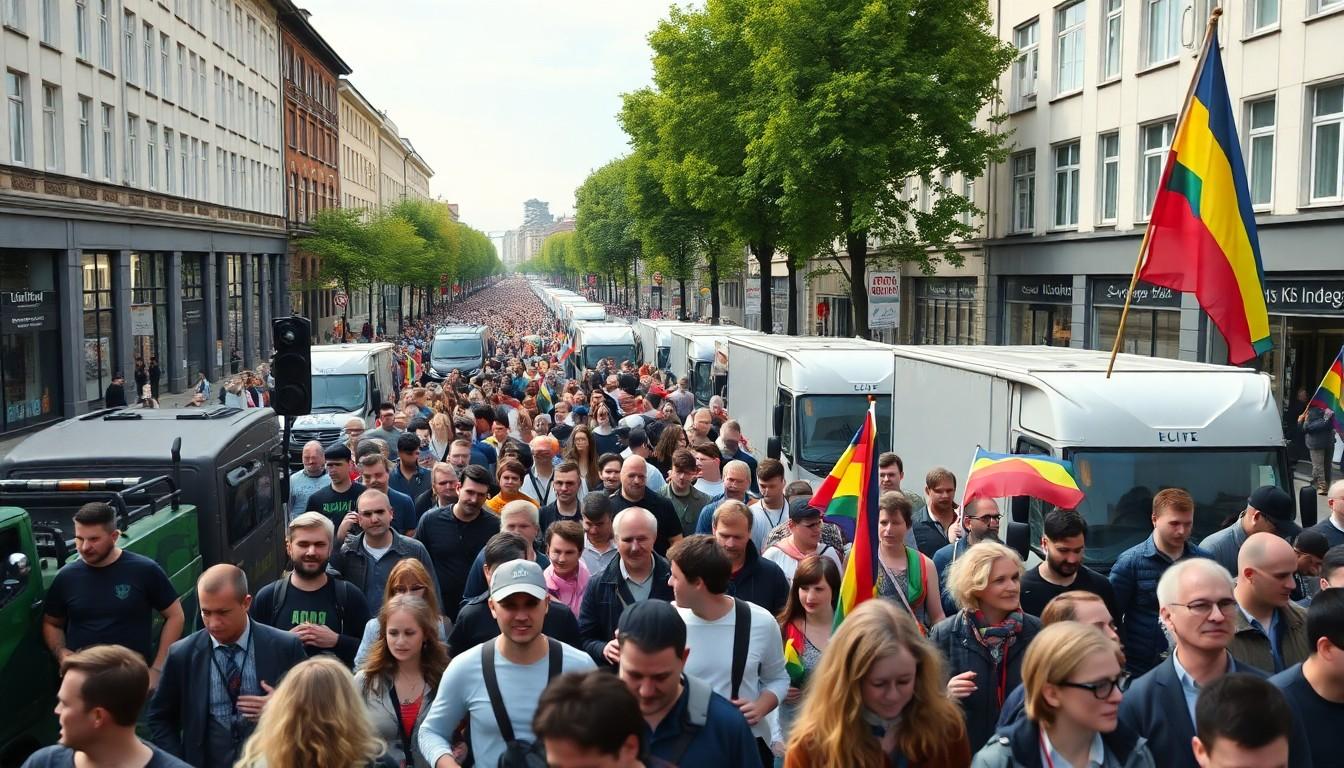
Shoppers, residents and rainbow-clad crowds poured into St. Georg as tens of thousands joined Hamburg’s Christopher Street Day, an energetic, defiant show of solidarity a week after the Berlin attack. The demonstration mixed music, politics and community spirit, and mattered because it was equal parts celebration and security-conscious protest.
Essential Takeaways
- Huge turnout: Organisers expect up to 250,000 people; tens of thousands gathered near Lübecker Straße for the march.
- Visible procession: About 60 lorries acted as moving stages for companies, groups, parties and the church, creating a festival-like atmosphere.
- High security: Police doubled staffing compared with last year after the Berlin attack; officials described the mood as peaceful and lively.
- Political presence: SPD and Green politicians joined participants, signalling civic and political support.
- Firm message: The motto, “Solidarisch queer. Haltung zeigen – für eine Zukunft ohne Angst!”, combined celebration with a call for safety and solidarity.
A colourful, loud procession that didn’t let fear win
The march kicked off near Lübecker Straße and wound through St. Georg toward the centre, a bright, noisy river of banners, flags and music. The procession had a tactile, festival quality, bass you felt as much as heard, the smell of street food and the rustle of flags, yet every float carried a pointed message about safety and solidarity. Organisers from Hamburg Pride wanted to show that grief and joy can exist together, and the streets felt like proof.
Context matters: this CSD came just a week after the violent attack in Berlin, so the mood was layered. According to event statements, marshals and community leaders urged calm and mutual care, while participants kept returning to the same refrain, refuse to be intimidated. For anyone planning to attend future marches, that blend of celebration and vigilance is now part of the experience.
Why the security changes were so visible this year
Local authorities reworked the safety plan after Berlin and deployed roughly twice as many officers as at last year’s demonstration. Police spokespeople said the greater presence was meant to reassure participants without spoiling the party atmosphere, and initial reports described the event as peaceful and joyous. If you were there you probably noticed more officers on foot and at key intersections, a quieter but practical layer under the confetti.
That’s a pattern we’re likely to see across public LGBTQ+ events: higher, more visible security that aims to deter threats while letting events keep their open, inclusive vibe. If you’re going, expect bag checks, controlled entry points and clear signage, simple things that make large gatherings safer.
Floats, parties and politics, what the march mixed together
About 60 lorries served as mobile stages for a wide variety of participants: businesses, community groups, political parties and even the evangelical church. That eclectic mix turned the march into a living snapshot of civic life and commercial interest rubbing shoulders with grassroots activism. It’s striking to see mainstream organisations alongside local collectives; it shows how CSD has become both a political statement and a mainstream cultural event.
For people choosing which part of the route to join, floats bring concentrated energy and music, while neighbourhood sections tend to feel more intimate. If you’re attending next time, decide whether you want to be near the most boisterous stages or somewhere quieter to chat and watch.
The political signal, why SPD and Greens turned up
Several politicians from the SPD and the Greens walked with the crowd, underlining official support for queer rights and public solidarity. Hamburg’s Innensenator framed the event as the city’s response to fear, an insistence on diversity and cohesion. Politicians’ presence can feel symbolic, but it also matters: it reassures vulnerable communities that their safety and rights are part of the civic agenda.
Look at it practically: when elected officials show up, resources and scrutiny tend to follow. That can mean better funding, clearer policies and a higher profile for anti-discrimination work long after the parade finishes.
The legacy and the reminder from Stonewall to today
The CSD movement traces back to the Stonewall riots in Greenwich Village in 1969, and every march carries that echo: a mix of celebration and reminder that rights were and still are hard-won. Hamburg’s demonstration turned that history into something immediate, music, tears, laughter and a communal refusal to let violence define public life.
For newcomers, the take-away is simple: CSD is both party and protest. Attend for the joy, but leave with the memory that civic solidarity keeps communities safer and stronger.
It's a small change that can make every march feel safer and more supportive.
Source Reference Map
Story idea inspired by: [1]
Sources by paragraph: