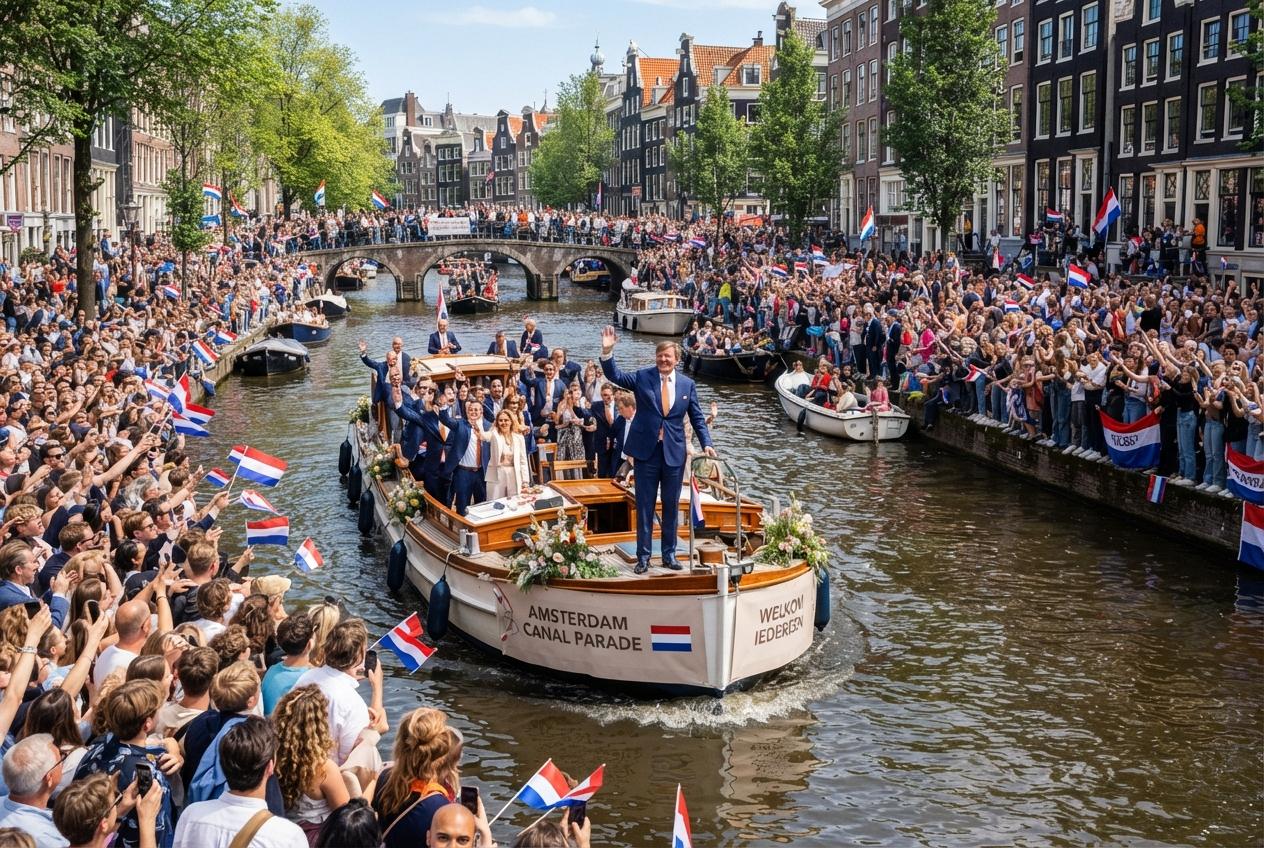
Shoppers are turning their attention to a different kind of spectacle: Prime Minister Rob Jetten brought politics and party together on Amsterdam’s waterways, joining the Canal Parade during WorldPride to mark 25 years since the Netherlands legalised same-sex marriage and to underline that Pride remains both celebration and protest.
Essential Takeaways
- Historic first: Rob Jetten became the first Dutch prime minister to join the Canal Parade, creating a highly photographed moment that mixed statesmanship with street-level joy.
- Safety visible: Amsterdam bolstered security after a deadly attack at Berlin Pride, with police boats, helicopters and more officers present, though organisers kept the mood festive.
- Mix of moods: Jetten framed the parade as freedom and celebration while warning acceptance is under renewed pressure; his presence was both symbolic and political.
- Mass turnout: Hundreds of thousands lined the canals and about 80 decorated boats took part, giving the day a lively, communal feel.
- Personal touch: The PM shared dozens of spectators’ Instagram Stories, turning candid snaps into a collective scrapbook rather than staged government imagery.
A prime minister on a Pride boat , what it looked like
The image was at once casual and charged: Jetten waving from a small organisational boat, sunlight on the water, crowds packed along the canal edges, cameras snapping from every side. That joyful texture , smiling faces, rainbow flags, splashes of colour , made the moment feel immediate and human. According to coverage of the event, people captured and reshared spontaneous photos and stories, which gave the day a scrapbook-like intimacy rather than polished campaign shots.
Behind the smiles, organisers and the city had to strike a careful balance. Additional police boats and helicopters were visible across the city after heightened warnings, but officials worked to minimise disruption so visitors could still enjoy the parade’s atmosphere. The overall effect was twofold: a festival that didn’t ignore risk, and a show of resilience in public celebration.
Why this mattered beyond a photo op
Jetten didn’t treat the parade as a PR stunt. He used his platform to speak directly to young LGBTQ+ people, acknowledging how terrifying coming out can feel and urging them towards authenticity. He also stressed that Pride is still protest: recent attacks at events abroad have underlined that acceptance isn’t guaranteed. His dual message, comfort to individuals and a warning about political headwinds, gave the appearance weight beyond the visuals.
Representation is rare at the very top of national politics, and an openly gay prime minister joining Pride broadcasts a simple signal: you’re seen. Observers noted that public visibility from leaders can shift perceptions and afford practical comfort to those who might feel isolated.
The wider context: 25 years since the Netherlands led the world
This edition of WorldPride coincided with a milestone: 25 years since the Netherlands became the first country to legalise same-sex marriage. Cities and officials used the anniversary to mark how far things have come, and to remind audiences that legal progress and social acceptance still need protecting. Amsterdam staged other commemorations too, including civic ceremonies and municipal initiatives, tying the parade into a larger narrative of rights and remembrance.
That context made Jetten’s participation feel timely rather than token. It also amplified policy moves announced around the event: the prime minister flagged plans to strengthen protections and increase funding for safety initiatives, reinforcing that leadership can be both celebratory and legislative.
What Pride looked and felt like on the water
There’s something tactile about a canal parade: the water reflects the colours, voices echo between historic facades, and the boats themselves become floating stages for groups, causes and companies. About 80 decorated vessels travelled the route, representing community groups, businesses and government departments, which created a patchwork of identities passing by in quick succession.
For visitors the day was sensory , the smell of street food, the buzz of music, the warmth of a crowd. For many young people, seeing a national leader physically joining the parade turned an abstract notion of acceptance into something tangible: a person in charge choosing to be visible beside them.
What this means going forward
The snapshot of Jetten on the water will likely be replayed for years, not just as a cute photo but as a signifier of where Dutch politics and society stand. He combined the symbolic act of waving from a boat with concrete promises about legal protections and safety funding, reminding us that representation and policy are companion pieces.
If you’re planning to attend Pride events, practical things matter: check security updates, pick a clear meeting spot, and charge your phone for the inevitable livestreams. And if you have kids or younger family members around, little public gestures like this can help them imagine different futures.
It's a small change that can make every celebration feel safer and more meaningful.
Source Reference Map
Story idea inspired by: [1]
Sources by paragraph: