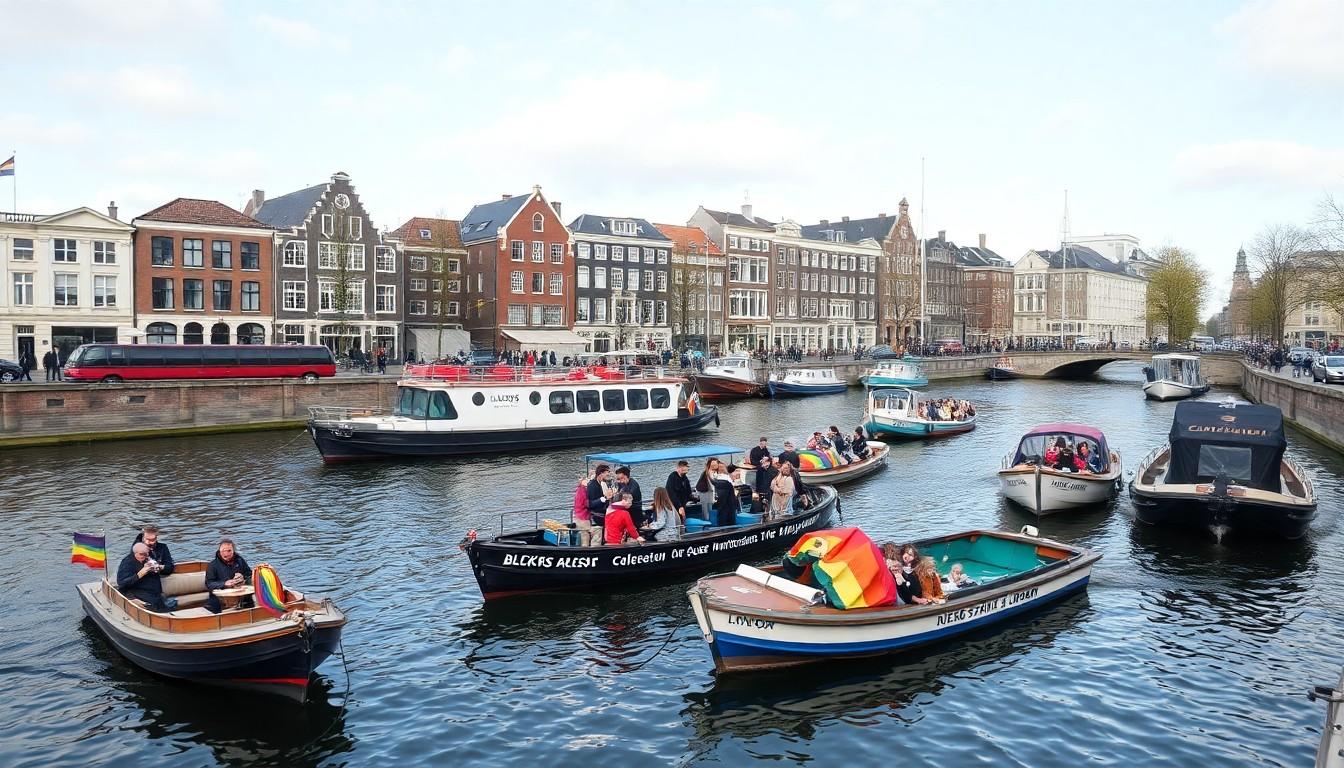
Shoppers and sightseers are flocking to Amsterdam’s canals this WorldPride, where colourful floats and bold statements glide by; here’s what to watch for, who’s behind the designs and why each boat matters to queer history, protest and partygoers alike.
Essential Takeaways
- BLCKHS party energy: Expect disco, R&B and club classics with singers and dancers , a lively, South American–inspired visual palette.
- Queer Museum debut: A moving gallery of queer icons aims to bring overlooked stories to life during its first parade appearance.
- Book Boat statement: The Amsterdam Public Library’s giant open-book float highlights censorship with texts partially blacked out.
- Protest and celebration mix: Several entries balance party spectacle with serious protests on trans healthcare, commercialisation and global human rights.
- Familiar faces: Longstanding favourites like We Are Family and Dolly Bellefleur bring nostalgia, performance and local history.
BLCKHS Amsterdam: a party that nods to nightlife history
If you want to hear the beat of Amsterdam’s queer nightlife, the BLCKHS boat is the place to start; the music will feel immediate, warm and familiar. According to the official Pride listing, DJ Natarcia will spin a mash of disco, R&B and club classics while singers and dancers bring the story of local clubs to life. The South American visual theme , white and silver with bursts of bird-of-paradise orange, blue and green , promises a festive, tropical look against Amsterdam’s grey canal backdrop. For anyone choosing where to stand, pick a spot near the bridges: you’ll get the sound, the dancers and the best photo light.
Queer Museum: kicking off a long-awaited public presence
Seeing a museum float is a clever way of making heritage mobile, and the Queer Museum’s first parade appearance does just that. The organisation wants to underline why a dedicated queer museum matters, showcasing portraits from Hadrian to Lil Nas X that organisers say will “come to life”. The timing is notable: while the museum prepares to open in the Centrum, joining the parade turns a future cultural venue into a present-day statement. If you care about preservation of queer stories, this is a visual reminder that history is still being written , and that museums can be a form of protest.
De Boekenboot: a literal book-shaped protest about censorship
The Book Boat is the parade’s most literal metaphor: a giant open book carrying around 100 writers, illustrators and creators, with selected passages visible and others crossed out behind black bars. Organisers frame it as a defence of free speech and queer literature at a time when books are being challenged globally. It’s a quiet but sharp intervention among louder party boats, and a good place to listen if you want to hear writers’ voices rather than DJs. For parents and teachers in the crowd, it’s also a reminder of why access to diverse stories still matters.
The Kissing Couple: humour with a humanising intent
You can’t miss the boat that recreates two world leaders kissing in Delftware style , a bold visual that aims to momentarily soften power into something human. Creators say the piece isn’t meant to provoke for provocation’s sake, but to pause the spectacle of politics and focus on intimacy. It’s a cheeky, photogenic comment on geopolitics and celebrity, and it often sparks the loudest cheers among passing crowds. If you like satire with a glossy finish, this will be one of your favourite snapshots.
Aidsfonds: sober urgency among the celebrations
Not every boat is here to party, and Aidsfonds keeps that balance visible with a performance about cooperation and the ongoing fight against HIV. The foundation stresses that AIDS remains a global reality, and this entry aims to translate that urgency into human stories and collective responsibility. In a parade full of glitter, Aidsfonds is a reminder that visibility can , and sometimes should , carry policy demands and calls to action. Stand close if you want to catch the speeches and the choreography that underline the message.
Student protest boat: Pride as protest, not product
A.S.V. Gay and StudentPride are sailing a black-and-white protest float that deliberately references Stonewall-era news photos. Their aim is straightforward: reclaim Pride’s roots and push back against the event’s commercial drift. Issues on their list include long waits for trans healthcare, police violence, and international human-rights crises , a broad and sharp agenda for a student-led crew. If you’re wondering where the parade’s heartbeat of dissent is, look for this stark, uncompromising entry.
We Are Family and 25 years of same-sex marriage: dreamy then defiant
We Are Family have been part of Amsterdam Pride since the 1990s, and this year’s shimmering white wedding tableau marks 25 years of legal same-sex marriage in the Netherlands. The boat moves from fairytale celebration to protest at a set moment, with passengers unfurling “Same love, same rights!” banners. It’s a clever reminder that progress needs guarding: anniversaries are for cake, yes, but also for listing what remains unfinished.
Stichting 3 Layers: Caribbean and Dutch solidarity visualised
Stichting 3 Layers returns with a multilingual, multinational cast from the Dutch Caribbean and the Netherlands, interpreting Unity as a daily practice. Expect performances that foreground identity, visibility and shared responsibility, and an installation that reads like a public conversation. This float is worth watching if you want the parade to feel politically and culturally expansive, connecting local activism to broader postcolonial debates.
Tess van Zwol & Outloud: design prize winners keep the visual drama
Tess van Zwol’s entries have won design prizes before, and this year’s collaboration with Outloud Music Festival turns the boat into a lush human jungle. The message is simple: intimacy, not screens, produces real connection. Expect dense foliage, dramatic silhouettes and moments that feel almost theatrical. For festivalgoers who love a strong visual identity and immersive design, this is a showstopper.
Dolly Bellefleur: the camp, the critique and the local history lesson
No canal parade is complete without Dolly Bellefleur , Ruud Douma’s alter ego , delivering a blend of camp performance and citywide tribute. This time the theme celebrates 25 years of marriage equality and pays homage to pioneers like Erwin Olaf and Bet van Beeren. Dolly’s original song is always a highlight: singalong-ready, bittersweet and very Amsterdam. It’s the kind of performance that turns spectators into participants.
It's a small change that can make every parade moment mean more.
Source Reference Map
Story idea inspired by: [1]
Sources by paragraph: