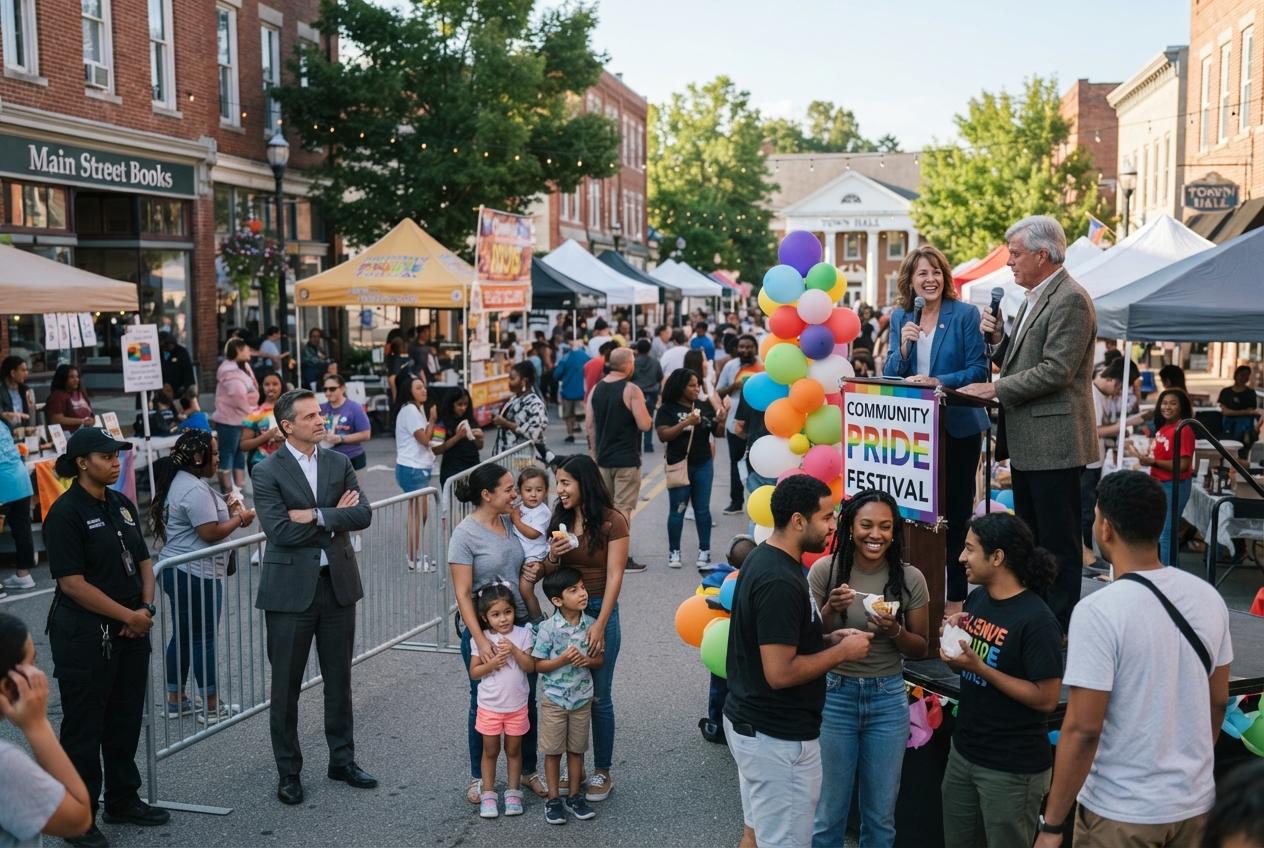
Celebrating community in small towns is trending again , Lebanon, Ohio, hosted its third downtown Pride festival last weekend, drawing both cheers and controversy as a city councillor attended but publicly distanced himself; organisers say the event is family-friendly and plan to come back next year.
Essential Takeaways
- Third year: Lebanon Pride returned to Mulberry Plaza for its third annual celebration, with a lively, family-friendly atmosphere.
- Mixed reception: A city councillor attended but clarified he did not support the event, sparking online backlash and safety concerns.
- Organisers’ stance: Festival leaders emphasise non-confrontation, adherence to decency rules, and plans to continue next year.
- Safety issues: The councillor reported harassment and threats after his social posts; the mayor publicly condemned such behaviour.
- Wider context: Small-town Pride events nationally have faced both bans and vocal opposition, yet many persist and attract broad local support.
A neighbourhood party that quickly became a public row
Lebanon’s Pride felt like a sunny community fair on paper , stalls, performances and families wandering Mulberry Plaza , but the weekend took a political turn when a sitting councillor showed up and made his opinions public. The scene was vivid and a little awkward, with festival-goers noting the councillor’s presence and organisers wishing he’d stayed to mingle. The energy of the crowd and the smell of street food contrasted sharply with the sharpness of the online debate that followed.
Why a councillor’s attendance mattered so much
Elected officials carry weight in small towns, and their actions tend to be read as signals. The councillor said he was there to observe rather than celebrate, and that stance prompted calls for others to join him in “monitoring” future entertainment. That message alarmed organisers, who insist the festival met all municipal standards and is intended as inclusive community programming. The fallout shows how public gestures by officials can amplify tensions over cultural events.
Harassment, misinformation and the mayor’s quick intervention
What started as disagreement escalated when false images and invasive behaviour surfaced online, and the councillor reported receiving threats. The mayor stepped in to condemn harassment and deception, calling out fabricated images and explicit threats as crimes that harm civic trust. That response underlined a wider concern: communities can disagree without resorting to intimidation, and local leaders have a part to play in setting that tone.
Lebanon Pride’s approach and what organisers want next
Organisers describe the festival as family-friendly and non-confrontational, and they don’t plan to back down. They say the event follows the city’s decency policies and aims to be treated like any other downtown festival. For residents wondering how to engage, the simple advice is to attend, ask questions, and support safe, lawful expression , or, if you’re a policymaker, to show up and listen rather than amplify conflict.
This fits a national pattern , tensions, but also resilience
Across the US, Pride events in smaller communities have faced bans, protests and heated council meetings, yet many festivals persist and even grow. Organisers nationwide have reported harassment but also strong local turnout and solidarity. The Lebanon example mirrors that push-and-pull: civic friction on one hand, and people organising public celebrations of identity on the other. If you’re planning to go next year, check the festival’s schedule, bring the family, and be ready for both community spirit and spirited conversation.
It's a small change in civic life that can make every local festival feel more open , and safer , for everyone.
Source Reference Map
Story idea inspired by: [1]
Sources by paragraph: