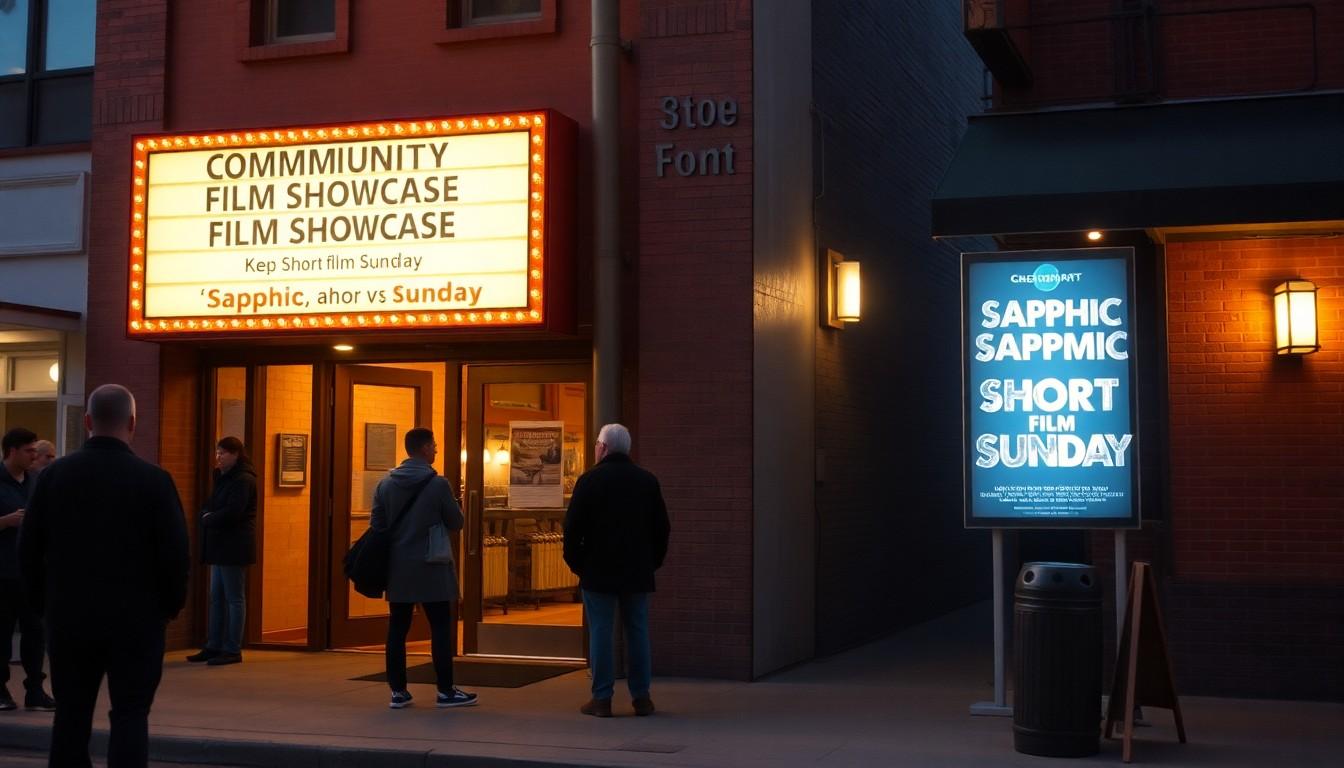
Shoppers of stories are turning up to cosy, low-key screenings that celebrate women-loving-women cinema; Sapphic Film Sunday brings a curated three-hour block of indie shorts, a live filmmaker Q&A, and a post-screening social hour that matters for makers and audiences alike.
Essential Takeaways
- Community-first vibe: A single, three-hour block of curated sapphic shorts with a live Q&A and social hour, creating a welcoming, intimate atmosphere.
- Who’s encouraged: Submissions centre on sapphic or WLW narratives and warmly welcome cis and trans women, lesbians, bisexual and pansexual women, queer women, non-binary and gender-expansive creators.
- Practical rules: Completed films only, digital screeners via Festhome (Vimeo/YouTube preferred), English hardcoded subtitles required for non-English films.
- Low cost, low pressure: Independently funded with intentionally low entry fees, no awards, no trophies, and no red carpets, just connection.
- Rights and responsibilities: Submitters grant non-exclusive screening rights and promotional use of stills/trailers; filmmakers must secure all clearances and licences.
Why intimate showcases are winning over big festivals
There’s a particular warmth to a screening room where everyone came for the same kind of story, and Sapphic Film Sunday leans into that. The event curates a tight block of shorts so audiences settle in, watch a rhythm of related work, and leave feeling like they’ve seen a coherent programme rather than a grab-bag. That cosy, human feeling matters to makers who want honest feedback and to viewers after more than a token representation.
Smaller showcases also let films breathe in a way competitive festivals can’t. Rather than vying for trophies, filmmakers get face time: a live Q&A after the screening block and a chance to chat in the lobby with people who actually paid attention. It’s the kind of connection that can spark new collaborations, funding ideas, or simply friendships.
What kind of films fit best , and why WLW focus matters
Sapphic Film Sunday specifically asks for films that centre women-loving-women themes and narratives, which creates a focused curatorial lens. That means love stories, examinations of sapphic identity and queer history, and character pieces that explore the full complexity of sapphic life. It’s a corrective to mainstream programming that often sidelines or flattens these experiences.
The organisers also make an explicit inclusion commitment: cis and trans women, lesbians, bisexual and pansexual women, queer women, and non-binary or gender-expansive creators are all invited. That clarity signals to underrepresented makers that their work will be seen in context, not tokenised.
Submission tips: practical and pro-level
Follow the rules and save yourself stress. Only completed films made in 2025 or 2026 are eligible, and you must upload a digital screener via Festhome , Vimeo or a passworded YouTube link is preferred. If your film isn’t in English, hardcoded English subtitles are mandatory, so don’t leave captioning to the last minute.
Add a short content warning in your submission notes if you cover sensitive topics. The organisers use those notes to warn audiences, which is both considerate and helps the film land with the right crowd. Finally, remember entry fees are non-refundable; they’re low on purpose to improve accessibility, so treat the submission as a small investment in exposure and community time.
Rights, promotion and legal fine print , what to watch
By submitting, you grant Sapphic Film Sunday non-exclusive public exhibition rights for the event and permission to use promotional clips, stills and poster art. That’s standard for screenings, but it’s worth flagging if you plan other festival runs or online premieres.
Crucially, you remain responsible for all clearances , music licences, talent releases, trademarks. The organisers explicitly refuse legal liability, so keep records of your permissions and contracts. If you’re unsure, a quick chat with a festival-savvy producer or a rights clearance service will save headaches later.
The cultural ripple: why showcases like this matter now
There’s been renewed interest in archival and indie sapphic cinema recently, from rediscovered 1990s queer films to contemporary documentaries reclaiming lesbian histories. Platforms like Sapphic Film Sunday help stitch those threads together by giving new shorts a place to be seen alongside conversations about queer memory and representation.
For audiences, this format is a gentle, joyful way to encounter work you wouldn’t otherwise find. For filmmakers, it’s a low-pressure chance to present work to a receptive crowd and to hear immediate responses. In a festival ecosystem crowded with competition, these community-led showcases are quietly powerful.
It's a small change that can make every screening feel more inclusive and a lot more human.
Source Reference Map
Story idea inspired by: [1]
Sources by paragraph: