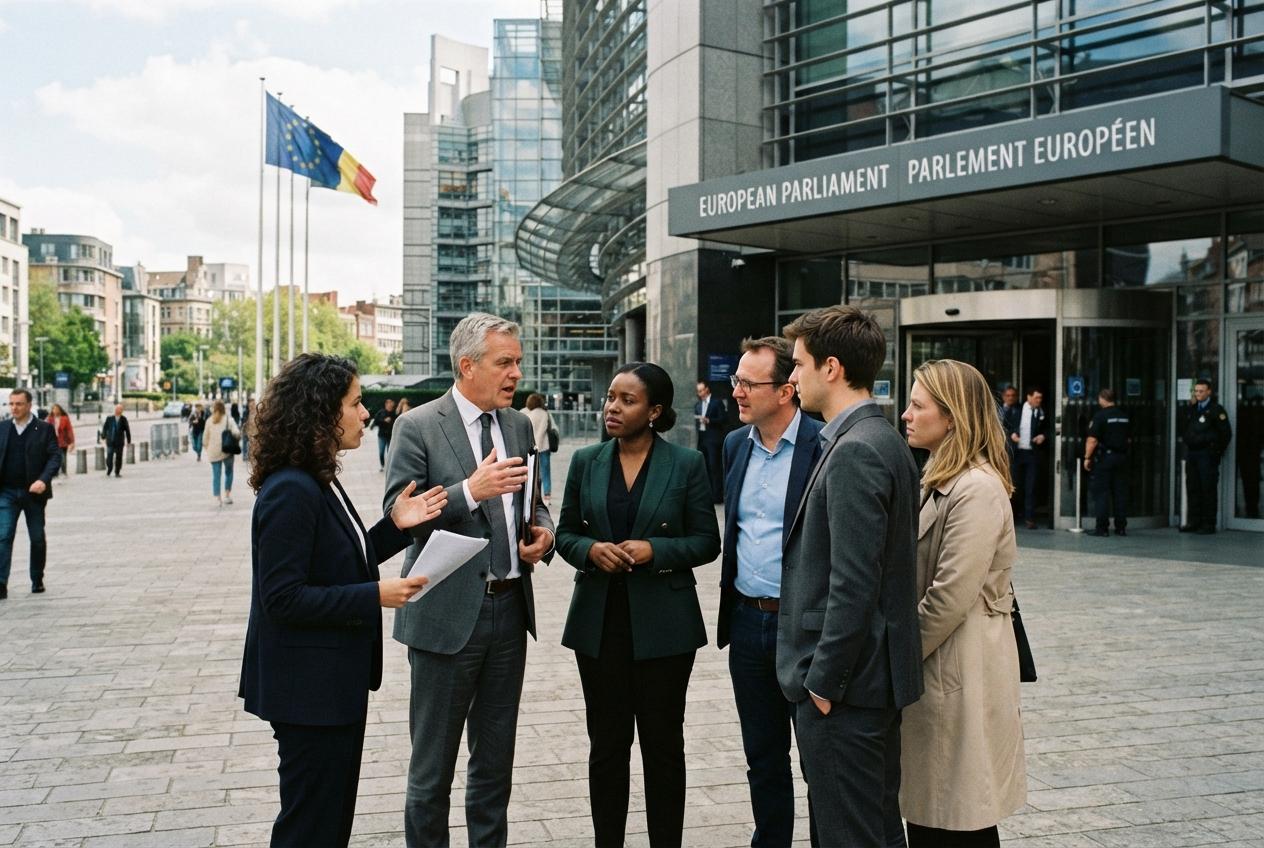
Shoppers are turning their attention to how Europe answers hate: the Lega in Brussels has lodged a formal question to the European Commission demanding action on homophobic violence tied to Islamist extremism, a move that matters for policy, funding and LGBT+ safety across the EU.
Essential Takeaways
- Formal challenge: An MEP from Lega has submitted an interrogation to the European Commission asking for firm measures against homophobia linked to Islamist extremism.
- Trigger event: The move follows an attack at Berlin Pride that revived concerns about targeted violence against LGBT+ people.
- Funding question: The MEP wants EU funds paused for organisations that tolerate or spread values hostile to fundamental rights.
- Data push: The interrogation asks for an analysis of hate crimes against the LGBT+ community to guide policy.
- Political tension: The matter has exposed disagreement in the European Parliament about causes and responsibilities, with accusations of silence and political bias.
Why this parliamentary question landed in Brussels now
The strongest fact here is simple and stark: an attack at a Pride event in Berlin prompted renewed scrutiny of homophobic violence linked to Islamist extremism. The case has a raw, emotional edge , survivors and onlookers described panic and anger , and that stirred an Italian MEP to act. According to reporting, the MEP said she had previously raised concerns in the Parliament’s civil liberties committee and met an awkward silence. So she formalised those worries into an interrogation to the Commission to force answers rather than platitudes.
The backstory matters because it shows how single incidents can change the tone of debates in Brussels. This isn’t just a headline-grabbing hot take; it’s a procedural move that asks the EU to consider practical steps, like funding reviews and systematic data gathering. For readers, the takeaway is clear: incidents at local events can trigger supranational political pressure, and that can shape what community groups receive support.
What the interrogation actually asks for
The document lodged asks the Commission to consider several concrete measures: stop EU financing for groups that tolerate or promote values contrary to fundamental rights, and commission an analysis into the spread of hate crimes targeting LGBT+ people. That’s not vague rhetoric , it channels into policy levers the EU actually controls.
Context helps here. European funding programmes routinely back integration, cultural and social projects across member states, so a decision to suspend payments would be meaningful and controversial. If you volunteer or work with a multicultural organisation, this is the sort of development that could affect grant eligibility and compliance requirements. Expect questions about transparency and clear criteria if this path gains traction.
The wider debate: security, tolerance and political lines
You can’t discuss this without the political heat. The move has highlighted fault lines in the Parliament: some colleagues dismissed the emphasis on Islamist-linked homophobia as politically charged or as an excuse to target certain communities, while the MEP says ignoring the phenomenon amounts to willful blindness.
That tension reflects a broader trend across Europe, where debates over migration, integration and religious freedom are increasingly entangled with security concerns. For LGBT+ advocates, the issue is straightforward , safety and rights must be upheld , but for others the worry is about stigmatism and the risk of collective blame. The practical insight: any policy response will need to balance targeted prevention with safeguards against discrimination.
How this could change funding and local projects
One practical consequence under discussion is tighter vetting of recipients of EU social and integration funds. The idea on the table would require evidence that funded organisations respect fundamental rights, including LGBT+ rights. That’s a familiar concept in EU policy , conditionality is already used in rule-of-law debates , but applying it to social funding would be novel and contested.
If you run or support community projects, start thinking now about clear nondiscrimination policies, monitoring and public transparency. Preparing documentation that shows your commitment to fundamental rights will make applications more resilient if Brussels tightens rules. And for citizens, pressure on local politicians to ensure safety at public events could translate into more visible policing and prevention measures.
Where things go from here , tensions and practical steps
Expect the Commission to answer the interrogation with a mix of legalese and policy options: more data collection, guidance on funding rules, and possibly targeted initiatives to protect vulnerable communities. The real test will be whether Brussels pursues preventative measures without fuelling polarisation.
For now, reflect on the human side: LGBT+ people and allies want reassurance that events like Pride are safe. Community groups want clarity on rules and funding. Policymakers must bridge those needs without scapegoating whole communities. In short, better data, clearer funding criteria and local prevention can all help.
It's a small but consequential nudge that could change how Europe balances tolerance, security and rights.
Source Reference Map
Story idea inspired by: [1]
Sources by paragraph: