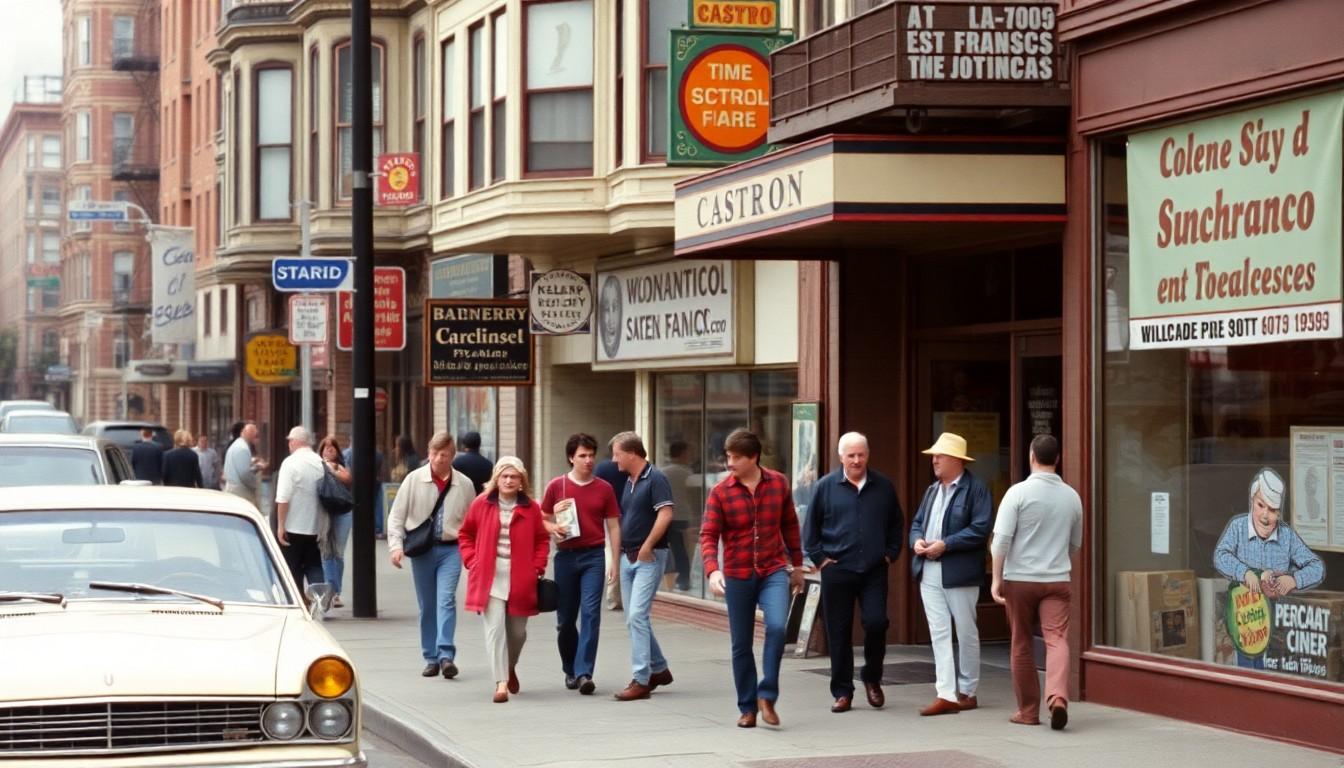
Shoppers and history buffs are diving back into the 1970s as San Francisco’s defining decade for LGBT life , a time when activism, culture, and community institutions blossomed and changed the nation. This piece traces who, what and why the era mattered, and offers practical context for readers exploring the city’s queer past today.
Essential Takeaways
- Pivotal victories: San Francisco played a central role in rolling back criminal laws and normalising open LGBT public life.
- Community infrastructure: Bars, fairs, choirs, theatres and support groups sprang up, creating a lively social and cultural ecosystem.
- Visible pioneers: Figures such as Harvey Milk, Sylvester and Gilbert Baker left lasting symbols , from political firsts to the rainbow flag.
- Grassroots defence: Volunteer patrols and groups like Lavender Panthers and Butterfly Brigade reflect how communities protected themselves.
- Lasting legacy: Many organisations founded in the 1970s evolved into today’s nonprofits, health services and annual events.
Why the 1970s felt like a golden age , and why it still hums today
The strongest single fact about the decade is how rapid change felt; you could almost hear the city rearranging itself, from storefronts to politics, with a bright, rebellious energy. According to contemporary reporting and later retrospectives, San Francisco’s size, geography and tolerant traditions made it fertile ground for LGBT life to flourish. People who walk the Castro now will still notice the tactile traces , murals, theatres and businesses that began in that period , and there’s a warm, lived-in quality to the archives and plaques.
The backstory matters. National shifts, including the American Psychiatric Association’s 1973 decision to remove homosexuality as a mental disorder, gave local organising sharper teeth. At the same time, city-level fights to repeal anti-sodomy laws and to elect openly gay public officials accelerated public visibility. For a modern visitor or researcher, the 1970s read as a sustained civic experiment in building institutions from the ground up.
How politics, protests and painful losses shaped the movement
San Francisco’s political landscape shifted quickly: activists transformed social spaces into campaign hubs, and grassroots organisers turned cultural visibility into electoral wins. Harvey Milk’s rise from Castro shopkeeper to elected supervisor is often cited as the decade’s defining political arc. That achievement sits alongside darker moments , assaults on LGBT people, targeted violence, and the assassination of Milk and Mayor Moscone , which exposed how fragile hard-won gains could be.
Context helps explain the texture of activism: groups organised not only to lobby but to provide mutual aid and security, carrying whistles, patrols and sometimes improvised weapons to deter attacks. Those responses reveal a community learning to defend itself while demanding legal and civic recognition.
Culture exploded: discos, film, theatre and the first gay university
If you think of the era for its music and parties, you’re not wrong. Disco culture reworked nightlife and helped queer people claim public spaces. The Advocate’s nod to 1975 as the “Year of the Disco” captured how clubs shaped identity, fashion and social life. Parallel cultural experiments , the world’s first LGBT theatre company, film festivals projected on sheets, and pioneering publications , show a creative scene building its own institutions.
Practical note: those cultural outputs weren’t simply entertainment. They were recruitment, solidarity and identity formation. For anyone curating exhibitions or giving tours, spotlight the crossovers: a disco poster can tell a story about migration, work, safety, and belonging.
Symbols and institutions we still recognise: the rainbow, choirs and community health
A clutch of innovations from the late 1970s went on to become global icons. Gilbert Baker’s rainbow flag, first flown in San Francisco, offered a portable, hopeful symbol that communities worldwide adopted. Jon Reed Sims’ marching band and chorus modelled how music could be civic practice as well as performance. Health and service institutions that began then , clinics, bisexual centres, and community newspapers , evolved into parts of the city’s safety net and cultural memory.
If you’re researching or visiting, note where these origins meet present-day services: community health hubs and long-running publications trace their roots to that burst of civic energy. They also show how organisers moved from protest to institution-building.
Lessons for today: choosing what to preserve and how to tell the story
There’s a practical question for curators, educators and community leaders: which stories stay in the foreground, and which get buried? The 1970s produced both joyous public rituals and raw trauma. Presentations that balance celebration with honesty , for instance, pairing the rainbow flag’s debut with accounts of targeted violence and the Dan White trial aftermath , create a richer public history.
For visitors and researchers, tip: combine walking tours with reading local archives or oral histories. Those layered experiences let you feel the textures of the era , the hum of a parade, the scrape of a protest banner, the quiet of anniversary plaques. And remember that many community groups founded then still have living members who can bring a personal voice to the facts.
It's a small change in perspective that makes those streets and symbols come alive again.
Source Reference Map
Story idea inspired by: [1]
Sources by paragraph: