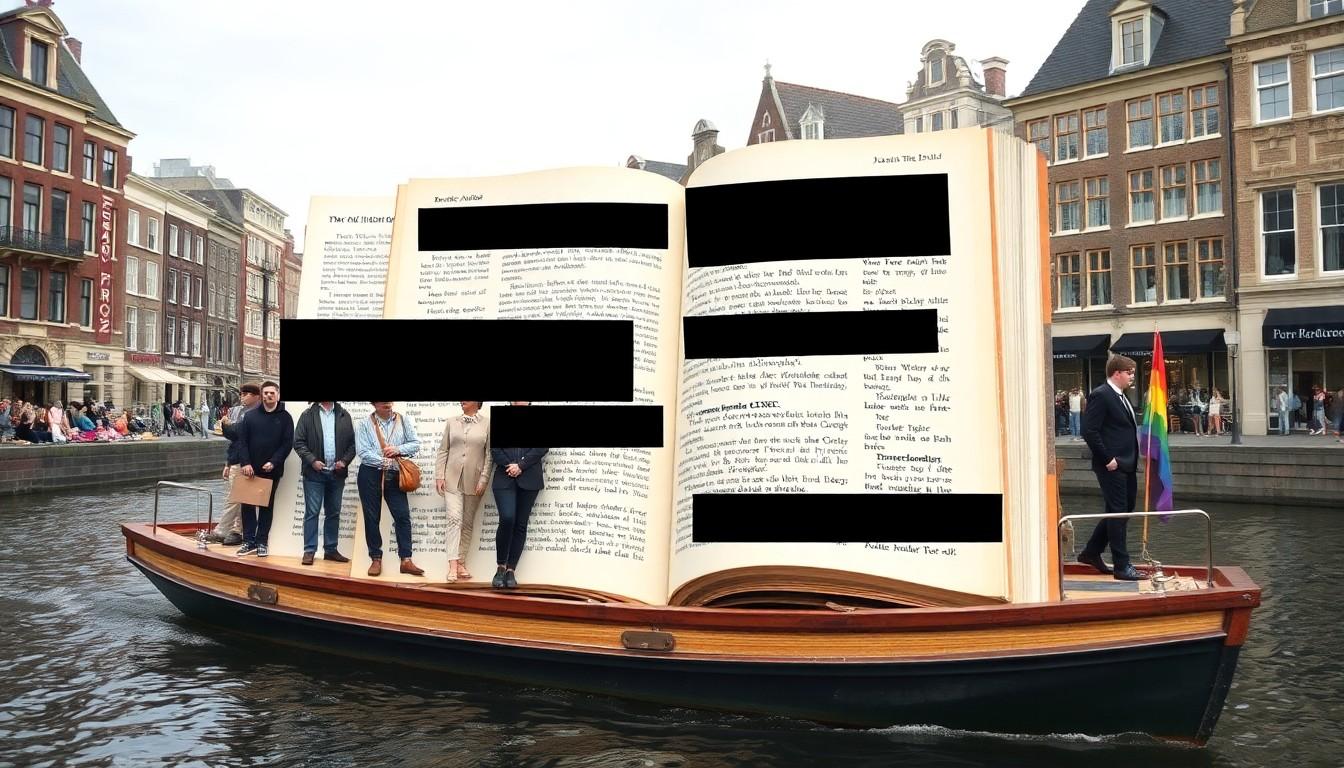
Shoppers and readers are watching as Dutch writers and book organisations float their protest down Amsterdam’s canals, fighting a global rise in bans and silencing of queer stories , a bold, visual campaign that mixes celebration with a clear warning about censorship.
Essential Takeaways
- What’s happening: A Books Boat , nicknamed a giant open book , will sail in Amsterdam’s Canal Parade under the banner Free the Word: Every Story Counts.
- Who’s involved: Prominent Dutch authors and organisations such as Maartje Wortel, Pete Wu, Pim Lammers, the Openbare Bibliotheek Amsterdam, Stichting Lezen, CPNB and the Nederlands Letterenfonds.
- Visual impact: Campaign panels are partially obscured with black censorship bars to show how queer narratives are being blanked out.
- Tone and aim: The action is both a protest against growing book bans and a celebration of queer visibility and literary freedom.
- Practical note: The Books Boat will appear as part of WorldPride/Canal Parade programming in Amsterdam, joining a wider calendar of Pride events.
A striking protest that looks like a book , and feels like a dare
The opening image is deliciously literal: a floating, oversized book, pages spread and words partly blacked out, gliding past terraces and bridges. It’s a theatrical way to make a quiet but urgent point about the creeping removal of queer voices from public life. According to local reporting, the campaign uses the visual shock of censorship bars to translate an abstract debate into something you can see and feel , the way blank space on a page suddenly becomes loud.
Authors and cultural organisations have grown weary of quiet erasures. The Books Boat harnesses that irritation and turns it into celebration: visible writers, visible organisations, visible stories. It’s designed to be both protest and party, which is exactly the tonal mix WorldPride often favours.
Why writers and libraries are taking to the canals
The Dutch book world isn’t acting alone. Industry groups and cultural institutions have joined forces to underline how censorship doesn’t only happen in far-away places but creeps into school libraries, bookshops and public programming. The collaboration shows a sector keen to defend its public role. Organisations like the Openbare Bibliotheek Amsterdam and Stichting Lezen are lending not just logos but legitimacy; it’s harder to dismiss a movement when libraries stand shoulder to shoulder with writers.
There’s also a pragmatic reason: parades and festivals attract attention, photos and social shares. A boat that reads like a censored book is irresistible on social media, and that reach is part of how the campaign hopes to change minds beyond the canals.
How this fits into a wider global trend of book bans
Across multiple countries, queer narratives have been challenged, restricted or removed from shelves and curricula, and writers report threats and pressure. Industry sources and writers’ unions have been raising the alarm about these patterns. The Books Boat deliberately references this global uptick in censorship , the banners and blocked words on the boat aren’t just Dutch theatre, they’re a mirror to actions happening elsewhere.
If you’re wondering what to watch for: look at which messages are blacked out and what remains visible. The contrast is meant to spark conversation about what communities lose when stories disappear.
What it means for readers, parents and educators
For readers this is a reminder: access matters. For parents and teachers it’s a sign that literary choices are increasingly politicised, and that defending a diverse reading list can require public action. Practical tips: support local libraries, ask schools about their reading policies, and seek out events where authors read or discuss challenged books , visibility helps normalise contested stories.
If you’re in Amsterdam during WorldPride, the Books Boat is a tangible way to show support , clap, photograph, share, buy a book from a queer author. Small acts help keep these stories in circulation.
Looking ahead , will the stunt change policy?
Publicity rarely changes laws overnight, but it shifts the conversation. By making censorship visible in a joyful, public setting the Books Boat aims to reframe the issue from abstract policy to community loss. Industry groups hope that combining protest with celebration will sustain momentum and keep attention on real-world consequences: books removed from shelves, authors silenced, children denied mirrors and windows in their reading.
And beyond policy, there’s a softer hope: that seeing queer stories celebrated on the water will make them feel more ordinary, and harder to erase.
It's a small, vivid act with a clear question: what kind of reading public do we want to be?
Source Reference Map
Story idea inspired by: [1]
Sources by paragraph: