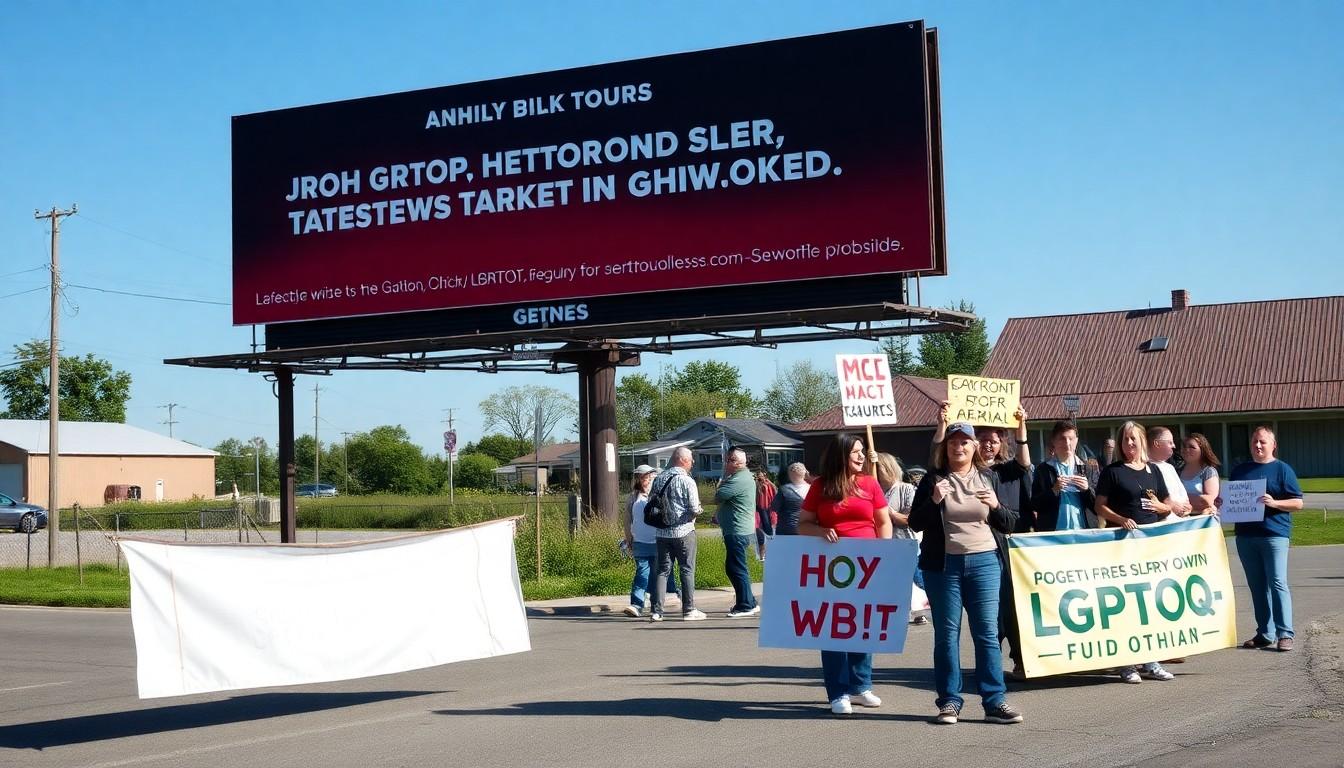
Shocked residents and activists are pushing back after anti-LGBTQ+ billboards appeared across rural Ohio; local groups bought counter-ads, raised thousands, and are turning outrage into organised action , here’s what happened, why it matters, and how communities can respond effectively.
Essential Takeaways
- What ran: Nationwide group Them Before Us placed billboards in rural Ohio stating “No child has two dads. No child has two moms,” using rainbow-coloured words to target LGBTQ+ families.
- Local reaction: Residents like Megan Tucker-Manly quickly shared photos online, sparking viral attention and community mobilisation in Lima and beyond.
- Countermeasures: Dayton nonprofit Have a Gay Day purchased billboard space with a pro-queer message and raised more than $15,000 from supporters.
- Broader context: Them Before Us has links to anti-LGBTQ+ advocacy and aims to influence policies on marriage equality and reproductive technologies.
- Practical note: Community responses combined fundraising, visibility, and civic engagement , a model other towns can adapt.
A jolt on the road: how a billboard lit a fuse in Lima
A shopper leaving a supermarket saw the message and, like many of us these days, snapped a photo and posted it online; the image spread fast, and people were shocked at the chilly, erasing language. According to local reporting, the line was crafted to feel protective but lands as exclusionary and personal to parents and kids who don’t fit a traditional mould. The visual hit hard , bright rainbow text with a blunt denial underneath , and that contrast seems designed to provoke.
The pushback was immediate. Neighbours, Pride groups and online followers rallied, proving that a small-town sightline can very quickly become a national conversation. That instant virality offered people a platform to say they won’t accept messaging that erases their families.
Who’s behind the billboards , and why it matters
Them Before Us, a Seattle-based organisation, has been identified in coverage as campaigning against same-sex marriage, IVF and no-fault divorce, and its founder has a history of involvement with well-known conservative advocacy networks. Media reports and community statements framed the billboards as part of a broader strategy to normalise a political stance under the cover of “protecting children.”
That context changes the conversation from one-off vandalism or an odd advert to a coordinated attempt to shift public opinion. When activists with policy aims buy billboard space, they’re planting seeds for larger campaigns , which is why local groups treated the ads as more than just offensive copy.
How local groups turned outrage into action
Rather than only protest, Dayton’s Have a Gay Day took the pragmatic route: they bought billboard space to push back with an affirmative message about queer families. The group’s fundraising drive pulled in significant support quickly, raising over $15,000 to keep the counter-ads up and visible.
Other community players , Lima Pride Alliance, Equality Ohio and national groups , issued public statements and helped amplify the local fundraising. This mix of grassroots energy and institutional backing shows how small organisations can multiply impact when they combine visibility with resources.
The research and rhetoric: facts that cut through fear
Advocates pointed to studies showing same-sex families and children benefit from inclusive policies, an important counter to the billboard’s implied “harm” narrative. Public-opinion data also suggested broad support for marriage equality, which helped frame the billboards as out of step with many voters.
Putting research in front of emotive messaging helps communities argue in public forums and at council meetings. If a billboard claims to “protect children,” responders can counter with evidence about well-being and the real-world diversity of family life.
What residents can do next , practical steps that make a difference
If you see similar messaging in your town, a few simple moves help: document the ad, share responsibly on social platforms to build attention, contact local LGBTQ+ groups for coordination, and consider supporting or crowdfunding positive counter-ads. Attending council meetings, raising the question of hate speech or public harm, and linking with state-level organisations like Equality Ohio or national groups can also escalate the issue constructively.
Donors and volunteers should check the credibility and aims of the groups they support, and organisers should pair visibility campaigns with educational outreach so the conversation doesn’t end at the roadside.
A community response that’s about more than signs
This episode shows how quickly a single billboard can catalyse civic energy, turning passive anger into fundraising, public statements and plans for local advocacy. People like Megan Tucker-Manly, who despite personal hardship spoke up, remind us that local voices matter , and that communities can reshape the narrative by showing the families the billboards tried to erase.
It’s a small change that can make every message in town a little less cruel and a lot more honest.
Source Reference Map
Story idea inspired by: [1]
Sources by paragraph: