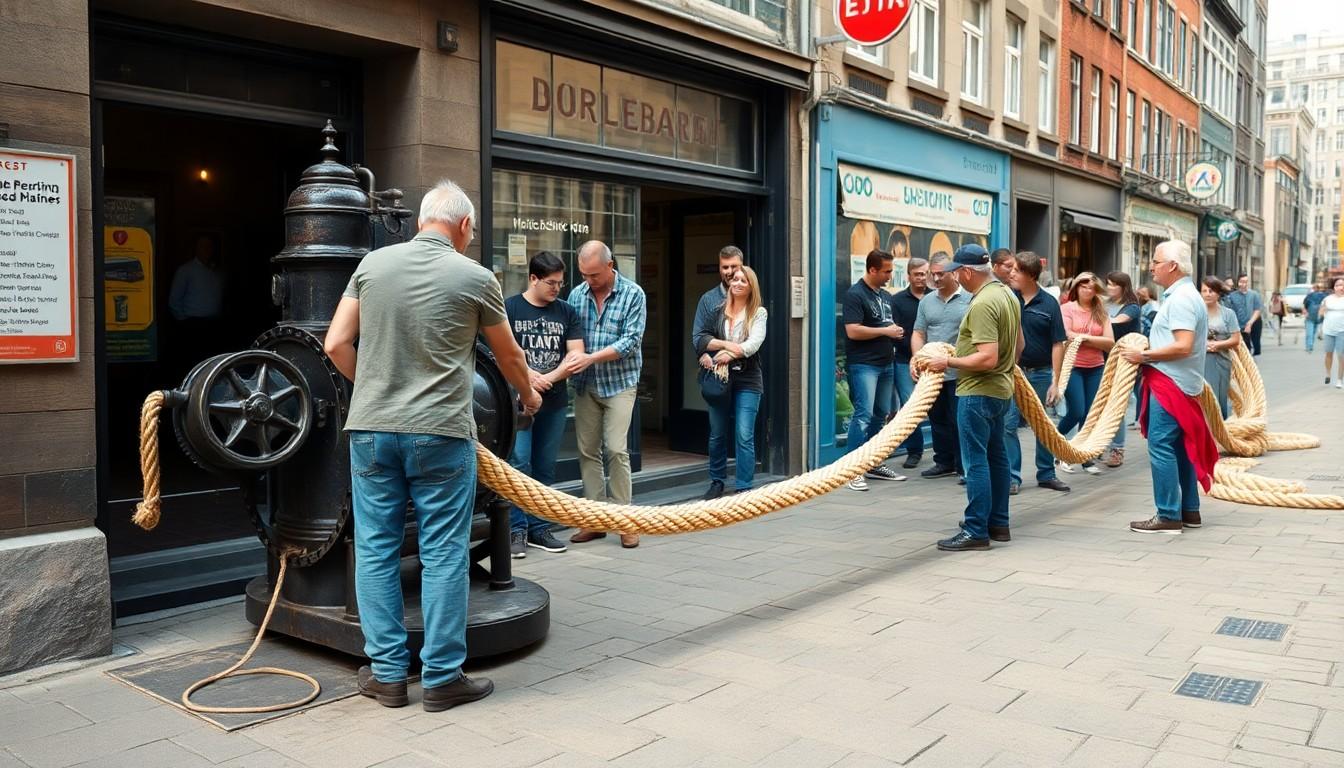
Celebrate: locals and visitors helped craft the longest rainbow-coloured rope on Hamburg’s Reeperbahn as part of Pride Week and the street’s 400th birthday, a colourful community statement that links historic rope‑making to contemporary solidarity.
Essential Takeaways
- Historic link: The Reeperbahn’s name comes from "Reepe", old Low German for strong ropes, and rope‑making was once a local craft.
- Community effort: Volunteers worked a 100‑year‑old hand‑cranking rope‑making machine to twist rainbow strands together.
- Sensory note: The machine adds a satisfying “drall” , a twisting motion you can feel and see as strands become rope.
- Size and fate: Organisers estimate the finished rainbow rope exceeded 40 metres and plan to show it in a Hamburg museum.
- Meaning: The project was timed for Pride Week and the CSD parade, intended as a visible symbol of unity and resilience.
A bright idea rooted in craft and history
The best part of the story is how naturally the idea tied past to present: the Reeperbahn, named for the strong ropes once made there, became the setting for a pride project that’s playful and meaningful. According to local reports, organisers invited passersby to join in twisting colourful strands on a century‑old “reepschläger” machine, and you could hear people laughing as the crank turned. It’s a tactile, visual way to honour both the street’s 400 years and the message of Pride.
How the rope was actually made , and why it matters
The process is charmingly simple and completely hands‑on. First the coloured strands were tensioned, then volunteers cranked the machine to add twist, and finally a wooden block joined the strands into a single rope. The machine is a bespoke build by a seaman’s ropemaker and more than a century old; museum educators have been touring it around for years. That Old World technique makes the final piece feel authentic, not gimmicky, and gives the project extra weight.
Community, timing and a heavier note
Organisers from the Historical Museums Foundation, St. Pauli Pride, the BID Reeperbahn+, and FC St. Pauli framed the project as a statement of solidarity. It was scheduled before the attack on the CSD in Berlin, so the finished rope now carries an added, poignant meaning for many. As one organiser put it, a single strand is weak but many together are strong , an image that landed with a lot of people on the Reeperbahn that day.
Where the rope goes next and why museums matter
The rainbow rope will be conserved and accessioned into a Hamburg museum collection and shown in an upcoming exhibit, although the exact venue hasn’t been decided yet. Museum staff say the plan is to care for and occasionally display the rope segments, so this community project will become part of the city’s material memory. If you love local heritage, that’s an encouraging example of how ephemeral activism can be preserved and reinterpreted.
What to do if you missed it , and how to join future projects
If you didn’t make the day, keep an eye on Pride Week listings and museum education programmes. These roaming rope‑making demonstrations turn up at street festivals and school events, and volunteers are usually welcome. It’s a simple, memorable way to participate that’s sensory , the click of the crank, the smell of fibre, the bright colours , and it makes a public gesture that lasts.
It's a small, tactile idea that knits history and hope together.
Source Reference Map
Story idea inspired by: [1]
Sources by paragraph: