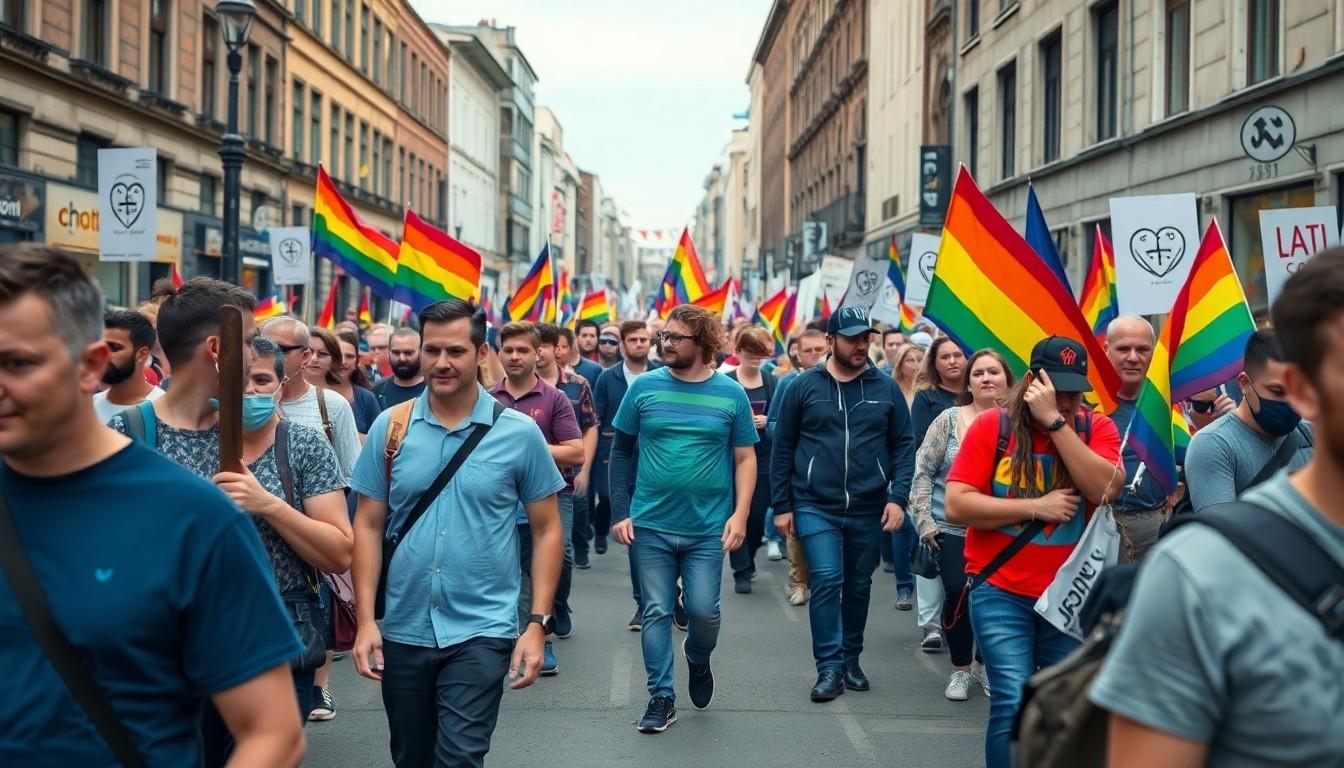
Notice a worrying trend: organisers and participants at Christopher Street Days across Germany are adapting to routine threats, as rising queerphobia and right‑wing mobilisation shift Pride from celebration to confrontation and safety planning. Here’s what’s changed, why it matters, and practical ways communities are responding.
Essential Takeaways
- Scale: Germany hosted a record number of CSDs in 2025, with many newly appearing in smaller towns, but most events now face some form of harassment or right‑wing presence.
- Threats feel personal: Incidents range from insults and graffiti to organised neonazi marches shadowing parades, leaving crowds tense and flags torn.
- Organisational resilience: CSD groups increasingly coordinate solidarity travel, local alliances and clearer anti‑right stances; many add concrete security measures.
- Support structures: Funds and monitoring initiatives are growing to strengthen on‑the‑ground safety, legal help and rapid response.
- Practical tip: If you’re attending, check organisers’ safety info, travel in groups, and share exit plans , small precautions matter.
Why Pride feels different this year: a visible mood shift
There’s a distinct, gritty texture to recent CSDs that visitors notice the moment they arrive , the route lined with hateful graffiti, the taut looks of volunteers, the extra lorries of marshals. According to monitoring by several civil‑society groups, attacks and targeted disruptions have risen to record levels, so what used to be a carefree parade increasingly includes planning for threats. Organisers say this isn’t a short blip but a consolidation of trends that long predate the latest headlines.
That background matters because it reframes each Pride: it’s not only a festive display but also a test of civic institutions, police readiness and community solidarity. For attendees that means being alert without letting fear win; for cities it means deciding whether to permit hostile counter‑demonstrations near Pride routes. The choices made by local administrations shape whether visibility becomes a hazard or a protected right.
Small towns are on the front line , and they’re fighting back
More CSDs are popping up in smaller towns, which is good news for inclusion but brings real logistical headaches. In places where a Pride parade might be the first large queer event in years, organisers encounter little infrastructure, limited media attention, and sometimes a louder local backlash. Yet those same small CSDs show notable resilience: people travel in solidarity from nearby cities, local alliances form with antifascist groups and civil society, and organisers are more likely to take explicit anti‑right positions.
Practically, that means planning early. If you’re part of a small‑town Pride, apply for permits well ahead, map safe exit routes, brief stewards and liaise with regional support networks. Solidarity travel is more than symbolic , it supplies numbers, resources and visibility that can deter isolated attacks.
What authorities and organisers are rethinking about security
The picture of police simply forming a single line between Prides and neonazi marches, then leaving it at that, belongs to the past. Many CSD teams are sharpening their security playbooks: layered stewarding, trained medics, legal observers, secure zones for families and trans people, and communication plans for deescalation. NGOs and foundations have set up emergency funds and monitoring projects to help finance extra stewards and legal aid when things go wrong.
Still, responses vary by city. Some administrations lean toward heavy policing; others favour community‑led safety measures. The takeaway for organisers is clear: diversify your safety strategy. Combine official liaison with grassroots protective practices, and document incidents so future planning rests on evidence, not anecdotes.
The role of right‑wing mobilisation , and why it feels normalised
This isn’t about isolated troublemakers. The recent upsurge includes organised groups whose campaigns against so‑called “gender ideology” and who mount counter‑actions timed to Pride. These efforts frequently draw on long‑standing networks , from party offshoots to street scenes of young men socialised into violent, competitive masculinity. Their presence at Prides, and the occasional permissive handling by local institutions, feeds a new normal where queer visibility is treated like an opinion up for public contestation.
For readers, it’s useful to see patterns rather than panic: documentation shows the same actors resurfacing across years, so disrupting their logistics and limiting publicity wins for them. That means timely intelligence sharing between CSD organisers, local NGOs and law enforcement can blunt the spectacle these groups crave.
What attendees can do: sensible, solidarity‑based steps
If you’re going to a Pride this season, you don’t need to stay home , but do prepare. Check your local CSD’s safety brief, arrive with friends, note the steward and medic points, and save emergency contacts. Respect organisers’ guidance on routes and exit plans. If you film incidents, prioritise personal safety and hand footage to organisers or legal teams so it can be used responsibly.
Communities can also chip in: donate to local safety funds, volunteer as a steward after training, or simply travel to smaller events to boost numbers. Visibility still works , it’s just that visibility now works best when paired with careful planning.
It's a small change that can make every Pride safer and stay true to what these events stand for.
Source Reference Map
Story idea inspired by: [1]
Sources by paragraph: