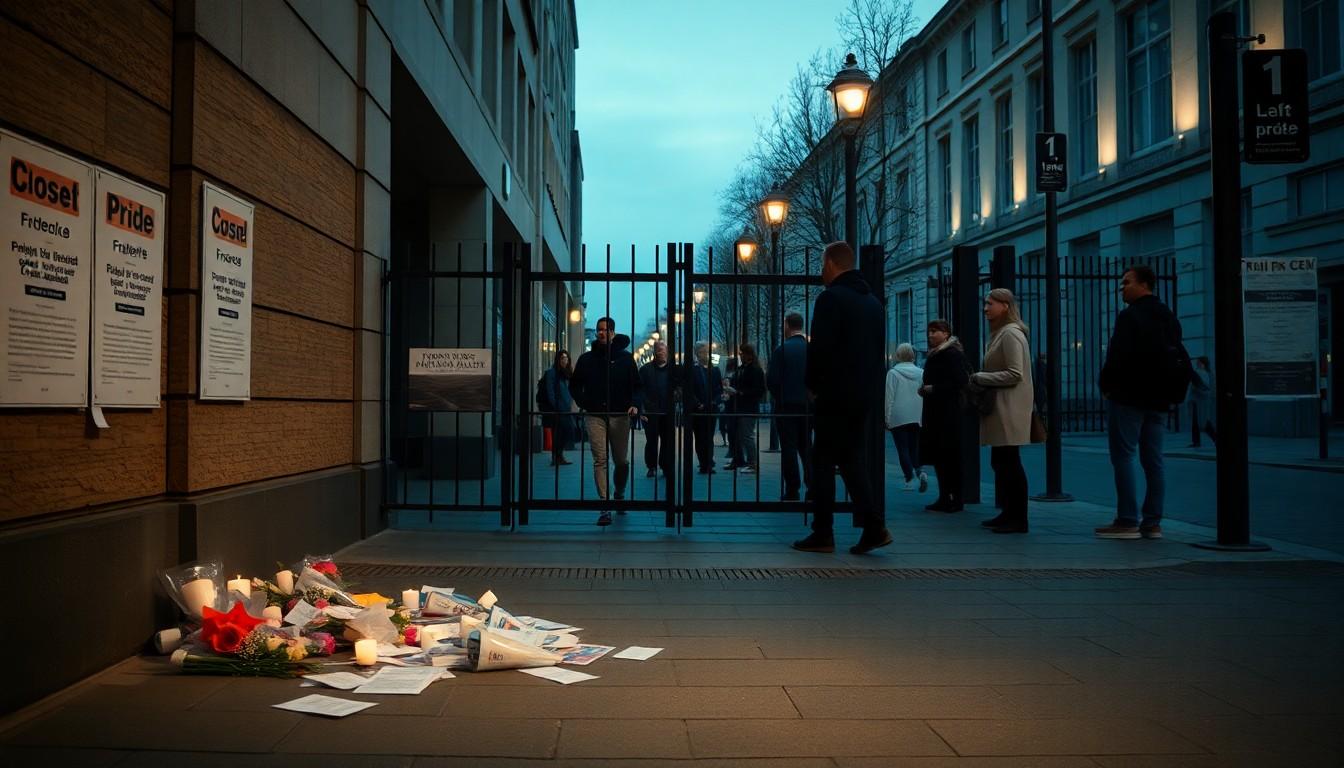
Watchful hearts gathered in Berlin last weekend as Pride ended in tragedy; readers want to know who was hurt, how the attack unfolded nearby government buildings, and why political responses matter , this dispatch unpacks the facts, the politics, and practical takeaways for queer communities and allies.
Essential Takeaways
- What occurred: A driver ploughed a van into crowds at the end of Christopher Street Day in Berlin, then allegedly attacked people with a machete; one woman was killed and dozens were injured, according to authorities.
- Known risk: Police sources indicate the suspect had been under surveillance and placed in a high-risk category prior to the attack.
- Official response: Law-enforcement shot and killed the attacker after a manhunt; politicians quickly framed the event as Islamist terror while others warned against using grief for political gain.
- Local impact: The incident renewed fear at public LGBTQ+ spaces but also produced strong calls to avoid scapegoating Muslim communities and to resist far-right exploitation.
- Practical note: If you attend large events, watch exits and crowds, travel with friends, and keep an emergency plan; organisers should review access controls and first-response readiness.
What we know about the attack , a compact timeline
Police say the vehicle entered the Tiergarten area as Pride wound down and struck people leaving the finale, then hit a tree; the attacker reportedly left the van with a blade. Witnesses described shock and confusion, and hospitals treated dozens with injuries. According to reporting, officers later tracked and fatally shot the suspect after a short manhunt. This version of events has been carried by multiple outlets, including AP and Al Jazeera, and frames the immediate facts you need to follow.
Authorities quickly labelled the incident terrorism and pointed to the attacker’s prior attempts to join jihadi groups. That context explains why officials treated him as a known risk, and why surveillance and intelligence questions have surfaced in the press. For readers, the takeaway is practical: incidents like this are messy at first, and verified timelines take time to emerge.
Why people are asking how a known suspect could carry out an attack
It’s painful and bewildering when someone placed on a watch list still manages to act. Investigations note surveillance footage and a recent high-risk assessment connected to the suspect, which raises questions about resources, priorities and legal limits of monitoring. Journalists and commentators are probing whether gaps in communication or restrictive rules on pre-emptive detention played a part.
That scrutiny is natural and necessary , public safety depends on transparent answers. Meanwhile, families, friends and Pride organisers are left to reconcile grief with the need for reforms in how threats are monitored, investigated and prevented.
Politicians, grief and weaponised narratives
Within hours of the attack, senior politicians used the tragedy to underscore security narratives, promising tougher measures. Some leaders described Islamist terror as the principal threat to queer people; others warned against turning mourning into anti-Muslim rhetoric. The swift politicisation of the event has angered many in Berlin’s LGBTQ+ community, who see grief being co-opted to push deportation and surveillance proposals.
This pattern matters because it shifts the conversation away from victims and emergency responses toward broad policy moves that can stigmatise whole communities. Observers caution that reflexive policies, more stops, more deportations, broader surveillance, can replicate the very monolithic thinking that fuels terror.
The risk landscape: Islamist terror versus far‑right violence
Context matters: while this attack has been described as Islamist-inspired, German data show a sharp rise in anti-LGBTQ+ incidents attributed to the far right. Recent statistics indicate most ideologically linked offences come from right-wing actors, and Pride events have seen numerous disruptions by far-right agitators this year.
That doesn’t minimise the horror of Saturday’s attack, but it does emphasise a broader truth: queer communities face multiple threats from different directions. For organisers and attendees, that means layered security planning , from physical barriers to rapid medical response , while also resisting rhetoric that flattens entire religious groups into security threats.
What this means for Queer Muslims and the wider community
Many queer Muslims endured renewed suspicion simply because the attacker claimed an Islamist motive. That’s painful and dangerous: people who live at the intersection of identities often face compounded prejudice. Leaders and Pride organisations have explicitly urged not to equate Islam with terrorism and to protect queer Muslims from backlash.
Practically, community spaces should be explicit in condemning violence while also publicly supporting vulnerable subcommunities. Allies can help by amplifying voices of queer Muslims and by calling out politicians who use tragedies to stoke division.
How to stay safer at big public events , simple steps
Large gatherings will always carry risk, but small habits increase safety. Go with friends who know your plan, pick a clear meeting point and spot exits before you settle in. Keep a charged phone and basic first‑aid items, and follow organisers’ guidance on access routes and crowd control. If you’re an event organiser, review traffic barriers, emergency medical placement and communication channels with police and medical services.
Communities that plan together usually come through crises together, too. That preparedness is a quiet kind of resilience.
It's a small change that can make every gathering a bit safer and keep Pride loud, visible and defiant.
Source Reference Map
Story idea inspired by: [1]
Sources by paragraph: