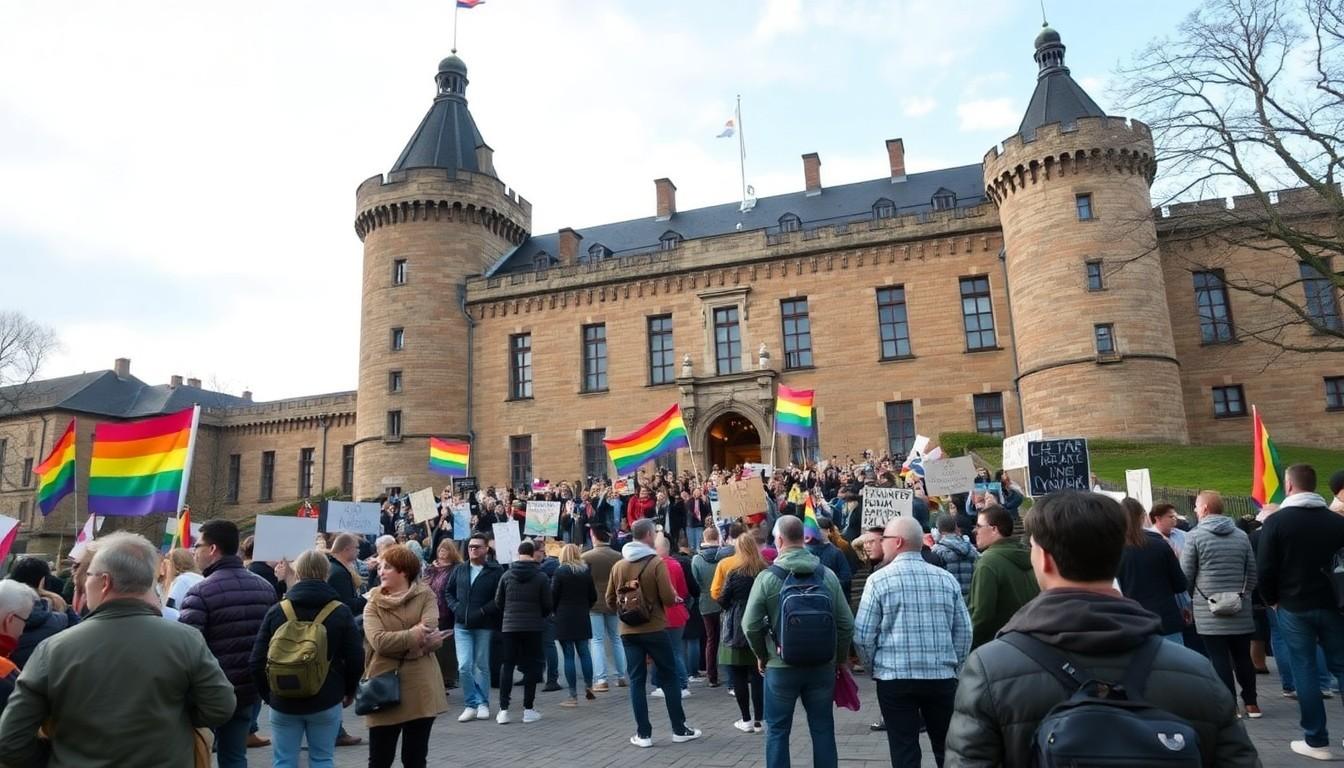
Shoppers and onlookers are watching as churches and a Christian counter-protest prepare to meet at Stockholm’s Pride, where questions of faith, safety and free speech are colliding , here’s what happened, why it matters and what both sides are saying ahead of the parade.
- Who’s involved: A Christian evangelical group called Guds Sanning has permission to hold a counter-demonstration near the Royal Palace while Kyrkorna på Pride and other church participants march past.
- Tone and impact: Organisers from Kyrkorna på Pride describe the counter-protest language as “bible-related violence” that feels psychologically hurtful; the counter-protesters say they’re calling people to repent and spread God’s love.
- Location detail: This year the parade route runs past the eastern shore of Gamla Stan; the counter-demonstration is set beneath the balustrade at Lejonbacken, about 100 metres from the march.
- Sensory note: Last year’s encounter was loud and confrontational, with megaphones, raised voices and a visible moment where a priest stood in prayer before the protestors.
- Practical point: Police permits and public order planning matter here , both sides have legal rights to be present, but the way messages are delivered affects who feels safe to attend.
A tense reunion by the palace , what happened last time
The clearest image from last year sticks in the mind: a preacher on a loudspeaker denouncing gay clergy while a priest stood before him and prayed, hands raised. That noisy, raw moment is part of why organisers on both sides are taking this year seriously. According to local reporting, the earlier encounter left some parade participants shaken and others determined to be visible anyway. For many who plan to march, the sensory environment , shouting, sound systems, the smell of crowded streets , shapes whether they feel welcome or wary.
Why organisers call it “bible-related violence”
Kyrkorna på Pride leaders say the language used by some counter-demonstrators causes real harm. They describe it as a form of psychological and verbal violence that can push people out of participating, or reopen past religious traumas. The point is not merely academic: if people feel unsafe walking down a route because of targeted shouting or labels, that changes who the parade represents. The criticism here is about tone as much as content , that the way religious conviction is voiced can wound communal trust.
The counter-protest perspective: love, truth or provocation?
Guds Sanning and its spokespeople argue they are obeying a Christian call to warn and to convert, comparing themselves to biblical prophets who went into cities with urgent messages. They maintain their intent is pastoral and loving, even if their words are sharp. That claim highlights a long-running tension in public religion: where is the line between prophetic urgency and public harm? For some onlookers, the answer depends on whether the audience hears compassion behind the words, or only condemnation.
Law, logistics and the public square
Permits matter. Swedish police authorised the counter-demonstration at a spot near Lejonbacken while the official Pride procession follows a route by Gamla Stan’s eastern shore. That physical separation , roughly 100 metres , is supposed to reduce clashes, but it can’t fully insulate people from hearing loud, confrontational speech. Event planners and police will be watching for hate speech or incitement, but also for the softer, cumulative effects of repeated, hostile messaging that make some attendees reluctant to take part.
What this means for participants and bystanders
If you’re marching, consider how visibility and safety feel for you: bring friends, stay in groups and flag concerns to marshals or police early. If you’re observing or curious, remember both sides feel they’re acting from conscience , but the impact differs. For faith communities, this moment is a reminder that public theology has to reckon with how words land in a diverse crowd. For Pride organisers, it’s about balancing openness with protection, so the parade can remain a place where people can celebrate without fear.
Looking ahead: can there be better dialogue?
There’s no simple fix, but there is space for reflection. When religious groups meet in public, tone and method matter as much as message. A future where conviction and compassion coexist would ask both sides to consider impact, not merely intent. For now, Stockholm’s Pride will be a test of how a city handles competing claims to moral speech on the same streets.
It’s a small change in approach that could make every march and counter-demonstration feel safer and more honest.
Source Reference Map
Story idea inspired by: [1]
Sources by paragraph: