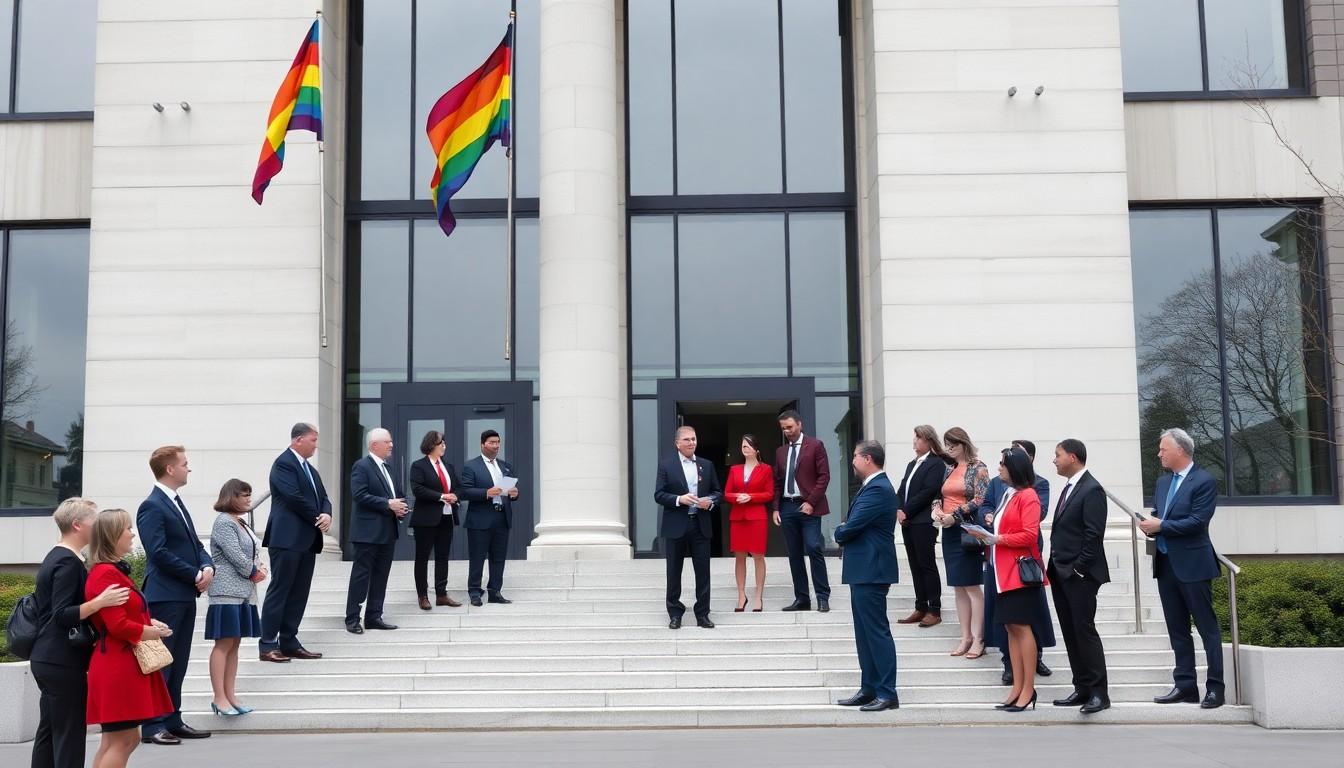
Shoppers of political change are turning their focus to the Grundgesetz as the SPD moves to enshrine a ban on discrimination for sexual and gender identity, saying it matters for safety, dignity and public funding of queer services across Germany. The proposal reignites debate about constitutional change and political responsibility.
Essential Takeaways
- Party initiative: The SPD leadership has announced plans to push for adding sexual and gender identity to Article 3 of the Grundgesetz.
- Safety and services: The move follows violence at a Christopher Street Day event and comes with warnings against cutting queer support and counselling services.
- Legislative reality: A constitutional amendment needs a two‑thirds majority in Bundestag and Bundesrat, so cross‑party buy‑in is essential.
- Broader backing: The Left has offered support for an amendment, while other parties and civil society actors have previously advocated similar protections.
- Practical impact: Enshrining protection would strengthen legal clarity, signal state recognition and could affect funding and anti‑discrimination practice.
Why the SPD wants this now , and what changed
The SPD says recent violence at a Christopher Street Day rally sharpened the urgency to protect queer people more explicitly, and the party’s leaders want the idea back on the political agenda. There's a raw, visible worry behind the statement , people are asking whether the constitution does enough to promise safety and equal standing. According to press coverage, the appeal is both symbolic and practical: adding sexual and gender identity would make unequal treatment plainly unconstitutional. For queer communities, it's not just wording; it's recognition that can influence courts and public institutions.
How Article 3 would be updated , and what it means in practice
Article 3 already lists protected characteristics like sex, origin and faith; the proposal is to name sexual and gender identity alongside them. Constitutional scholars and advocacy groups have argued for this for years, saying a clear mention removes ambiguity in discrimination cases and strengthens prevention measures. Practically, it could bolster claims in court, encourage inclusive policy across schools, workplaces and public services, and make it harder for funding cuts to be justified on indifferent grounds. If you work in counselling or run a queer organisation, that legal certainty could be a substantial defence against shrinking budgets.
Politics and numbers , why this needs cross‑party coalitions
Changing the Grundgesetz needs a two‑thirds majority in both Bundestag and Bundesrat, so SPD can't do it alone despite its announcement. The Left has signalled willingness to provide support, but the governing coalition itself lacks the necessary supermajority. That means the proposal will be a test of political will: can parties stitch together the votes, and will they attach the change to other bargaining items? For voters, this matters because constitutional amendments are rare and consequential; they require broad consensus rather than party punts.
Funding and services are part of the argument
SPD leaders warned that cuts to programmes for queer people would undermine the very protections they seek to enshrine. Advisers and drop‑in centres give tangible help , they’re where safety, legal advice and peer support intersect , and reductions in funding have put pressure on those services. The debate is therefore twofold: constitutional words and day‑to‑day resources. For campaigners, the message is simple , legal recognition without the services to enforce and support it rings hollow.
What activists and other parties say , a wider movement
This drive isn't new. Government queer representatives and Green and Left politicians have long called for constitutional protection for sexual and gender identity. Civil society groups see the SPD move as a welcome step that could finally align post‑1949 law with social reality. There's also a cultural angle: enshrining queer identity in the Grundgesetz would be a public statement about belonging, not just a legal tweak. Watch for negotiations, amendments and public consultations , this will be as much about language as about the commitments that follow.
It's a small but consequential push that could change how the constitution names and protects people , and how the state backs that promise in practice.
Source Reference Map
Story idea inspired by: [1]
Sources by paragraph: