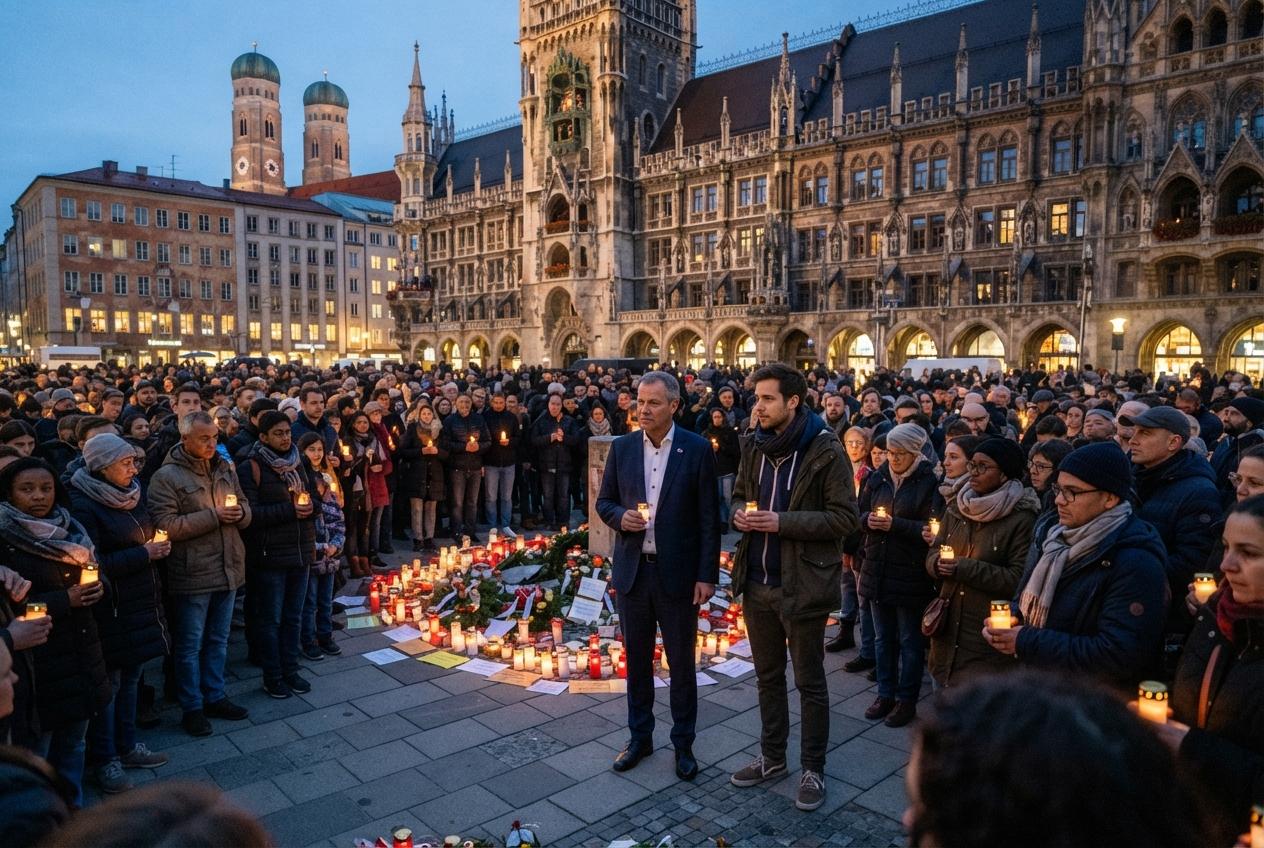
Shoppers and citizens turned out in force as Munich held a moving CSD vigil for Berlin , thousands gathered on Marienplatz to mourn, show solidarity and insist Pride remains essential for visibility and safety. Here’s what happened, who spoke up and why it matters for queer communities across Germany.
Essential Takeaways
- Mass turnout: About 4,000 people attended the Marienplatz vigil, creating a heavy, emotional atmosphere and visible solidarity.
- Personal connection: A Munich resident, Henry Frömmichen (27), had been at the Berlin parade shortly before the attack and described shock, heart-racing worry and relief.
- Safety visible: Police presence and bollards at the Munich vigil gave attendees a calmer, more secure feeling.
- Rising threats: Local figures point to growing queer‑phobic attacks in Bavaria, underlining why Pride events remain politically and personally important.
- Respect over politics: Some participants criticised the Berlin memorial for becoming politicised; Munich’s vigil was praised for keeping the focus on mourning and support.
Why thousands came to Marienplatz , a visible show of solidarity
People packed Marienplatz in a scene that was at once tender and determined, candles and flags against the summer evening sky. The turnout underlined how a single act of violence can ripple nationwide, prompting communities to gather and say, simply: we see you. The Munich mayor ordered rainbow flags for the town hall and organisers emphasised grieving over grandstanding. For many it was a way to stand with Berlin and to refuse silence.
One attendee’s close call , a personal story that brought the event home
Henry Frömmichen, a 27‑year‑old who now lives in Munich, had been at Berlin’s Christopher Street Day earlier the same weekend. He left the parade before the attack, then learned the vehicle had struck close to where he and friends had stood an hour earlier. He described a fast, unsettling rush of anxiety , “thoughts spinning, heart racing” , but also a firm decision not to stop attending Pride events. His account makes the threat feel immediate, not abstract, and explains why the vigil mattered on a human level.
Security, atmosphere and different approaches to mourning
Organisers in Munich set up bollards and police were clearly present, which many attendees said helped them feel safer. That contrasted with Henry’s impression of the Berlin memorial, where he felt the tone had shifted into political confrontation and even insults directed at police. For some, the Munich event struck the right balance: solemn, unified and focused on the victims rather than on factional arguments. It’s a reminder that how we gather matters , tone, safety measures and leadership shape the experience.
Why Pride still matters , beyond parties and floats
Attendees and local organisers stressed that CSDs are political and protective rituals as much as celebrations. Pride is visibility work: it affirms free, self‑determined lives and draws attention to people who are otherwise marginalised. Recent regional figures show a sharp rise in queer‑phobic attacks, reinforcing the point that marches and vigils aren’t optional nostalgia but ongoing civic defence. If anything, these events have grown more necessary in the face of rising hostility.
What to consider if you plan to attend future vigils or Pride events
If you’re heading to a march or memorial, think practical: check transport and meeting points beforehand, agree a buddy system, and note where police or organisers have set up safe zones. Emotional preparedness helps too , vigils can be intense, and it’s fine to step back if you need a breather. Finally, take cues from organisers about tone; respectful solidarity keeps the focus on survivors and victims.
It’s a small act to bring a candle or a flag, but together those small acts make a loud statement of protection and presence.
Source Reference Map
Story idea inspired by: [1]
Sources by paragraph: