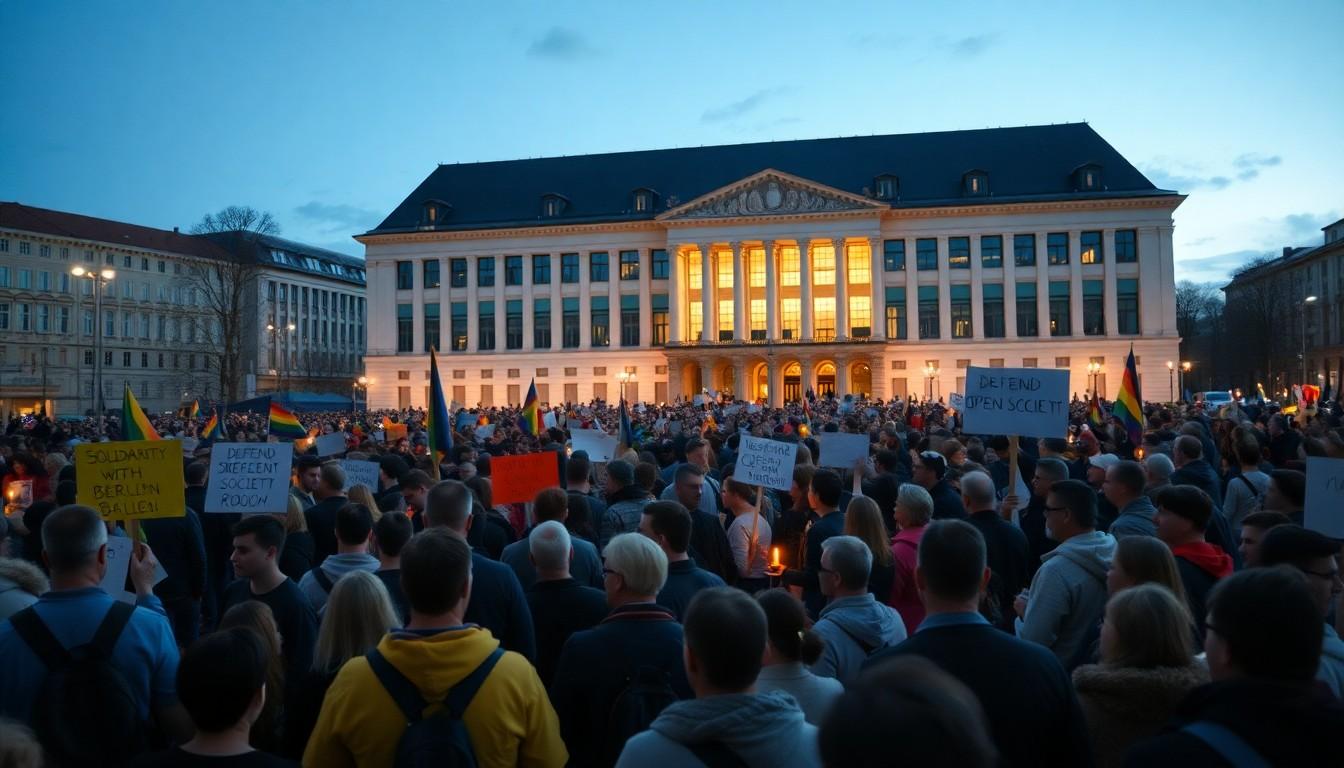
Shoppers and residents paused, but the heart of the city came alive with solidarity: around 4,000 people gathered in Munich to remember victims of the Berlin Christopher Street Day attack, raise rainbow flags and insist on defending an open, tolerant society. This mattered because public mourning became a statement against hate.
- Large turnout: Approximately 4,000 people attended the Munich vigil, organisers say, a figure that matched police estimates and gave the event real civic weight.
- Visible symbols: Rainbow flags were flown in front of the town hall, a calm but powerful visual of solidarity and protest.
- Local leadership: Munich’s mayor, Dominik Krause, publicly framed the attack as an assault on LGBTIQ+ rights and democratic values.
- Community response: Organisers and queer groups called the gathering a moment to grieve, support victims and reaffirm rights like sexual self-determination and the right to demonstrate.
- Quiet but resolute mood: Attendees described mourning and unity rather than spectacle , a sturdy, human response to violence.
Why Munich’s vigil mattered , a civic reply to an attack
Munich’s turnout was both emotional and deliberate; people wanted to be seen and to be counted. According to organisers, about 4,000 showed up on the Monday evening after the Berlin CSD was struck, matching police estimates and giving the gathering a seriousness that felt necessary. The crowd’s mood leaned quiet and supportive rather than performative, the sort of grief that hums rather than shouts.
The context is raw: the Berlin parade was cut short after a car ploughed into the crowd, leaving one person dead and dozens hurt. That night in Munich, the community’s response was to gather, lay witness and make a public stand. It’s a classic civic instinct , when one city is hurt, another shows up.
Rainbow flags and the message from the mayor
The municipal gesture was simple and visible. Munich’s mayor, Dominik Krause, ordered rainbow flags to fly in front of the Rathaus, turning a familiar civic façade into a banner of tolerance. It’s an image that travels easily: flags snapping in the breeze, a quiet town square lined with people.
Krause also penned a letter to Berlin’s mayor, calling the attack an assault on the LGBTIQ+ community and on democratic society itself. He highlighted the importance of defending rights such as sexual self-determination and the freedom to demonstrate. That kind of language helps frame a local vigil as part of a broader political and moral conversation.
How organisers and the queer community responded
Organisers made the event about mourning and solidarity. Alexander Kluge, who runs Munich’s CSD, urged that thoughts were with the injured, the bereaved and everyone who witnessed the attack. The tone was pragmatic and human: support the survivors, hold the space for grief, and stand with Berlin’s queer community.
This approach reflects a shift in how Pride-related events balance celebration and safety. After traumatic incidents, organisers increasingly prioritise remembrance and mutual aid alongside festivities , practical, respectful and community-focused.
What this means for public safety and public celebration
Events like CSD are both joyful and political; they depend on the right to assemble. The Munich vigil underlined that point , people came not just to mourn, but to insist the right to demonstrate remains protected. City leaders and activists are likely to push for clearer safety plans at large gatherings while resisting any knee-jerk curtailment of civil liberties.
If you’re attending Pride events now, practical tips matter: travel with friends, agree meeting points, keep mobile phones charged and note official event marshals. These small precautions let communities keep celebrating without giving fear the upper hand.
Looking ahead: resilience in public life
There’s a quiet bravery to turning out after something like this. Munich’s vigil was an act of collective refusal , to be intimidated, to let lives be narrowed by violence. As cities debate security, the public message was plain: grief and remembrance are part of democracy, and so is standing up for minority rights.
For many attendees, the gathering offered both comfort and conviction: mourning now, organising later. It’s the kind of civic response that stitches communities back together.
It's a small, public stand that says the city won’t be defined by fear.
Source Reference Map
Story idea inspired by: [1]
Sources by paragraph: