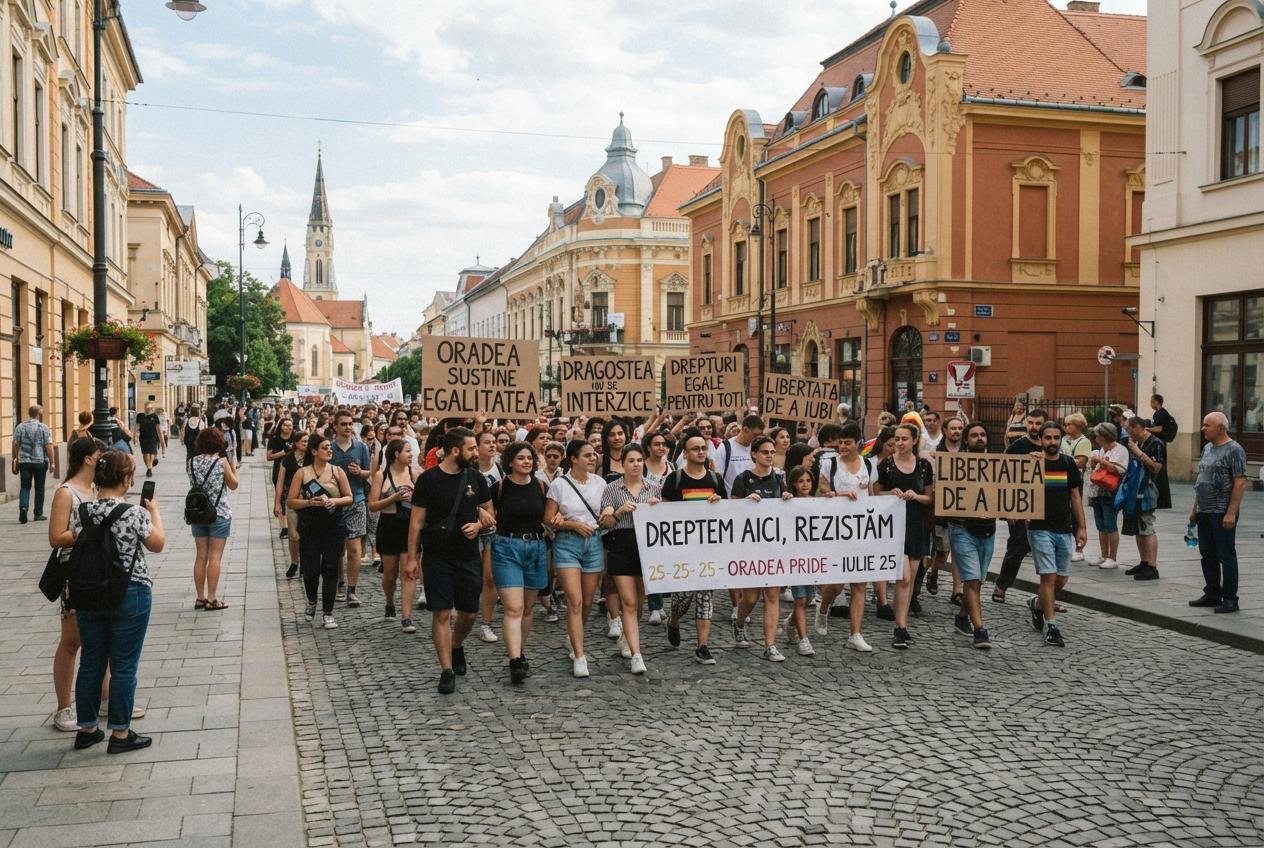
Shoppers and residents looked on as a handful of determined marchers walked through Oradea on 25 July , organisers from Ark Oradea held a Pride event despite municipal bans, fines and what they call thinly veiled discrimination, showing why visibility still matters for Romania’s LGBTQ+ community.
Essential Takeaways
- Defiant action: Ark Oradea went ahead with a Pride march on 25 July even though city hall has blocked Pride for four years.
- Administrative obstacles: Organisers say about 100 proposed routes were rejected for technical reasons, which they view as a way to prevent the event without saying so openly.
- Enforcement: Local authorities attended and issued fines to some participants, prompting offers of legal support from Ark Oradea and allies.
- Solidarity on the march: International and national groups, including IGLYO and Accept Romania, joined or pledged support, creating a cross‑border show of unity.
- Legal next steps: Local activists are preparing legal challenges and may escalate complaints to European courts over alleged systemic discrimination.
A quiet street, loud message: why Oradea’s march mattered
The strongest image from Oradea was understated: a short, peaceful procession with banners, a few chants, and people looking both resolute and wary. According to local reporting, organisers framed the action as both a protest and a necessary act of visibility. They wanted to show the city that LGBTQ+ residents are present and visible, even when official channels try to silence them.
The backstory is familiar by now. For four consecutive years the municipality has refused permits or closed off proposed routes on technical or scheduling grounds. Ark Oradea say those reasons mask an unwillingness to permit Pride, and many outside observers agree the pattern looks like indirect discrimination.
For anyone watching from elsewhere, it’s a reminder that Pride remains political in places where institutions use bureaucracy to curb expression. If you’re organising or attending a march, expect friction and plan for legal support in advance.
How the municipality blocked routes , and why organisers call it discriminatory
Organisers reportedly drew up roughly 100 different routes, only to see them turned down because they conflicted with other events or city plans. That tactic , citing logistics rather than stating an ideological objection , is a tactic activists know well.
Local and national outlets have quoted Ark Oradea leaders saying the city never explicitly banished Pride on anti‑LGBT grounds, but the practical effect is the same: repeated denial. Observers note this pattern can create a legal grey area that’s harder to challenge unless activists document the refusals and show the pattern of exclusion.
Practical tip: keep meticulous records of every permit request, rejection letter and correspondence. It helps build the case that refusals aren’t random but part of a systemic pattern.
Fines, solidarity and legal support , what happened at the march
Officials did attend the event and handed out fines to some participants, a development Ark Oradea immediately turned into a mobilisation point. They urged people who received sanctions to contact the group and said they , with partners such as Accept Romania , would help contest the penalties.
That combination of frontline bravery and backroom legal planning is crucial. As reports suggest, legal challenges are likely to follow, and activists are already talking about taking matters to European institutions if domestic remedies don’t work.
For people who worry about enforcement: bring legal contacts, note badge numbers if possible, and rely on official observers where available.
International reactions changed the tone of the debate
The reaction went beyond local headlines. Politicians and rights groups voiced criticism: the Vice‑President of the European Parliament publicly called the situation shameful, and international youth groups like IGLYO attended to show solidarity.
Those external voices matter. They turn a municipal dispute into a European issue about freedoms, and that can shift legal and diplomatic pressure. It also reassures local marchers that they’re not isolated , allies travelled from other parts of Romania and Europe to be present.
Outlook: international attention often speeds up legal reviews and amplifies civic pressure, so maintain those connections if you’re campaigning locally.
Why this fight feels like the original Pride , and what comes next
Participants and organisers framed the march as both a protest and a reaffirmation of history: Pride began as resistance, and in Oradea it’s still doing that work. Ark Oradea’s statement about writing history and claiming the city “for everyone” captured that sentiment.
Next steps are likely legal challenges and continued grassroots activities. Local media report that community groups are preparing court cases and that civil society will keep pressing on visibility, education and rights. It’s not just about a single march; it’s about changing how institutions respond to minority claims.
If you’re following this, look out for court filings and statements from European rights bodies , they’ll be the clues about whether this local stand will yield systemic change.
It's a small but firm stand that could shift how Oradea , and places like it , treat public demonstrations of identity.
Source Reference Map
Story idea inspired by: [1]
Sources by paragraph: