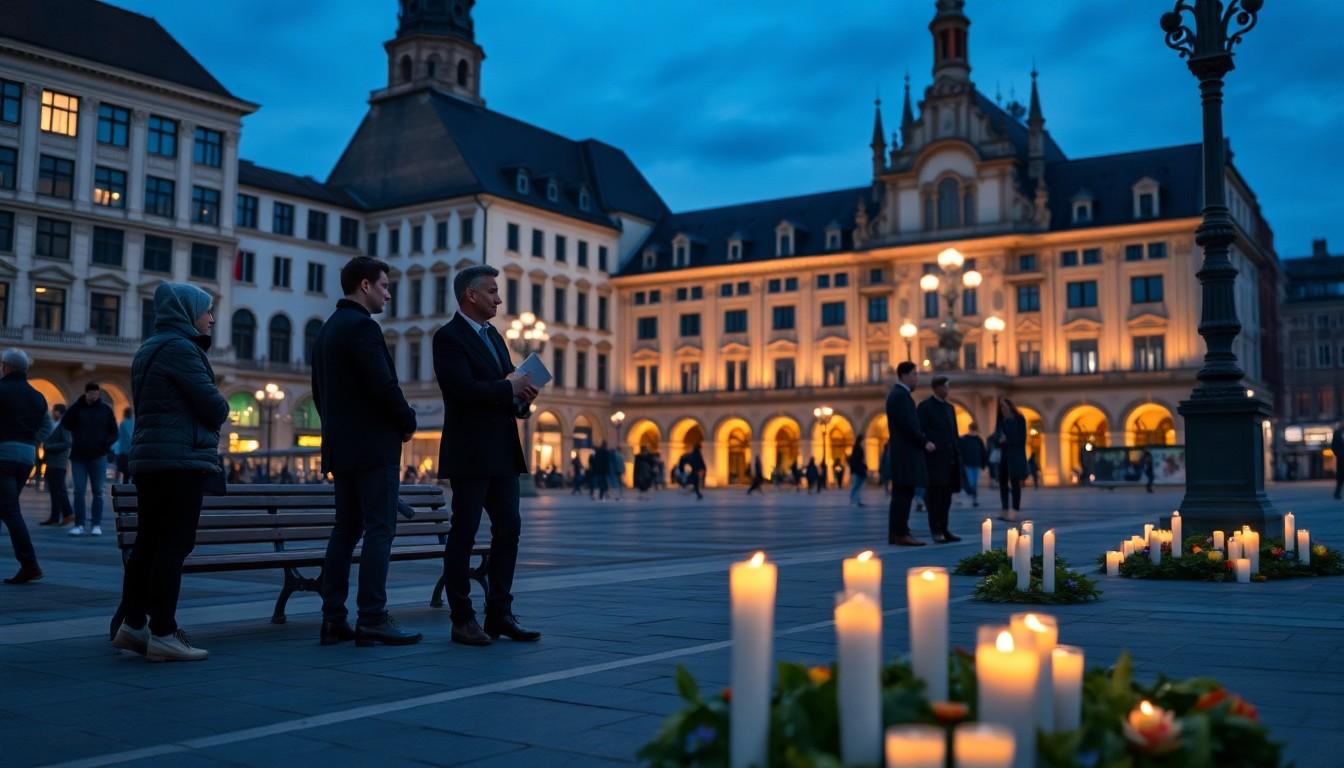
Shoppers and citizens are watching closely as Munich reacts to the deadly attack on Berlin’s Christopher Street Day; city leaders, organisers and faith figures have signalled solidarity, tightened safety plans and called for public vigour to protect queer rights. Here’s what’s happening, why it matters and what people in Munich can expect.
Essential Takeaways
- Immediate solidarity: Munich’s mayor ordered rainbow flags at Marienplatz and a public vigil to honour victims and show support.
- Organisers on alert: CSD teams say they’ve been increasing security measures for years and continue to coordinate closely with police.
- Community mood: People in Munich feel the attack personally , it has sharpened fears but also resolve to stay visible.
- Religious debate reignited: Local faith leaders criticised misuse of religion to justify hatred and urged theological accountability.
- Practical steps: The city is reviewing likely scenarios and reinforcing plans to reduce harm at large public events.
Munich’s symbolic reply: flags, vigils and a visible stand
Munich’s mayor moved quickly, ordering rainbow flags at the town hall and scheduling a Marienplatz vigil to honour victims and support affected communities. The image of the Rathaus lit by those colours is meant to be loud and simple , a civic refusal to be cowed. Organisers say symbols matter because they signal protection and recognition when people feel vulnerable.
Officials have also published letters and statements of condolence, and the memorial will include a public board where citizens can pin messages; those notes will even be sent on to Berlin. That gesture shows how cities now treat such attacks as shared trauma, not isolated incidents.
How prepared is Munich’s CSD? Stronger security, but never perfect
CSD organisers in Munich say they’ve been tightening security for several years, working hand in glove with police and safety authorities. They stress there are measures for the scenarios they deem likely , bag checks, stewards, medical posts and liaison officers , yet admit you can never prepare for every eventuality.
Practical advice for attendees: pick clear meeting points, note emergency exits and avoid travelling alone late at night. If you’re organising a march, coordinate early with police so contingency plans are concrete, not theoretical.
Community reaction: fear, grief and determination
People in Munich describe a mixture of shock and a renewed determination to be visible. “Berlin is not 600 kilometres away,” one organiser told local media , meaning attacks in one city reverberate nationally. That sense of solidarity fuels turnout for vigils and keeps CSD events from shrinking in response to threats.
At the same time, organisers say the fear is real. That’s why public messaging balances mourning with encouragement: keep showing up, but do it informed and prepared.
Faith leaders speak up , and stir a necessary debate
A Catholic priest in Munich publicly condemned the attack and denounced the use of religion to justify hatred, calling on both Christian and Muslim communities to reject queer-phobic teachings. His comments underline how the conversation has moved beyond policing and protest; it now probes the cultural sources of hostility.
Expect more public debate and calls for religious institutions to clarify their positions. For many in the queer community, this is less about blasphemy and more about accountability: if religion influences discrimination, it must also be part of the solution.
What this means going forward: practical steps and political pressure
City officials stress that protecting demonstrations and minority rights is an ongoing duty. The attack has prompted a review of event safety planning and a public pledge to defend democratic freedoms like sexual self-determination and the right to demonstrate.
For citizens, that translates into small but concrete actions: attend vigils, support local queer organisations, volunteer for stewarding, and press local politicians to fund visible safety measures. These are the kind of civic habits that can make public life both safer and stronger.
It's a small change that can make every march and every vigil a clearer statement: visibility will not be silenced.
Source Reference Map
Story idea inspired by: [1]
Sources by paragraph: