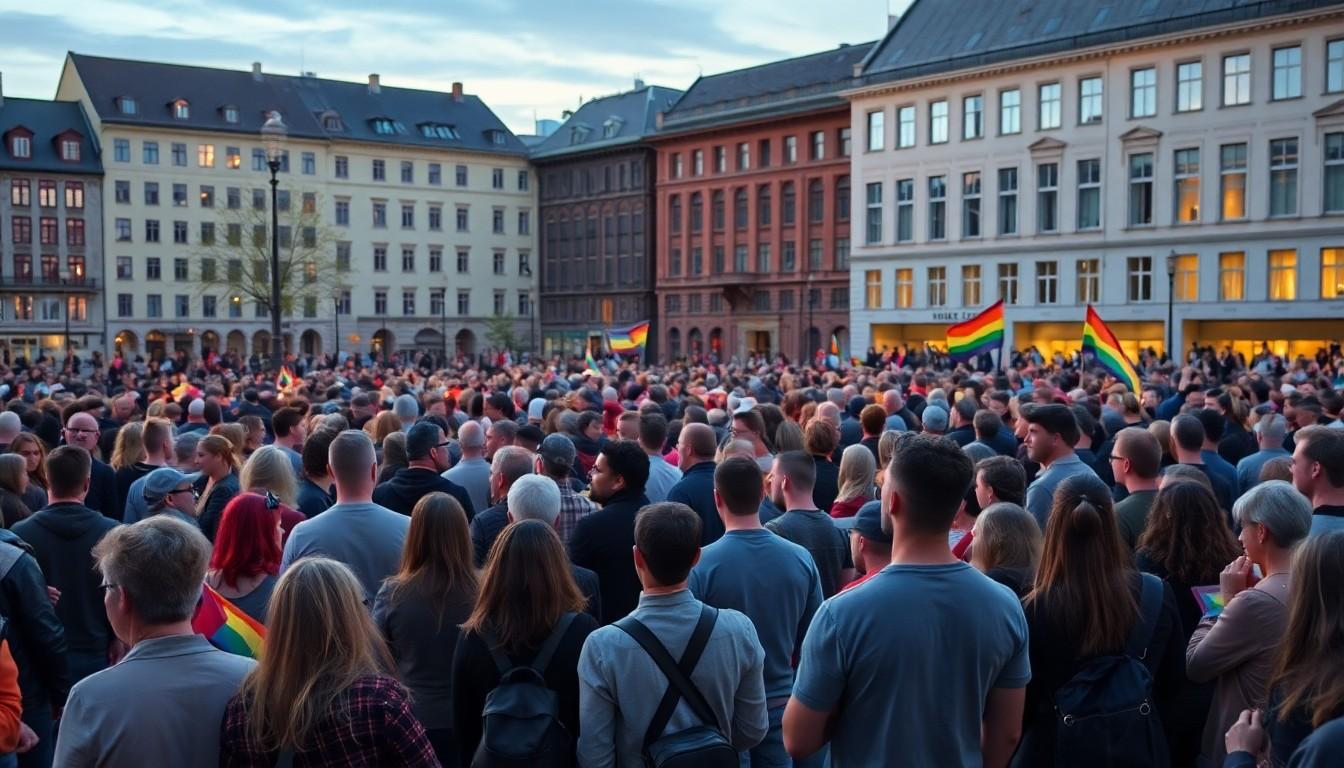
Shoppers, neighbours and activists gathered in cities across Germany after the deadly attack at Berlin’s Christopher Street Day, reminding us that grief and solidarity travel far beyond one square. Around 250 people met on Frankfurt’s Paulsplatz to mourn, speak out and demand clearer political action , a slow, public reminder that safety and recognition still matter.
Essential Takeaways
- Local turnout: About 250 people attended the Frankfurt Paulsplatz vigil called by the Greens and CSD Frankfurt e.V., with roughly 500 joining a separate Römerberg event the same weekend.
- Mood: The crowd mixed sorrow and anger , people described feeling powerless, determined, and relieved to stand together.
- Focus: Speakers and attendees pushed back on reducing Pride to a “party,” stressing CSD’s roots as protest and demonstration.
- Safety concerns: The incident in Berlin sharpened anxieties, participants said “it could have happened here,” underlining a demand for clearer protection for queer communities.
- Calls to action: Demonstrators want political clarity and courage, not euphemisms , they expect policies that name threats and protect vulnerable groups.
Why Frankfurt’s Paulsplatz mattered that night
The image of people lighting candles on Paulsplatz felt quiet and very human, a soft counterpoint to the shock that rocked Berlin. According to local reports, the event was organised by the Frankfurt Greens and CSD Frankfurt e.V., and about 250 people answered the call. Many attendees said they’d come simply to be present , to witness grief and refuse silence.
This kind of mobilisation shows how a single violent act ripples. People who’d marched at their city CSD the week before turned up to show the community isn’t alone. For anyone organising or attending similar events, pick a visible public space, keep the tone respectful and give people ways to contribute , speaking slots, candles, or quiet minutes.
From “party” to protest: why language still matters
There’s a stubborn frustration among attendees that CSD is too often framed as a festival rather than a political demonstration. One woman at the vigil pointed out she had marched in Frankfurt’s CSD with her daughter on 18 June and wanted to correct that narrative: these are acts of protest and visibility.
That semantic shift isn’t just about semantics. Calling CSD a protest highlights its roots in demanding rights and safety. For campaigners and politicians, the practical tip is simple: name it for what it is in speeches and policy, because words shape how seriously risks are taken.
How people in the crowd expressed fear and resolve
Statements people made at the vigil were blunt , “I was powerless,” said one participant , and they were angry, too. Others voiced the basic, chilling thought: “It could have happened here.” That mix of vulnerability and fury pushed the evening beyond mourning into a call for action.
If you’re supporting someone shaken by such events, listen first, offer concrete ways to help , show up to vigils, donate to legal or support funds, or volunteer with local queer organisations. Community presence turns anxiety into collective strength.
What demonstrators want from politics now
Anger at politicians was palpable. Attendees demanded “clarity and courage” , not soft statements that reduce complex threats to simple facts. They want honest public debate that names homophobia, transphobia and targeted violence, and they want visible measures to protect public events.
Practical expectations are straightforward: better event security planning, transparent communication from authorities, and policies that address hate-driven violence specifically. Officials who respond with clear steps and timelines will find communities more reassured than those who offer only condolences.
A cautious, hopeful outlook
Amid the grief, people at Paulsplatz found comfort in numbers , the sight of strangers standing shoulder to shoulder felt like an antidote to isolation. Similar vigils in other cities, and a larger gathering near the Brandenburg Gate, underscore how national the response has been.
That communal presence matters. It keeps the victims’ memories alive, it pressures decision-makers, and it reminds everyone that public solidarity can be an act of defence as well as remembrance.
It's a small change that can make every public gathering a little safer and a little more honest.
Source Reference Map
Story idea inspired by: [1]
Sources by paragraph: