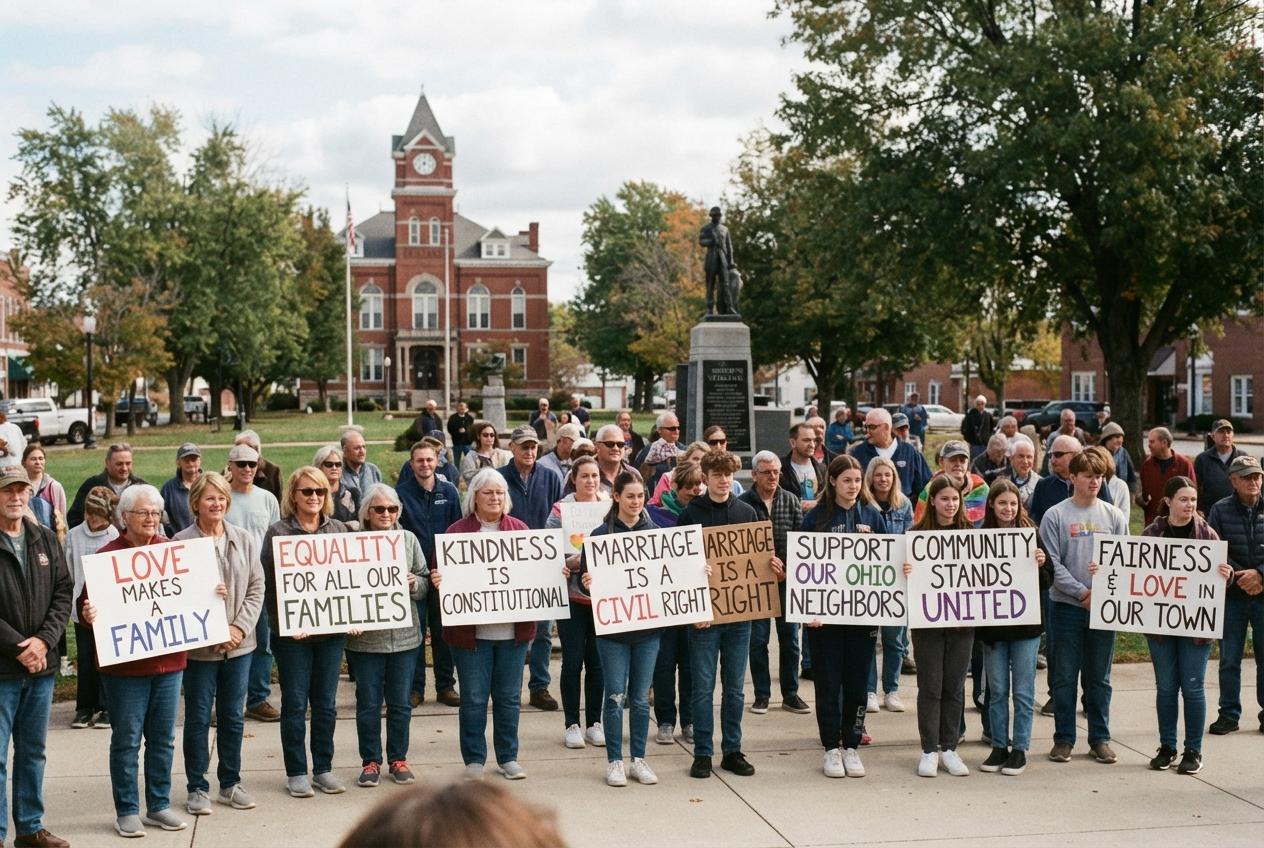
Shocked residents are pushing back: communities across rural Ohio answered a string of anti-LGBTQ+ billboards with rallies, counter-billboards and fundraising, showing how grassroots organising, local nonprofits and everyday neighbours can reclaim public space and support diverse families.
Essential Takeaways
- Immediate backlash: Local residents and groups mobilised after billboards appeared saying “No child has two dads. No child has two moms,” quickly going viral.
- Community solidarity: Have a Gay Day, Lima Pride Alliance and Equality Ohio organised counter-messaging, rallies and a successful fundraiser.
- Emotional impact: The ads were experienced as erasing many family types, prompting personal testimony from affected residents.
- Campaign origins: The billboards were funded by Them Before Us, an organisation known for opposing marriage equality, IVF and no-fault divorce.
- Practical outcome: Grassroots donations funded pro-LGBTQ+ billboard space and public demonstrations supporting all families.
How a few stark billboards lit a big local fight
The images of the billboards landed like a cold gust , blunt messaging, quiet roads, and immediate outrage. A Northwest Ohio resident posting a photo on Facebook made the visuals spread fast, turning a regional placement into a national talking point. People reported feeling the ads as an attack not only on same-sex parents but on families that don’t fit a narrow mould, and that emotional sting fuelled action. For anyone confronting a similar local campaign, swift documentation and sharing on social media can make a private frustration public and spark support.
Neighbour-led resistance: rallies, signs and counter-billboards
Within days, local groups had organised rallies and pro-family signage, asking people to bring positive messages and love. A small nonprofit, Have a Gay Day, bought its own billboard space and launched a fundraiser that drew significant contributions, showing how collective micro-donations can flip the script. If you’re part of a community facing hostile messaging, pooling resources for visibility , whether a billboard, a parade, or organised vigils , signals that the town has many voices, not just the loudest paid campaign.
Why the messaging felt broader than LGBTQ+ issues
Community leaders and parents pointed out that the billboards erased children from blended families, foster care, divorced households and other common arrangements. That framing helps explain why the response came from a wide range of people, not only queer activists. When confronting campaigns that claim to defend a “traditional” family, highlight shared experiences: teachers, faith leaders and foster carers can all show that family life is varied and human. That broader coalition-building often wins hearts in small towns.
Who put the billboards up , and what they want
The group behind the placements, Them Before Us, has a track record of opposing same-sex marriage, IVF and no-fault divorce, and is connected to a larger effort seeking to challenge marriage equality at the Supreme Court. Knowing the funder’s aims matters: it’s not just one billboard but part of a strategy. Reporting the sponsor, researching their goals and making that context public helps voters and local officials see beyond the surface message and respond more strategically.
Practical tips for communities facing similar campaigns
Document everything: photos, times and geolocation help if you want to contest placement rules. Mobilise allies: schools, faith groups and local businesses lend credibility and reach. Consider counter-advertising: a single positive billboard or a robust social-media fundraiser often outweighs repeated negative messages. And keep it personal: first-person stories from residents , brief, calm, human , cut through political noise and change minds more effectively than slogans.
It's a small change that can make every public message a little less lonely and a lot more truthful.
Source Reference Map
Story idea inspired by: [1]
Sources by paragraph:
- Paragraph 1: ,
- Paragraph 2: ,
- Paragraph 3: ,
- Paragraph 4: ,
- Paragraph 5: ,