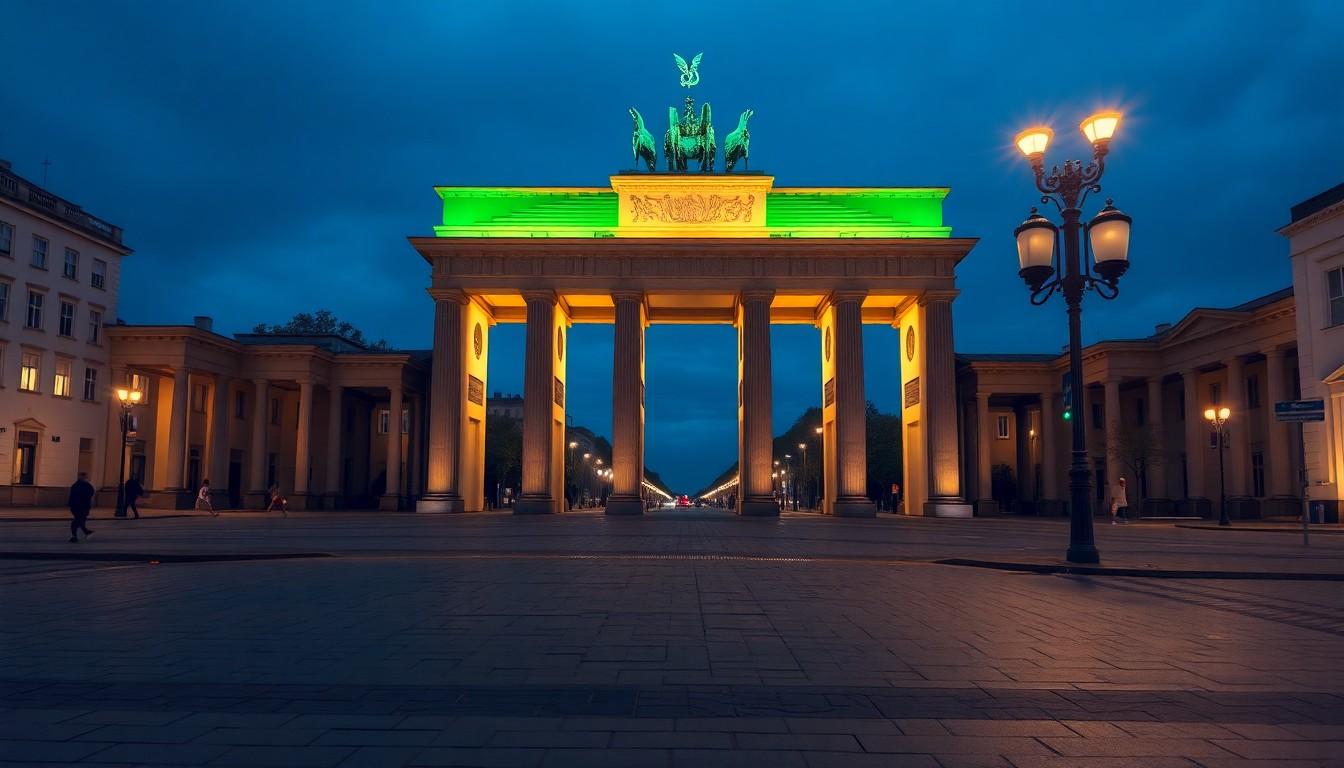
Shoppers and onlookers in central Berlin saw a striking response after the deadly attack at Berlin Pride , the Brandenburg Gate was illuminated in rainbow colours as a symbol of solidarity, tolerance and defiance, signalling support for victims and the wider LGBT+ community.
Essential Takeaways
- Visible solidarity: The Brandenburg Gate was bathed in rainbow colours from sunset, creating a calm, solemn visual that many found moving.
- Casualties reported: Authorities say one woman was killed and 29 people injured in the attack; by afternoon none of the wounded were in life‑threatening condition.
- Police action: A 21‑year‑old suspect was shot dead by police during an operation in Spandau and is believed to have Islamist links.
- Community reaction: Mourners laid flowers and lit candles near the Pride site, while city leaders and organisations publicly expressed support.
- Practical note: Landmark lighting is a quick, public show of unity , it’s symbolic, immediate, and speaks louder than words for many.
A powerful visual , why the Gate was lit in rainbow light
The sight of the Brandenburg Gate glowing in rainbow hues felt quietly defiant, a soft but unmistakable stand against violence, and a nod to the victims and the LGBT+ community. According to Reuters and local reporting, the projection began at sunset and drew people to the Mitte district, creating an unpretentious vigil under the stones of an iconic monument. Lighting a landmark is an easy, low‑risk way for a city to send a visible message, and in this case it read as both mourning and solidarity.
The immediate facts , what happened at the Pride event
Officials reported a vehicle and knife attack during an event on the outskirts of Berlin Pride that left one woman dead and 29 injured. Police told the press that by the following afternoon none of the injured remained in critical condition. The city moved quickly to provide factual updates while mourners gathered at the scene, laying flowers and lighting candles in a familiar, human way to process shock and grief.
Police response and the suspect’s background
Berlin police said a 21‑year‑old man was shot during an operation in the Spandau area and later died; investigators consider him linked to Islamist circles. The swift police action underlines how rapidly events developed and how authorities prioritised neutralising an immediate threat. It also raises questions about motives, radicalisation and how security is balanced with civil liberties , issues reporters and officials will keep exploring.
Why landmark lightings matter , more than optics
Lighting monuments like the Brandenburg Gate is short, sharp and symbolic: it’s a public ritual that says a city stands by victims without requiring long speeches. Past examples , from displays for international tragedies to solidarity with other nations , show how the move can comfort communities and focus attention. For those wondering how to respond personally, attending a vigil, donating to victim support funds, or checking in with friends in affected groups are tangible, practical steps.
What Berliners and visitors did next
In the hours after the attack and the lighting, people gathered to mourn and to show visible support. City officials and civic groups affirmed that Berlin stands by its LGBT+ community, and locals used social media to share images of the Gate’s soft glow. The scene combined the quiet ritual of remembrance with the hum of a city refusing to be cowed.
It's a small change that can make every show of solidarity feel more connected.
Source Reference Map
Story idea inspired by: [1]
Sources by paragraph: