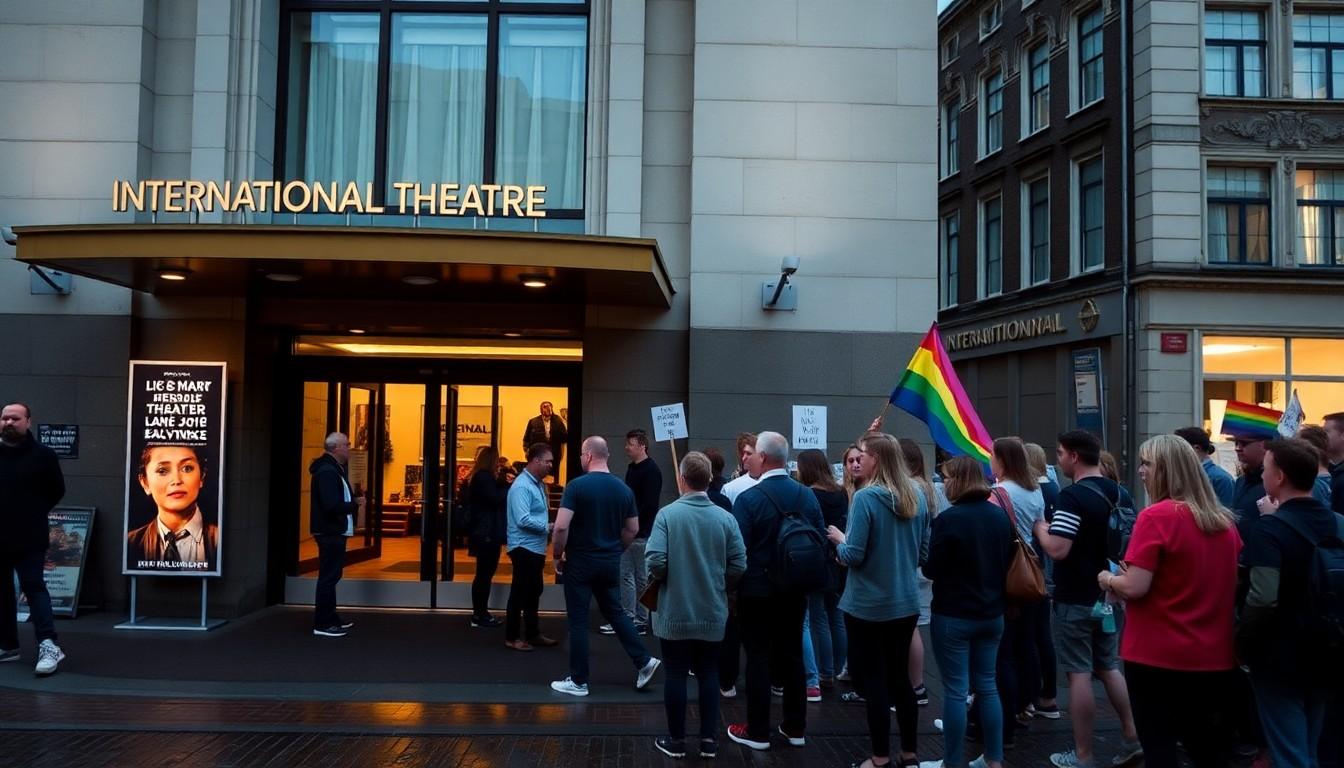
Shoppers of culture and queer audiences are leaning in: Wachten op Marsha, staged in Amsterdam, recasts Pride as protest and asks why celebration alone no longer feels enough. Director Raymi Sambo’s unapologetic, intercultural production looks to Marsha P. Johnson and today’s streets to restart a conversation about visibility, safety and collective action.
Essential Takeaways
- Strong premise: Wachten op Marsha stages a fictional WorldPride protest to spotlight rising violence and shrinking space for queer people.
- Personal stakes: Director Raymi Sambo draws on his experience as a Black, queer actor in the Netherlands to shape the show’s voice and anger.
- Mixed cast of voices: Characters represent competing strands of queer activism, festive Pride versus direct-action protest, creating dramatic friction.
- Sound and feel: Rehearsals are charged and physical; the piece leans on raw emotion rather than tidy answers.
- Practical note: The production runs 28–31 July at Internationaal Theater Amsterdam (ITA).
A protest-piece with a pulse
Wachten op Marsha opens with a collective shout that still hangs in the rehearsal-room air, a sensory jolt that promises a loud, present show. Raymi Sambo places actors around the floor so their voices ricochet off the walls, and you can almost feel the echo onstage before you see it. According to Parool, Sambo wants the audience to leave with their indignation stoked, not soothed.
The piece grew from Sambo’s frustration with narrow representation and his wish to tell stories where everyone plays a part. He says he never had queer role models who felt like him, and that informed a production which refuses caricature and leans into real, sometimes uncomfortable textures.
Why Marsha P. Johnson matters now
The title nods to Marsha P. Johnson, the Stonewall-era activist whose life has become shorthand for fierce, frontline queer resistance. Sambo pairs that legacy with the futility of waiting, riffing on Waiting for Godot to argue that passivity won’t deliver change. It’s a neat, political mash-up: history as instruction, theatre as rallying cry.
Sambo deliberately links 1969’s revolt to today’s uneven freedoms. He contends the Netherlands once relaxed into its gay-capital reputation and that a new kind of fight, call it a second revolution, is overdue if queer people are to reclaim equal space.
Characters, clashes and the messy middle ground
Rather than a single viewpoint, the play stages a small civil-war of tactics: pacifist Marvan stands for the parade-and-party tradition, while activist Glennis pushes for escalation. Sambo borrowed these tensions from debates around Amsterdam Pride and Queer Amsterdam, the more protest-minded organisation that formed in recent years.
That friction is the show’s engine. Sambo wants audiences to recognise themselves in the quarrels, not to point fingers. The point isn’t which side is right, he says, but how disunity weakens a community that still faces threats.
Theatre as response to real-world hostility
Sambo doesn’t speak only from theory. He recently experienced harassment on the street and turned that moment into an act of boundary-setting: confronting the parents of the boy who led the abuse. The anecdote underscores the production’s insistence that visibility means safety only if backed by refusal to be small.
Onstage, the activists echo that refusal. The drama imagines an Extinction Rebellion-style group pushing to change the social order; offstage, Sambo hopes the piece will rekindle militancy, or at least a sharper conversation about what queer public life should look and feel like.
What to expect and why you should care
If you go, expect a show that’s loud, deliberate and a touch unruly. The direction foregrounds emotion, anger, fear, stubborn pride, over neat solutions, and the repertory cast works to make those feelings tangible. Parool reports the production aims to bring together intercultural and queer perspectives that too often have been sidelined.
For audiences, Wachten op Marsha is less a lecture and more a mirror: it asks you where you stand and whether celebration without protest is enough. And for anyone fatigued by token inclusion, it’s a reminder that theatre can still be a place to agitate.
It's a small theatrical shock that might just reignite a bigger conversation.
Source Reference Map
Story idea inspired by: [1]
Sources by paragraph: