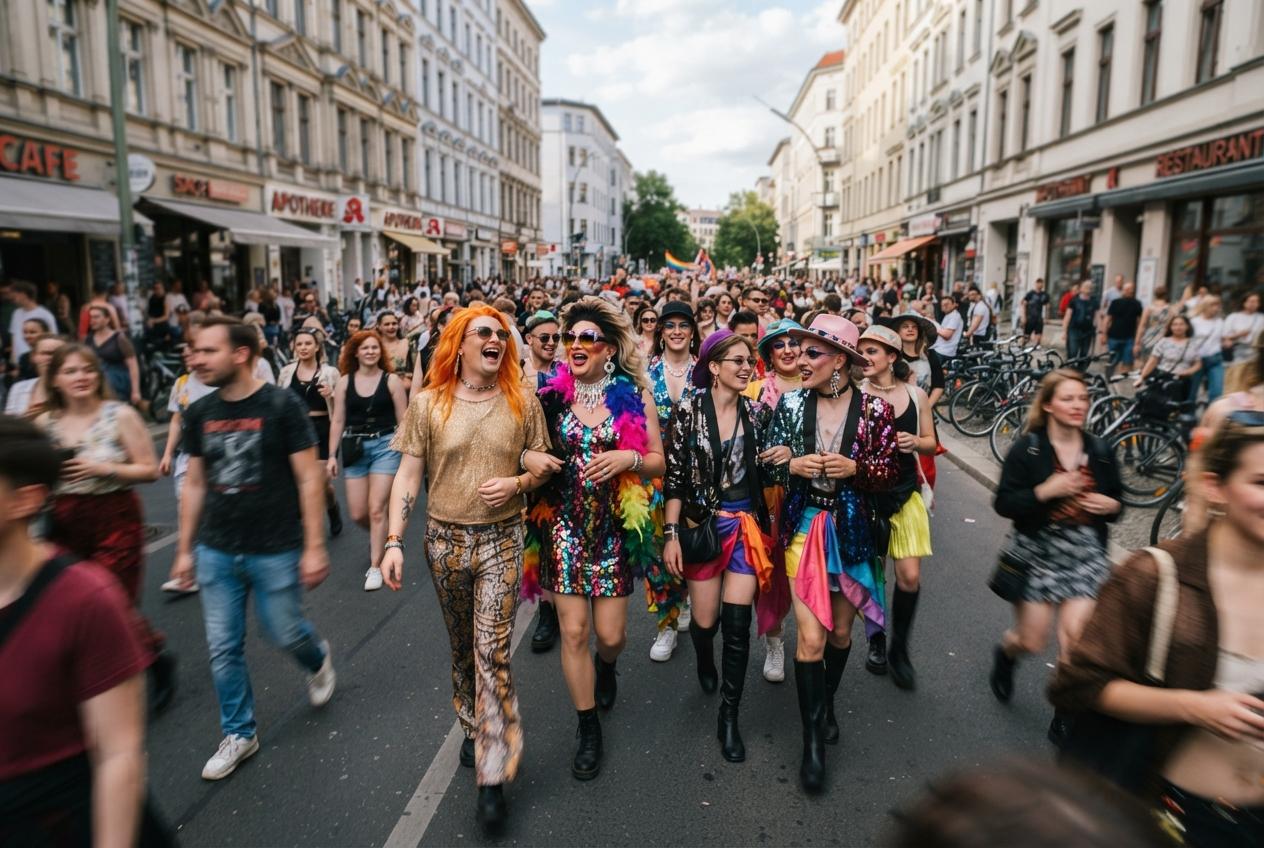
Shimmering, defiant and joyfully loud, Berlin's first drag march transformed what began as a protest into a glittering celebration , and it matters because public protest is changing into performance, drawing wider crowds and fresh visibility for LGBTQ+ causes across Europe.
Essential Takeaways
- Bold turnout: Thousands joined a colourful march in Berlin, combining protest energy with parade spectacle.
- Visual impact: Floats, sequins and theatrical makeup made the cause unmistakable and eye-catching.
- Message with joy: Organisers fused demands for rights and safety with celebratory tactics to broaden appeal.
- Local context: The event tapped into Germany's history of street protest and current debates over queer rights.
- Practical note: Marches like this are as much about visibility and community as about policy pressure.
Why this march felt different , spectacle meets politics
The opening scene was theatrical: wigs, glitter, booming music and placards that didn't look like your usual protest signs. That sharp contrast made the march impossible to ignore on the streets of Berlin. Organisers deliberately blended performance with politics to reach people who might otherwise scroll past a conventional demonstration.
Berlin has a long tradition of visible, creative protest, and this event built on that. According to local coverage, participants wanted to reclaim public space with joy as a tactic, not a distraction. For anyone thinking about staging or supporting activism, this is a reminder that aesthetics can be strategic: make it compelling and people will stop, watch and talk.
How organisers balanced safety and spectacle
Putting on a march that’s both a party and a protest requires careful planning. Stewards, clear routes and liaison with police helped keep the procession moving while maintaining a celebratory feel. That practical groundwork allowed floats and costumes to shine without letting chaos take over.
Organisers told reporters they focused on accessibility and safety for vulnerable participants. If you’re planning to attend similar events, dress brightly, bring water, and know the meeting and exit points , having a small plan makes the fun sustainable and safe for everyone.
What this says about the shifting tactics of activism
Turning a protest into a parade is more than a clever PR move; it's a tactical shift. By using drag and performance, campaigns tap into cultural spaces , nightlife, fashion, theatre , that reach non-traditional allies. Reuters-style reporting and local outlets highlight that this approach can soften barriers, inviting families and curious passers-by into conversations about queer rights.
At the same time, the message stays firm: visibility can be joyful without losing its seriousness. Framing demand for rights in a celebratory context can keep momentum while broadening the base of support.
The wider ripple effects across Europe and beyond
Events like Berlin’s drag march are already being noticed in other cities. Activists elsewhere may borrow the mix of spectacle and policy focus to revive local movements. Coverage suggests these marches help steer public attention toward issues like safety, legal protections and social acceptance.
It’s also worth noting the cultural economy at play , photographers, performers and small businesses benefit when such events draw crowds. So the ripple is both political and practical, supporting communities in multiple ways.
How to watch, support or take part responsibly
If you want to join a drag march or similar event, do a little homework. Check organisers’ guidance for meeting points, accessibility info and safety instructions. Bring essentials , water, a mask if needed, sun protection or a warm layer , and respect photographers and fellow marchers.
You can support from home too: amplify messages on social media, donate to local groups, or volunteer with logistics. Joy on the streets is powerful, but the longer fight for rights often happens behind the scenes.
It's a small change in tactic with a big human effect: protest that looks like a party can open ears and hearts.
Source Reference Map
Story idea inspired by: [1]
Sources by paragraph:
- Paragraph 1: ,
- Paragraph 2: ,
- Paragraph 3: ,
- Paragraph 4: ,
- Paragraph 5: ,