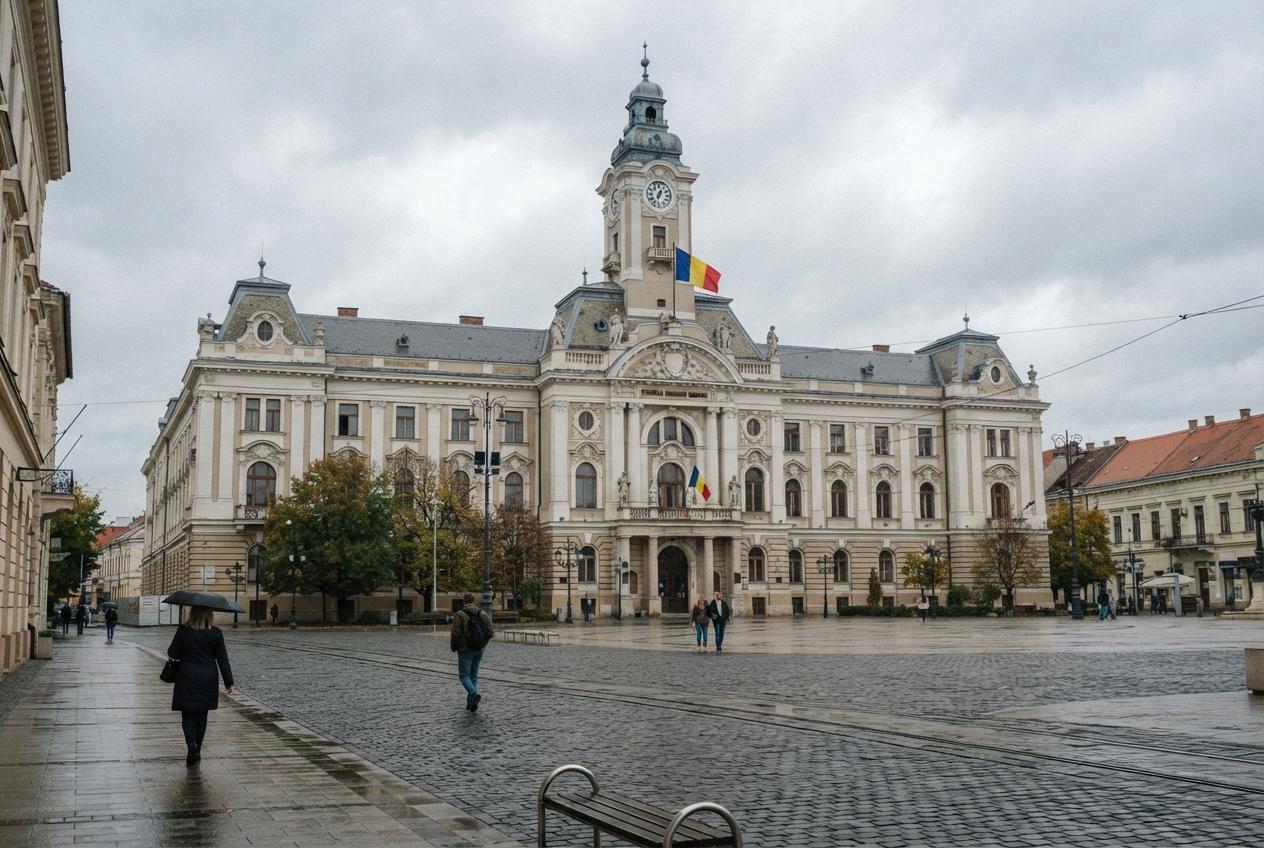
Shoppers and churchgoers in Oradea watched a weekend that split the city into uneasy camps: hundreds defied a municipal ban to march for LGBTQ+ rights, while many locals said the event clashed with their sense of decency and the town’s religious character. Here’s what happened, why it matters, and what it reveals about democracy and identity in Romania’s “Little Vienna.”
Essential Takeaways
- What happened: Hundreds marched in Oradea despite a repeated municipal ban on Pride, drawing national and international attention and tense local debate.
- Local mood: Many residents expressed discomfort rather than outright hostility , describing the march as “too much exposure” or contrary to traditional morals, while some voiced solidarity or alarm at restrictions.
- Religious influence: Oradea’s strong network of churches helps explain why many locals resist public Pride events; clergy and faith leaders framed concerns around “bunele moravuri.”
- Rights vs regulation: Critics and allies called the ban an infringement on the right to assemble, while the city defended its decision on grounds of public decency and order.
- Broader stakes: The episode feeds worries about democratic backsliding and how EU values play out in smaller cities built with European funding and aspirations.
A banned march, a city turned spectator
The most striking image from the weekend was people on both sides lingering near churches, markets and the town hall, watching what they called an extraordinary scene in an otherwise “elegant” city. According to reporting from national outlets and eyewitness accounts, several hundred people still marched even after the municipality rejected proposed routes, citing “good morals” as a reason to refuse permits. The visual contrast , hymn books and rosaries on one side, banners and rainbow flags on the other , made the debate feel intensely local and immediately human.
Historically, Oradea’s religious institutions have played a big part in shaping social norms, and that’s clear in how many residents framed their objections. For plenty of locals the issue isn’t violent disdain, it’s a discomfort at what they see as public spectacle. For others, the ban has crossed a line, signalling a municipal willingness to curtail basic civic freedoms.
Why “bunele moravuri” became the legal argument
City officials repeatedly used the phrase “bunele moravuri” , roughly “good morals” , when refusing dozens of route applications for Pride, a move that has been challenged by activists as selective enforcement. Local reporting shows the mayor and administration offered the rationale without a clear, consistent legal explanation, leaving critics to ask whether decency rules are being used to mask political or cultural pressure.
Legal experts and civil rights advocates point out that restricting public assembly on vague moral grounds risks clashing with constitutional protections. Meanwhile, supporters of the ban argue the municipality is exercising its duty to keep public spaces aligned with local standards. The row exposes a wider legal tug-of-war: how do towns square community norms with the binding rights guaranteed by national law and European standards?
Voices on the street: nuance, worry and solidarity
Interviews with residents captured a spectrum of reactions. Some people were bluntly opposed, describing Pride as something that doesn’t belong in their town square; others were quietly tolerant, saying people should live as they choose but prefer such displays to be private. A number of younger attendees, ex-residents and allies framed the march as an exercise in civil rights , and as a rebuke to what they see as persistent discrimination at home.
That mixture is important. It shows this is not a binary fight between “good” and “bad” people, but a city wrestling with fast cultural change. For some, resistance is rooted in faith and tradition; for others, frustration is political , the feeling that local institutions are out of step with their own European-facing aspirations.
International spotlight and talk of democratic backsliding
When foreign media reported on the ban and the defiant march, they framed Oradea as one of the few major EU cities where municipal authorities repeatedly blocked Pride routes. That international attention raised the stakes: criticisms of the ban quickly drew language about democratic backsliding and the erosion of civic liberties. Activists used that framing to press for clearer protections for assembly and non-discrimination, arguing that local decisions reverberate beyond town limits.
At the same time, municipal leaders say they’re responding to constituents who expect respect for local customs. The tension underlines a broader European conversation: how to reconcile local identity and religious traditions with human rights frameworks embraced at national and supranational levels.
What this means for residents and future events
For organisers and participants, the weekend underlined a few practical realities. First, always expect legal pushback and plan alternative strategies , permits, legal counsel and public communications matter. Second, community engagement matters: reaching out to local leaders, clarifying routes and scheduling family-friendly elements can reduce friction. For residents, the episode offers a chance to think about where public space, children’s exposure and civic rights intersect, and whether laws labelled as protecting decency are applied evenly.
Looking ahead, the debate in Oradea will likely keep reappearing in other cities where tradition and change collide. Expect further legal challenges, more civic conversations and continued media interest until the balance between local mores and public freedoms is better defined.
It's a small change that can make every march , and every municipal decision , safer and clearer for everyone.
Source Reference Map
Story idea inspired by: [1]
Sources by paragraph: