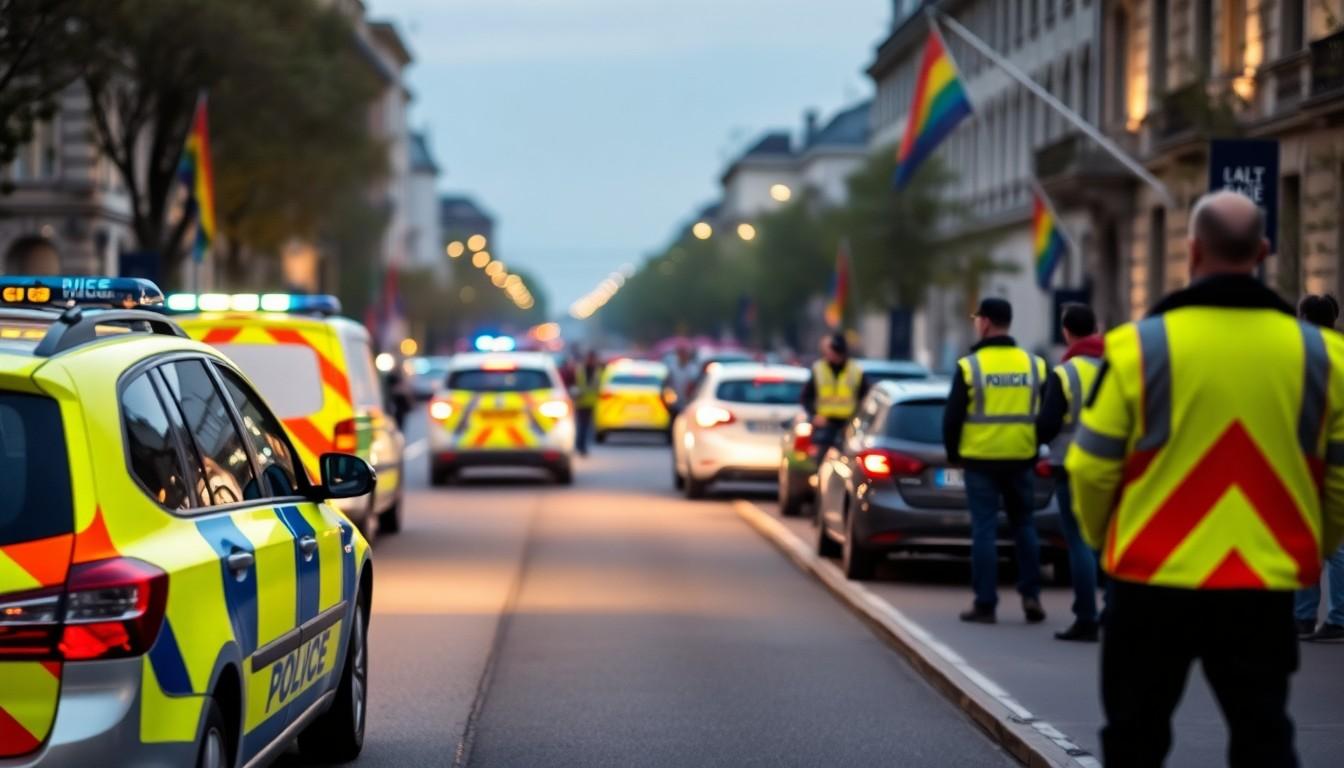
Shocked residents and visitors watched the CSD parade in Berlin turn tragic after a van ploughed into marchers , one person died and many were hurt; authorities now treat it as a likely attack and the city and Pride communities are grappling with security, solidarity and the wider threat to queer events.
Essential Takeaways
- Incident: A van drove into participants at Berlin’s CSD, killing one person and leaving multiple people seriously injured, according to police and local reports.
- Police response: Authorities are treating the crash as an intentional attack and launched an urgent manhunt for the driver.
- Event impact: The CSD was cancelled and emergency services evacuated and treated victims at the scene; the atmosphere turned from celebratory to chaotic and fearful.
- Context: Security agencies had warned of threats to Pride events in recent years, citing examples from Austria and the US, and researchers note rising disruptions at German Pride marches.
- Community mood: Shock and grief are mixed with determination among LGBTQI+ groups and allies to support victims and demand safer spaces.
What happened at CSD Berlin , the immediate scene
Eyewitnesses described a bright summer day that abruptly became horrifying when a vehicle mounted the parade route, striking marchers and bystanders; responders found a scene of injured people and panicked crowds. According to Reuters and local reporting, emergency services arrived quickly and the parade was halted and later cancelled as medical teams treated the wounded. The van incident left at least one person dead and multiple people in serious condition.
Police sources have said they are treating the case as a likely deliberate act and are actively searching for the suspect. For people at home, that image of sirens, ambulances and stunned onlookers is an ugly reminder that public gatherings can be vulnerable, even during what should be joyful community events.
Why authorities think this was an attack
Police statements indicate the crash is being investigated as an intentional assault rather than an accident, and officers have launched searches and forensic analysis at the scene. Reporters from Tagesschau and other outlets relay that investigators are looking at motive, vehicle trajectory and witness testimony to determine whether the driver targeted the crowd.
This follows a broader pattern of concern: security services in recent years warned of threats to Pride events, and there have been foiled plots in Europe. That context doesn’t explain every case, but it helps frame why investigators are treating this incident with urgency and why the city has mobilised extra resources.
A worrying pattern: threats to Pride across Europe and beyond
Security agencies have been public about risks to Pride gatherings. The FBI and US State Department issued advisories in prior years flagging the potential for extremist actors to exploit crowded Pride events. In 2023 Austrian authorities prevented an alleged attack on Vienna Pride, and those cases remain part of a worrying backdrop.
Research groups tracking rightwing and extremist harassment also recorded a rise in disruptions at German Pride events , including counter-protests, intimidation and sometimes violence. The ReGA network found that a significant share of CSDs in recent years experienced incidents or demonstrations that interfered with safety and celebration, underlining that this isn’t an isolated local problem but part of wider polarisation.
How communities are responding , solidarity, vigilance and questions about safety
Organisers and rights groups moved quickly to support victims and to call for calm. Local officials paused the event and prioritised medical care, then shifted to managing public messaging and security. Berlin’s queer community, meanwhile, has combined grief with resolve: vigils, statements of solidarity and plans for safer gatherings are already being discussed.
For attendees and organisers, practical steps matter now , clearer security plans, defined vehicle barriers on parade routes, better coordination with police and emergency services, and mental-health support for those traumatised by the event. Those measures can’t remove all risk, but they make collective spaces harder to weaponise.
What this means going forward , safety, politics and public spaces
Expect renewed debate about policing at public celebrations, the balance between openness and security, and how to protect vulnerable communities without turning Pride into an enclosed, securitised event. Authorities will also face pressure to explain how the suspect was able to target a parade route and what changes will prevent repetition.
There’s a human cost beyond policy: families, friends and strangers who shared a summer day now carry the memory of violence. As investigations continue, the wider conversation will need to include victims’ needs, community voices and sensible measures to shore up safety while preserving the spirit of Pride.
It's a small change to how public festivities are managed, but one that could make every march and celebration safer.
Source Reference Map
Story idea inspired by: [1]
Sources by paragraph: