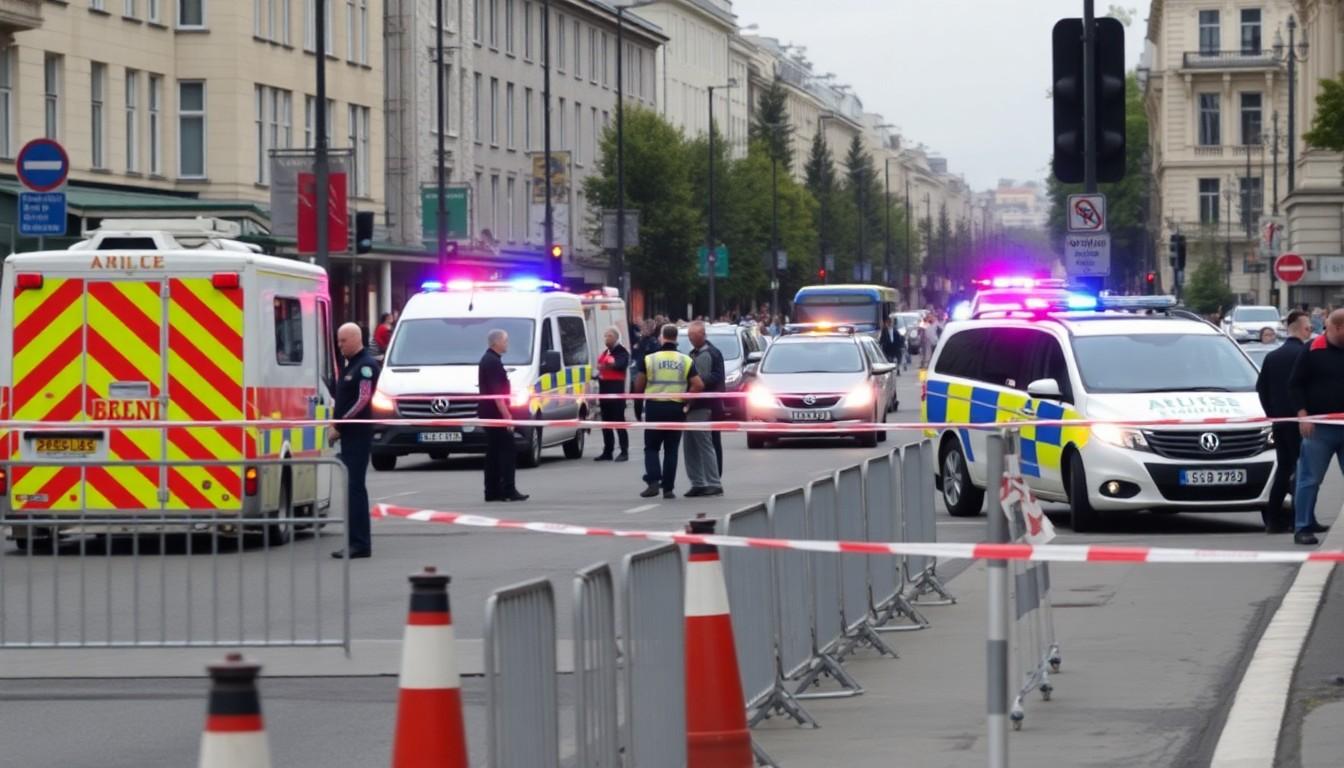
Shocked crowds watched chaos unfold as a vehicle ploughed into Berlin’s Christopher Street Day parade; police say an Islamist suspect is being sought and one person has died, making this a sobering moment for Pride events across Europe. Here’s what we know, why it matters, and practical steps organisers and attendees can take now.
Essential Takeaways
- What happened: A car drove into the Berlin Pride parade, killing one person and injuring around 16; witnesses described sudden panic and a terrifying, close-up scene.
- Suspect: German police have identified and are seeking an Islamist suspect in connection with the attack; an active manhunt is underway.
- Scene: Emergency services rapidly responded, securing the area and treating the injured; authorities are treating the incident as deliberate.
- Community impact: The attack has left organisers and attendees shaken, raising urgent questions about public-safety measures at large LGBTQ+ gatherings.
- Practical note: If you plan to attend Pride events this season, expect heightened security, bag checks, and a stronger police presence.
What unfolded in Berlin and how authorities described the scene
Eyewitnesses spoke of a still, stunned crowd moments after a vehicle struck people at the Christopher Street Day parade; the atmosphere went from celebratory to chaotic in seconds, with the scent of smoke and shouted warnings lingering in the air. Reuters and other outlets report one fatality and about 16 injured, while emergency crews moved quickly to secure the boulevard and treat victims. Police described the incident as deliberate and launched an immediate search for a suspect.
Context matters: large public events always carry some risk, but attacks that target symbolic gatherings such as Pride have a particular psychological weight. Officials have cordoned off parts of the route and urged people to avoid the area while investigations continue.
Who police are looking for and why the word “Islamist” is being used
German investigators have named an Islamist as the primary suspect and are actively pursuing his arrest, according to multiple reports. That label signals investigators believe the attack was motivated by extremist ideology rather than a random road-crash. Authorities are following leads, checking CCTV, and appealing to the public for sightings.
Naming a motive early can help shape the investigation, but it also fuels intense media attention and public debate. Police will need to balance speed with care to avoid misinformation while pursuing those responsible.
The human toll and how communities are reacting
Beyond the tragic death and physical injuries, the emotional impact is raw: Pride is about visibility, joy and safety, and attacks like this feel like a direct assault on that freedom. Community groups and politicians have already expressed shock and solidarity, and vigils are likely to follow.
For survivors and witnesses, access to trauma services will be essential. Local LGBTQ+ charities and health services typically mobilise quickly after such events to offer counselling and practical support.
What this means for Pride events across Europe this summer
Organisers are now reassessing risk plans for parades and street festivals. Expect amplified security measures: more barriers, bag checks, tougher vehicle access controls and larger police deployments. Some smaller events might consider postponement or alternative formats such as stationary rallies or enclosed venues that are easier to secure.
If you’re an organiser, review your emergency response plan, coordinate with police and medical teams, and communicate clearly with attendees about what to expect. If you’re an attendee, arrive aware of exits, keep personal items light, and follow steward or police instructions.
Practical safety tips for attendees and organisers
For attendees: stay aware of your surroundings, note escape routes, avoid dense bottlenecks near moving vehicles, and keep a charged phone and a small first-aid kit if you can. Report suspicious behaviour to stewards or police straight away.
For organisers: use vehicle barriers at parade termini, create buffer zones between crowds and roads, brief stewards on spotting and reporting risks, and set up clear medical stations. Work with local authorities to ensure fast medical access and share emergency communications with participants in advance.
Final thought This attack is a grim reminder that public celebration can be targeted, but communities often respond with resilience and solidarity; safety measures matter, and together they can help Pride remain a visible, defiant celebration.
Source Reference Map
Story idea inspired by: [1]
Sources by paragraph: