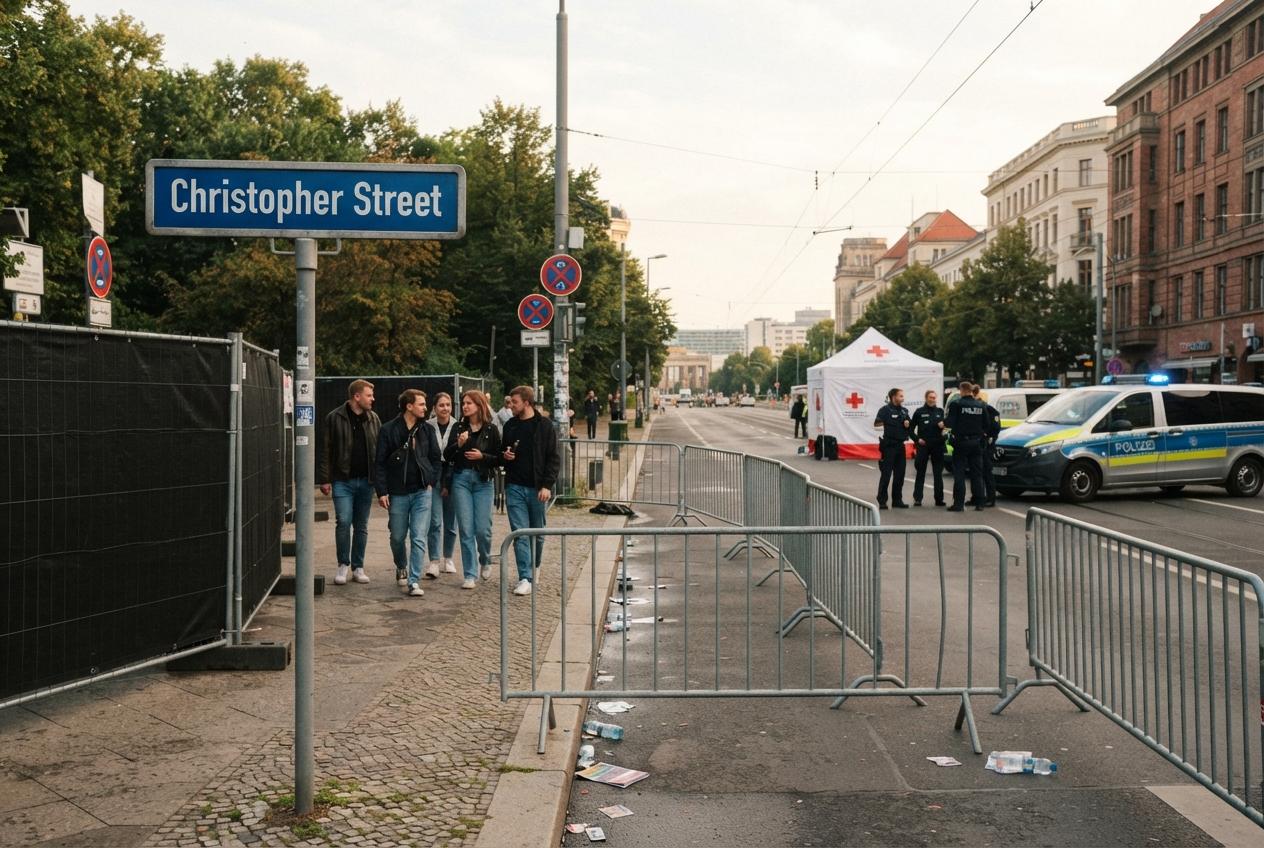
Shaken and solemn voices filled social channels after a vehicle ploughed into the Christopher Street Day crowd in Berlin, killing one person and injuring at least 16; politicians, activists and onlookers are now calling for solidarity, safety and clearer measures to protect large queer gatherings.
Essential Takeaways
- Casualties: One person died and at least 16 were injured when a car drove into the CSD parade route in Berlin.
- Immediate reaction: Political figures and LGBTIQ+ representatives expressed shock, grief and calls for unity and visibility.
- Safety concerns: The incident has renewed debate over security at large public events and how to keep diverse communities safe.
- Community impact: Organisers and participants describe the scene as a formerly safe, joyful space turned frightening and chaotic.
- International response: Leaders across Germany and Europe publicly condemned the attack and pledged support for freedom and diversity.
What we know so far about the attack
Eyewitnesses described sudden panic and confusion when a car struck people gathered for the Christopher Street Day parade in central Berlin; the scene reportedly smelt of smoke and the air was thick with shouted warnings. Emergency services arrived quickly, treating the wounded and securing the area, while hospitals took in multiple casualties. Reuters and Euronews reported that one person was killed and at least 16 were injured, though authorities are continuing to confirm details. For anyone following breaking coverage, official police briefings remain the best source for verified casualty figures.
Political and community leaders react
Politicians across the spectrum voiced shock and solidarity, with some stressing the need to defend democratic freedoms. According to reports, the SPÖ’s LGBTIQ+ spokesperson Mario Lindner expressed deep sadness and fury, saying hearts and thoughts were with Berlin’s queer community. International outlets recorded similar condemnations, including calls to protect visible minorities. Reaction has been swift and emotional, and you can already see organisers and activists planning vigils and statements to reclaim public space.
What this means for safety at Pride events
The attack has reignited arguments about what realistic security looks like for open, celebratory gatherings. Organisers face a tricky balance: making events welcoming and accessible, while also implementing barriers, checks and emergency plans that can deter vehicular attacks. NDR and Tagesschau reporting highlights that some cities are now reviewing crowd layouts, temporary bollards and rapid medical response plans. If you’re attending a parade, consider basic precautions: note exits, stick with friends, and follow guidance from marshals and emergency services.
How the LGBTIQ+ community is responding
For many attendees, Pride is a ritual of visibility, joy and safety; turning that into a site of fear leaves a deep emotional mark. Community groups are emphasising solidarity, visibility and mutual support as the first answers to such violence. The mood is one of grief but also defiance: organisers and allies say they’ll respond with more unity and presence rather than retreat. Expect memorials, increased counselling support and public demonstrations in the coming days as local groups and national organisations mobilise.
Looking ahead: policy and social implications
Beyond immediate grief, the attack raises questions about prevention, policing and the wider climate for marginalised groups. European leaders have publicly vowed to defend liberty and diversity in the wake of the incident, and analysts say there will be pressure for concrete steps to protect public events. That could mean more physical protections at parades, better intelligence-sharing and community-led safety training. Whatever unfolds, the conversation will likely mix practical measures with broader debates about hate, extremism and how societies safeguard vulnerable communities.
It's a small change that can make every public gathering safer and keep Pride spaces as they should be: open, loud and proud.
Source Reference Map
Story idea inspired by: [1]
Sources by paragraph: