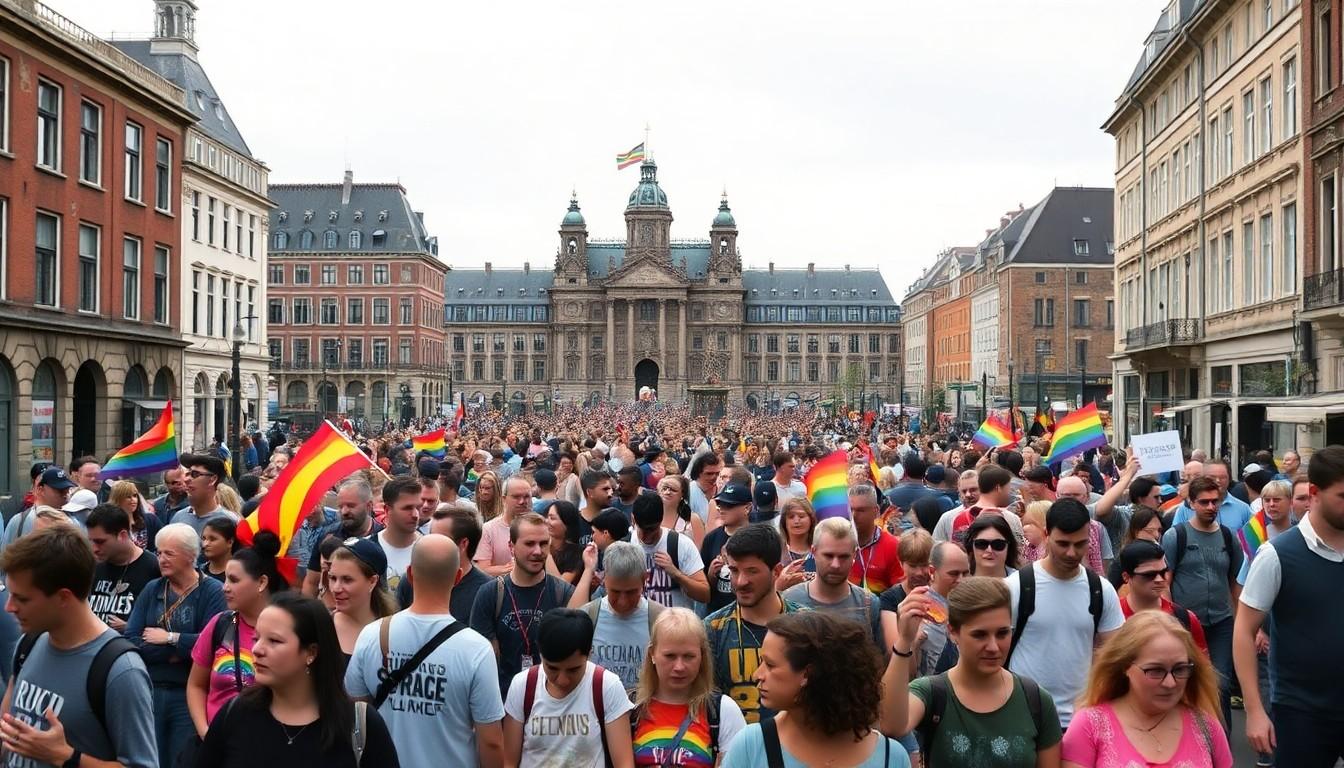
Shoppers, tourists and locals joined tens of thousands in Amsterdam as WorldPride’s Pride Walk filled the city, from the Dam to a sunlit, mud-spattered Vondelpark, mixing celebration with sharp political protest and setting the tone for a week that matters for rights, visibility and community.
Essential Takeaways
- Mass turnout: Thousands marched from the Dam through central Amsterdam, creating a vibrant, mobile crowd that drew phones and cheers.
- Festive atmosphere: The Vondelpark, renamed Pride Park for the day, was packed, colourful and loud, hoempapa bands and Dykes on Bikes set the mood.
- Mixed messages: Celebration sat alongside activist chants; some demonstrators called attention to international causes and clashed with police over flags.
- Civic stage: Mayor Femke Halsema and Queen Máxima addressed the crowd, urging tolerance and underscoring that freedom and equality remain contested.
- Practical note: Organisers balanced openness with safety measures around official venues, affecting who could enter during ceremonies.
A Dam start, a city that watches
The Pride Walk began in the heart of Amsterdam, with speakers rallying the crowd on the Dam and a clear line delivered: today the world’s eyes are on the city. You could feel the sun on people’s faces, their flags snapping in a light breeze, as the procession pushed onto the Rokin. Pride Amsterdam’s chair Suzanne van de Laar spoke of walking with pride for those who can’t and for those who came before, an intentional tie between celebration and remembrance. According to Pride Amsterdam’s ambassador materials, organisers have long aimed to combine parade energy with political purpose, and the tone on the Dam made that clear.
Through the centre: music, signs and human moments
The march through the centre was both noisy and intimate; people sang, danced and encouraged strangers. Small tableaux popped up, friends with homemade placards, a group in dog masks, a woman pedalling a cargo bike with a “Mama’s taxi” basket. Those domestic, slightly absurd scenes punctured the politics with warmth. Reporters noted how mobile phones lined the route, capturing gestures that will travel beyond the city. For visitors wondering when to go next time: early starts make squeezing through bottlenecks easier, and bring a water bottle, you’ll be on your feet for a while.
Vondelpark: Pride Park, full of colour and a few tensions
The gate into the Vondelpark proved a small choke point, but patience and sunshine smoothed the flow. Once inside, the park was gloriously packed, described by observers as mudvol with every shade of the rainbow. Soundscapes shifted between brass bands and roaring motorcycle groups, Dykes on Bikes made a theatrical entrance. Yet the park was also where activist contingents converged, chanting about international issues and confronting police over access to the Openluchttheater. City briefings explain why organisers sometimes restrict items or flags near official stages: they’re trying to manage ceremonies that include dignitaries while keeping the event broadly safe.
When protest meets protocol: flags, police and passion
Not all of the energy was celebratory. A group that took an alternative route arrived at the park to chant about Palestine and to criticise official Pride branding; police blocked access to the theatre for people carrying certain flags during the formal opening. The resulting stand-offs, shouts, pushed shoulders, and snarky megaphone retorts, illustrate a recurring dilemma for large-scale Pride events: how to hold an inclusive celebration that also allows space for dissent. City spokespeople and police say these measures are about security and timing; activists argue that restriction of symbols silences important solidarity. The tension is likely to resurface as WorldPride continues.
Speeches that mattered: mayor, monarch and the line between party and purpose
Inside the open-air theatre, Mayor Femke Halsema reminded the crowd that visibility and joy don’t negate the existence of intolerance, and she issued a blunt invitation to those who won’t accept queer people to adapt or stay away. The royal presence added a ceremonial weight: Queen Máxima offered warm words about being who you are and loving who you love, a message meant to land as reassurance but that also highlighted how far the struggle still reaches. For onlookers, the speeches reinforced that WorldPride is more than a parade; it’s a civic claim on rights and recognition, amplified now that Amsterdam hosts the global event.
Closing line
It’s a weekend where music, colour and conviction collide, pick your moment to join, listen and celebrate.
Source Reference Map
Story idea inspired by: [1]
Sources by paragraph: