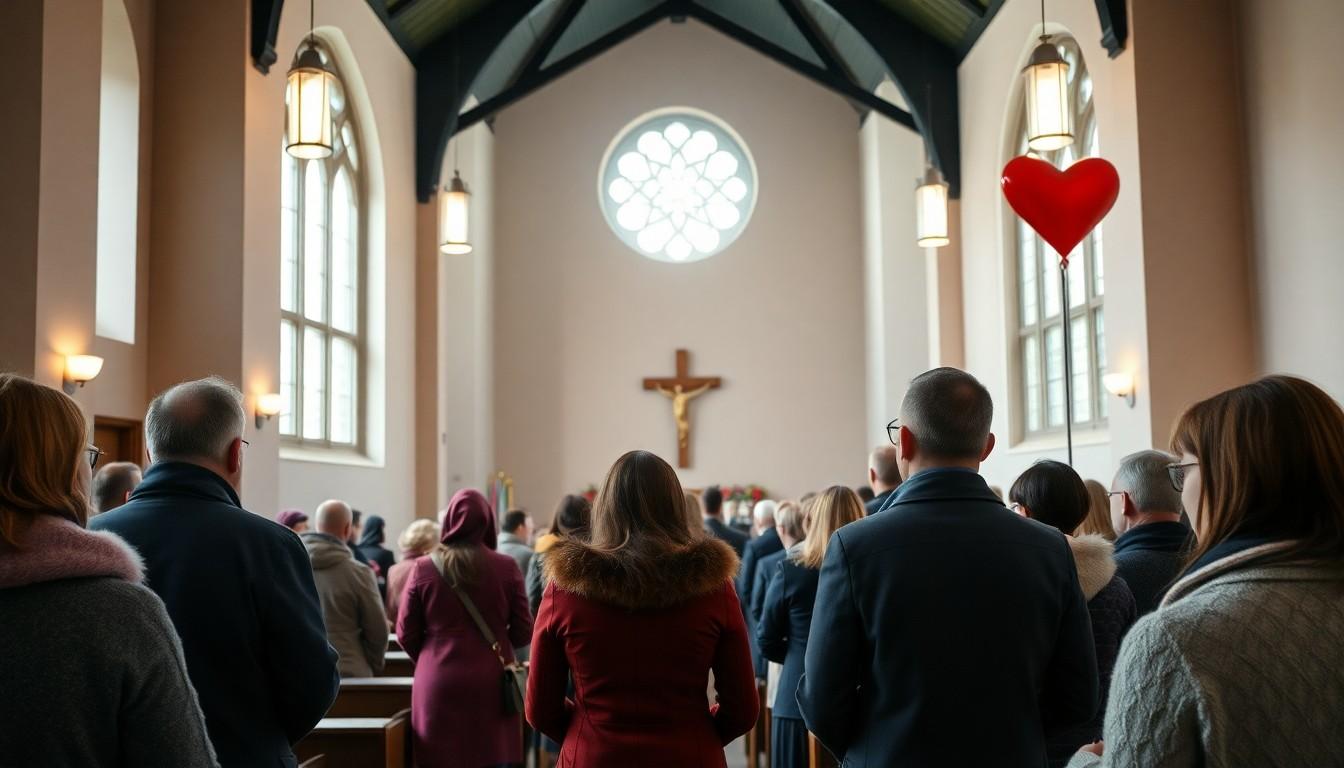
Shoppers of faith and curious locals turned up at St. Lantpert in Freising for a lively, modern Valentine’s Day service where couples of all kinds, married, dating, friends and same-sex partners, received blessings; organisers say the open, warm format helps people reconnect and feel seen.
Essential Takeaways
- Warm turnout: Around a hundred people packed St. Lantpert, creating a cosy, buzzing atmosphere that organisers described as unexpectedly full.
- Inclusive practice: Same-sex couples received public blessings, and clergy said they “have no problem with that,” emphasising love over labels.
- Interactive format: Six stations around the church encouraged reflection, candles for warmth, a shard of glass to symbolically lay down conflict, and other tactile rituals.
- Modern tone: Music and liturgy leaned contemporary and love-focused, breaking from more traditional procedures and inviting newcomers.
- Community effect: Attendees reportedly opened up, blessed the ministers back, and left visibly moved and connected.
A surprising crowd and intimate feel , why it worked
The service felt warm and slightly electric, with people filing in until the nave seemed almost crowded. Organisers said they were delighted by the turnout and the easy, intimate mood. According to local reporting, the event was set up deliberately with accessible language and modern music to lower the barrier for those who might otherwise skip church. If you’re planning a similar event, pick a small number of clear, tactile stations and a short, contemporary playlist , it makes the space feel less formal and more inviting.
Stations that encourage doing, not just listening
Rather than a single, passive ritual, organisers dotted six interactive stations through the church , candles to warm hands, a shard of glass representing conflict to be laid down, and other small acts that translate emotions into physical gestures. These little sensory moments let people act on their feelings rather than recite them, which many attendees found powerful. Practically, this format suits events aiming to draw in people unfamiliar with traditional services, and it’s an easy model for parishes wanting to experiment.
Blessing same-sex couples , a pastoral shift with local support
When clergy offered blessings to same-sex couples, they framed it simply: these are people in love who came seeking a blessing. Deacon Thomas Kirchmeier was quoted saying they had no problem with it, placing emphasis on pastoral care for the individual. This local choice sits alongside broader conversations in German Christianity; for instance, Cardinal Marx has moved towards permitting blessings of same-sex couples, while other communities are finding grassroots ways to respond. For churchgoers wondering what this means practically, expect more services that focus on relationship wellbeing rather than doctrinal labels.
Modern music, broken routines , why the format matters
Organisers deliberately broke with customary procedures and used contemporary music that stuck to the theme of love. The result was an atmosphere that felt both familiar and fresh, encouraging smiles and interaction. Events like this illustrate a trend: churches trying new formats to reach people with a looser connection to organised religion. If you’re curious about attendance, a softer entry point , modern songs, shorter liturgy, and clear invitations to participate , usually helps.
What it means for community and future services
Attendees reportedly “blessed the ministers back” and shared why they’d come, from celebration to worry, which shows the reciprocal nature of these gatherings. Local churches in Freising have been experimenting before , even controversial Halloween devotions have sparked debate , but the overall aim is the same: meet people where they are. Looking ahead, expect more local services that prioritise pastoral presence and inclusivity, and consider them a low‑stakes way to reconnect with your community.
It's a small change that can make every blessing feel more human and more like home.
Source Reference Map
Story idea inspired by: [1]
Sources by paragraph: