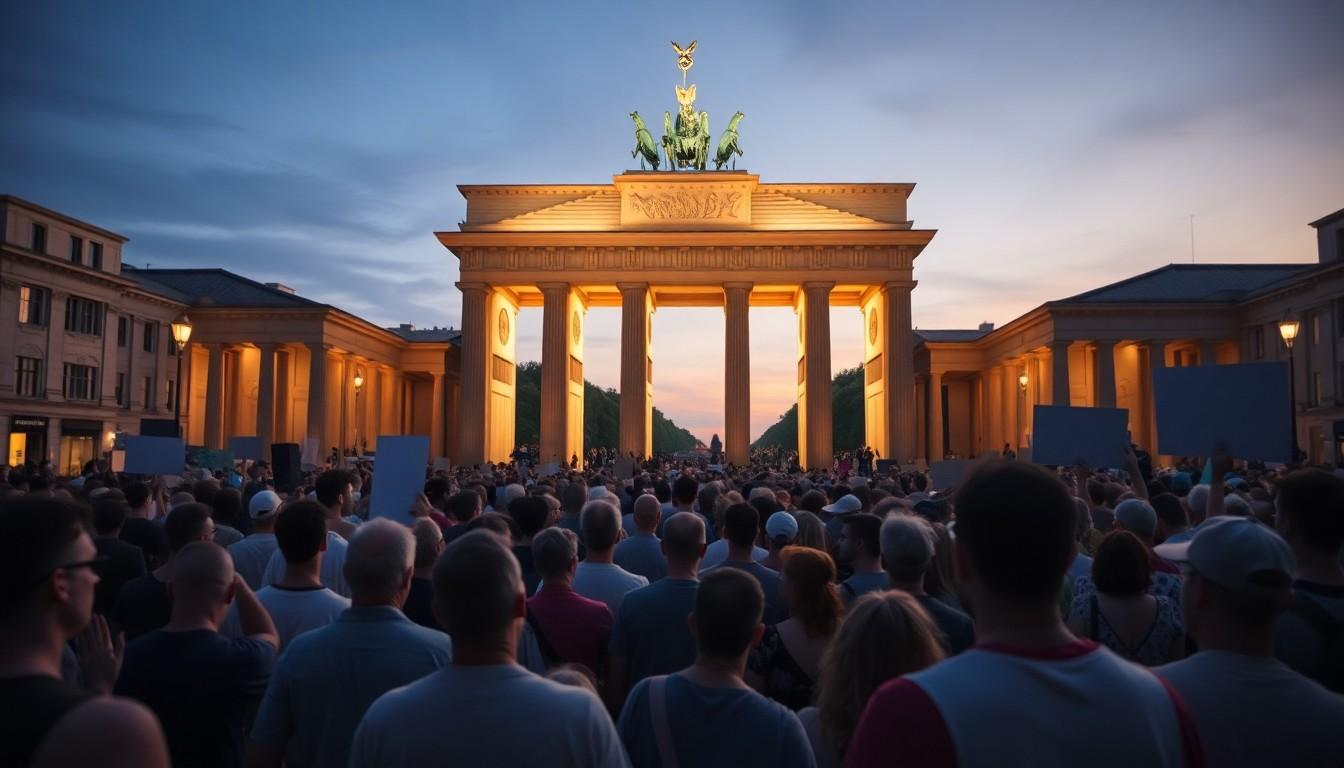
Thrilling the crowd, Ikkimel opened CSD weekend at Berlin’s Brandenburger Tor as thousands gathered to celebrate queer visibility and protest inequality , a high-energy, emotional concert that mattered because the fight for rights is far from over.
Essential Takeaways
- Massive turnout: Police estimated about 8,000 people in front of the Brandenburger Tor before the concert began, creating a buzzing, communal atmosphere.
- Artist message: Ikkimel thanked the queer community, stressed solidarity, and said she’ll keep fighting for rights while acknowledging progress isn’t guaranteed.
- No fee for performers: As with other acts on the CSD main stage, Ikkimel performed without a fee, reflecting artists’ support for the cause.
- Security incident: Police removed four men suspected of belonging to a right-wing group before the gig, keeping the event safe and focused.
- Festival context: The show followed a first-time Drag March and large Dyke* March, underscoring CSD’s mix of celebration, politics and visibility.
A high-energy opening and a crowd that felt alive
Ikkimel’s performance hit like a confidence boost, warm and direct, with a bassy, urban sound that matched the stone-faced dignity of the Brandenburg Gate. The crowd’s cheers were tactile , you could feel people leaning into every line. According to police figures, roughly 8,000 people were on site before the show, which made for a tight, charged audience that ate up every moment. For many fans it wasn’t just a gig; it was a communal ritual that set the tone for the weekend.
The rapper used the moment to remind listeners that hard-won freedoms can’t be taken for granted. She pointed out that queer people still face rejection in many countries and even, she said, sometimes in Berlin. That honesty landed with the audience , cheers, applause, the kind of exchange that turns a performance into an act of solidarity.
Why the lack of artist fees matters
Organisers made it clear that acts on the CSD main stage don’t receive a fee, and Ikkimel’s willingness to perform for free underlined how entwined art and activism are at these events. In practice, that means performers treat the stage as a platform rather than a payday, amplifying political messages and community pride.
That model isn’t without trade-offs , some artists may not be able to take part for financial reasons , but it keeps the focus on visibility and the movement. For attendees, it’s a reminder that music here is a means to an end: raising spirits, raising voices, pushing for change.
Security and tension: how organisers kept things calm
Before the concert began, police identified and escorted away four men who were allegedly linked to a right-wing group and looked set to disrupt the event. Officers conducted identity checks and a short safety briefing, after which the men left the area. The swift action helped maintain a safe space without escalation, which matters when thousands are gathered to celebrate and protest.
That interruption also illustrates the reality behind the festivities: public queer events can attract opposition, and visible, prompt security measures are part of preserving the inclusive atmosphere that makes CSD meaningful.
Marches, visibility and the weekend programme
The concert was just one highlight in a programme heavy with visibility-driven actions. Earlier in the day Berlin hosted a Drag March , a first for the city , that wound from Bundestag station to the gate, colourful and theatrical, turning streets into a runway. Later, more than 5,000 people took part in the Dyke* March, which is designed to boost lesbian visibility and political claims.
Taken together, these events show how CSD in Berlin balances party energy with pointed protest: music, choreography and banners working in the same key to demand rights and recognition.
What it means for the queer movement , and for fans
Ikkimel’s shout-outs to the community were both grateful and galvanising. She acknowledged that her rise into mainstream spaces has been fuelled by queer support, and pledged to keep fighting back. For fans, that felt like a promise as much as a performance. Moments like this reinforce why CSDs remain culturally and politically important.
If you were there, you probably left buzzing and a little proud; if you weren’t, consider one of the marches or the next open-air stage , it’s where music and activism meet, and where voices still count.
It's a small change that can make every celebration safer and every message louder.
Source Reference Map
Story idea inspired by: [1]
Sources by paragraph: