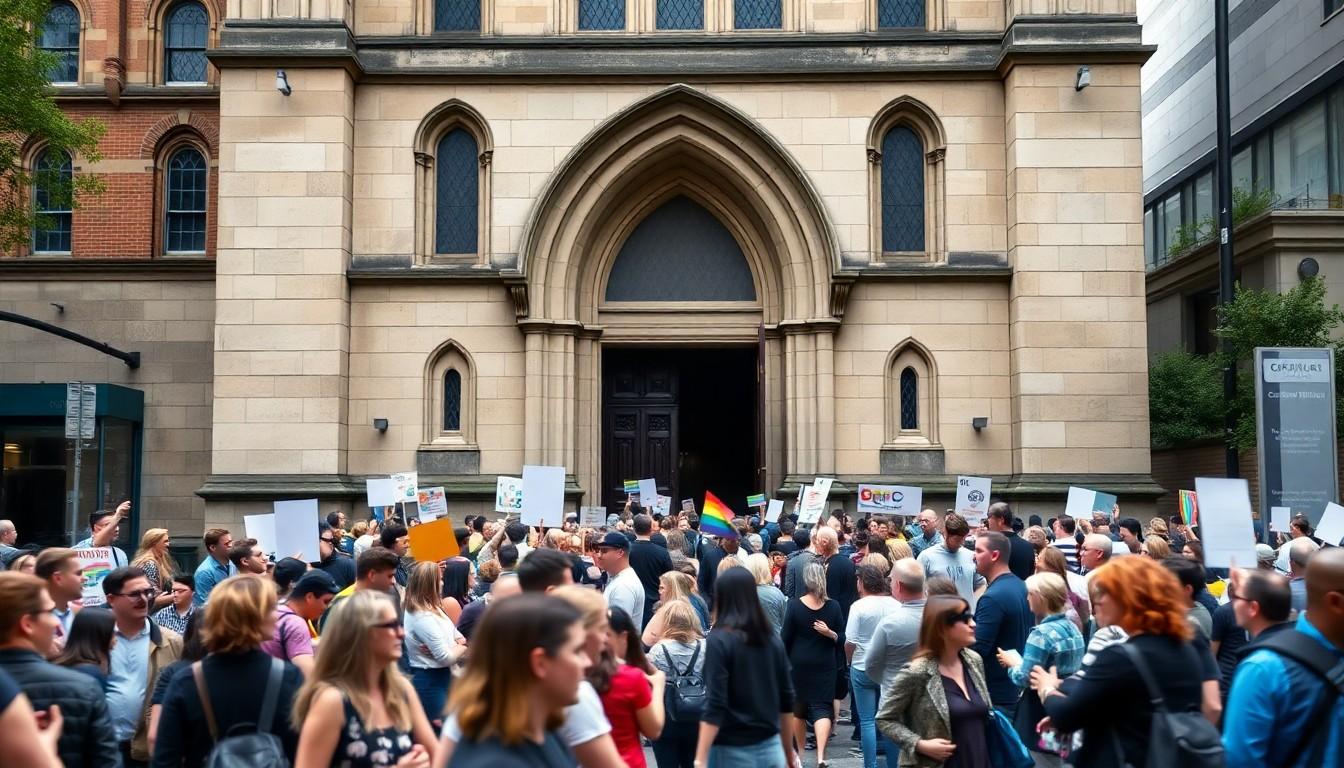
Bursting into song and colour, supporters turned an eviction into a rallying, joyful protest after a queer pop‑up theatre was forced out of a historic Sydney church , and the fallout speaks to bigger debates about arts, faith and free expression in the city.
Essential Takeaways
- Immediate reaction: Hundreds gathered in frocks and feathers to protest the eviction, singing hits like Madonna’s Like a Prayer and Chappell Roan’s Pink Pony Club, turning outrage into performance.
- Reason for eviction: Landlord lawyers cited “offensive trade” and invoked an old 1842 NSW law after conservative church groups protested outside the venue.
- Political heat: NSW Premier Chris Minns questioned the suitability of the former church as a venue; Greens MP Cate Faehrmann said his comments emboldened critics.
- Legal and funding questions: Heaps Gay, the events company tied to the lease, is weighing legal action for alleged unlawful discrimination while calls have been made to review government funding.
- Atmosphere: Supporters described the protest as colourful and defiant, while opponents framed the shows as provocative and disrespectful to Christian faith.
Why the eviction felt like more than a property dispute
The opening hook was theatrical: drag nuns, pig suits and a brunch called Sunday Mess , vivid, theatrical choices that either delight or dismay depending on your view. Supporters saw it as playful, creative disruption; critics called it mockery of religion. Media coverage from across outlets captured that sensory clash, the scent of protest and lipstick mixing with legal letters and petitions.
History and context matter here. The heritage‑listed Kent Street church, deconsecrated in 1932 and vacant for years, had become a pop‑up arts space this winter. According to reporting, the leaseholder hosted bold queer performances from July before the landlord’s lawyers issued a notice citing grievance and disturbance. That legal framing, and the invocation of an obscure 1842 law, transformed what might have been a landlord–tenant spat into a culture war flashpoint.
For performers and audiences, the eviction raises practical questions: where do queer shows that court controversy belong? Smaller, licensed venues avoid religious sensitivities; larger theatres may shy from experimental cabaret. If you’re booking a space, check lease clauses about “offensive trade” and crowd management, and consider venues with clear protections for artistic expression.
Politics met performance: leaders, radio hosts and petitions
Political commentary added fuel to the flames. NSW Premier Chris Minns, a practising Catholic, suggested there are plenty of other venues in NSW and expressed discomfort at the former church being used for daring shows. That line drew swift pushback. Greens MP Cate Faehrmann, who spoke at the rally, argued the premier’s words signalled tacit approval for the protesters and set a worrying precedent for marginalised groups.
Meanwhile, shock jocks and conservative activists amplified the outrage, piling on pressure and sparking competing petitions. The incident shows how quickly local arts disputes can escalate into statewide debates about funding, censorship and leadership. If you care about arts policy, keep an eye on any investigations into funding cuts or government statements that follow.
Legal angles and potential court fights
Heaps Gay, the events company named on the lease, has said it’s considering legal action against the developers and landlords for what it calls unlawful discrimination. Lawyers for the landlord argued the events caused grievance and disturbance; conservative Christian groups framed the shows as offensive to their beliefs.
This is a reminder that leases and local laws , sometimes centuries old , can be decisive. If you run a pop‑up arts project, get legal eyes on your lease early, document communications, and consider flexible exit plans. And if you’re a tenant who feels targeted, keep records: they’ll matter in any discrimination claim.
Community response: colours, songs and solidarity
The Saturday snap protest read like a parade and a press release at once. Hundreds turned up in costume, belting out anthems and making a visual case for inclusion. For many attendees the action felt cathartic, a way to reclaim space with joy rather than anger. Organisers leaned into performance as protest , a tactic that earned sympathetic coverage and amplified the story.
But not everyone saw it that way. Some locals and faith groups insisted the performances crossed a line, arguing a former house of worship should be treated with care. The clash underlines an enduring tension in urban life: how to balance heritage and belief with contemporary creative expression.
What this could mean for Sydney’s arts scene
Industry figures and the NSW arts minister framed the eviction as a backward step, urging tolerance and openness. For queer theatre-makers, the episode is a cautionary tale and a call to arms. Expect more debate over venue suitability, clearer lease protections, and possibly court cases that will test the boundaries of discrimination law and artistic freedom.
If you follow Sydney’s cultural calendar, look for organisers to pivot to safer venues or to use the publicity to fundraise and find legal clarity. Either way, the incident has sharpened public focus on who gets to perform where, and how communities defend creative expression.
It's a small change in the lease that sparked a much louder conversation , and one that will keep Sydney talking.
Source Reference Map
Story idea inspired by: [1]
Sources by paragraph: