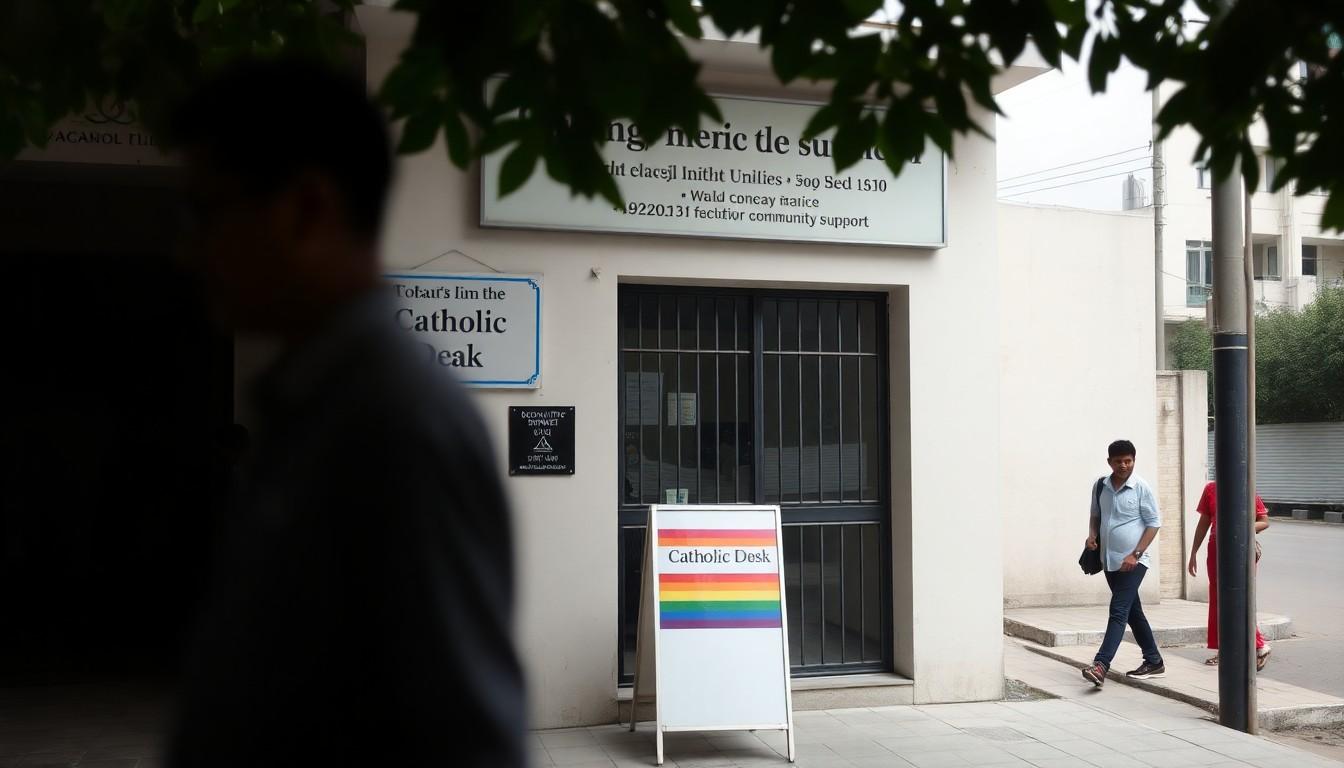
Shoppers of solidarity and quiet allies are organising on the ground: Catholic parishes and religious communities across India are setting up pastoral desks, shelters and job-support services for transgender people where legal protections have recently been weakened , and these grassroots efforts matter now more than ever.
- What’s happening: Catholic parishes in Chennai and other parts of India have launched pastoral desks and shelters offering counselling, job placement help and skills training for transgender people.
- Why it matters: A recent amendment to India’s transgender law now requires medical-board approval for legal recognition and narrows who counts as transgender, leaving many people without the legal identity they once had.
- Practical help on offer: Services include safe spaces, vocational training, education advocacy for transgender children, and referral pathways for healthcare and legal advice.
- Tone and reception: For many trans Catholics, tangible support at their local church is more important than rhetoric; the pastoral desks are experienced as concrete sanctuary rather than political posturing.
Why churches are stepping up now , a sanctuary amid legal uncertainty
The immediate spark for several new initiatives has been the political and legal shift this year that tightened rules around legal gender recognition. Amnesty International called the move “a major step backward for human rights,” and medical groups criticised the amendment as medically unsound. So it’s no surprise communities are responding at street level. According to reports, the Archdiocese of Madras-Mylapore and parishes in Chennai have launched pastoral desks offering employment support and counselling, and church-run shelters in the Northeast have been operating for years. For trans people facing sudden legal invisibility, having someone to take that first phone call can feel quietly transformational.
What these pastoral desks and shelters actually do
On the practical side, the new Catholic Desk model is straightforward and low-tech: it connects people to jobs, provides professional and spiritual counselling, and links beneficiaries to local NGOs and health services. In Ennore, the desk partners with an existing transgender-focused trust that already runs shelters and vocational programmes. In the Northeast, the Rainbow Home offers skills training and fights to keep transgender children in school. The emphasis is on dignity and daily survival , a warm meal, a CV workshop, a safe room , rather than headlines.
How these efforts fit into the wider church response
This isn’t isolated charity; it’s part of a wider pastoral trend. Some religious sisters describe their ministries as deliberately theological, using language similar to Pope Francis’s call to reach those “on the peripheries.” Church endorsements have helped shelters expand services and gain institutional backing, yet many initiatives still began from personal encounters , a bus conversation, a prayerful response , before being formalised. That mix of theology and one-to-one care gives the work both moral weight and practical reach.
Choosing help: what trans people and allies should look for
If you’re seeking support or want to refer someone, look for services that offer more than spiritual counsel: ask whether they provide vocational training, education advocacy, legal referrals and links to trusted medical professionals. Size and location matter too , a local parish desk may be quicker for immediate needs, while a regional shelter can offer longer-term skills training. Always check for confidentiality practices; many people seeking support want discretion as well as compassion.
Why this matters beyond liturgy and faith
When laws restrict identity and access to services, everyday institutions become lifelines. For trans Catholics, a desk in a parish isn’t merely symbolic , it’s a place to find a job, a bed, and the kind of acceptance that keeps people safe. These grassroots responses also send a gentle but clear message: community care can adapt faster than legislatures. The work won’t erase legal harm, but it does blunt its impact in very human ways.
It's a small change that can make every shelter, appointment and job application count.
Source Reference Map
Story idea inspired by: [1]
Sources by paragraph: