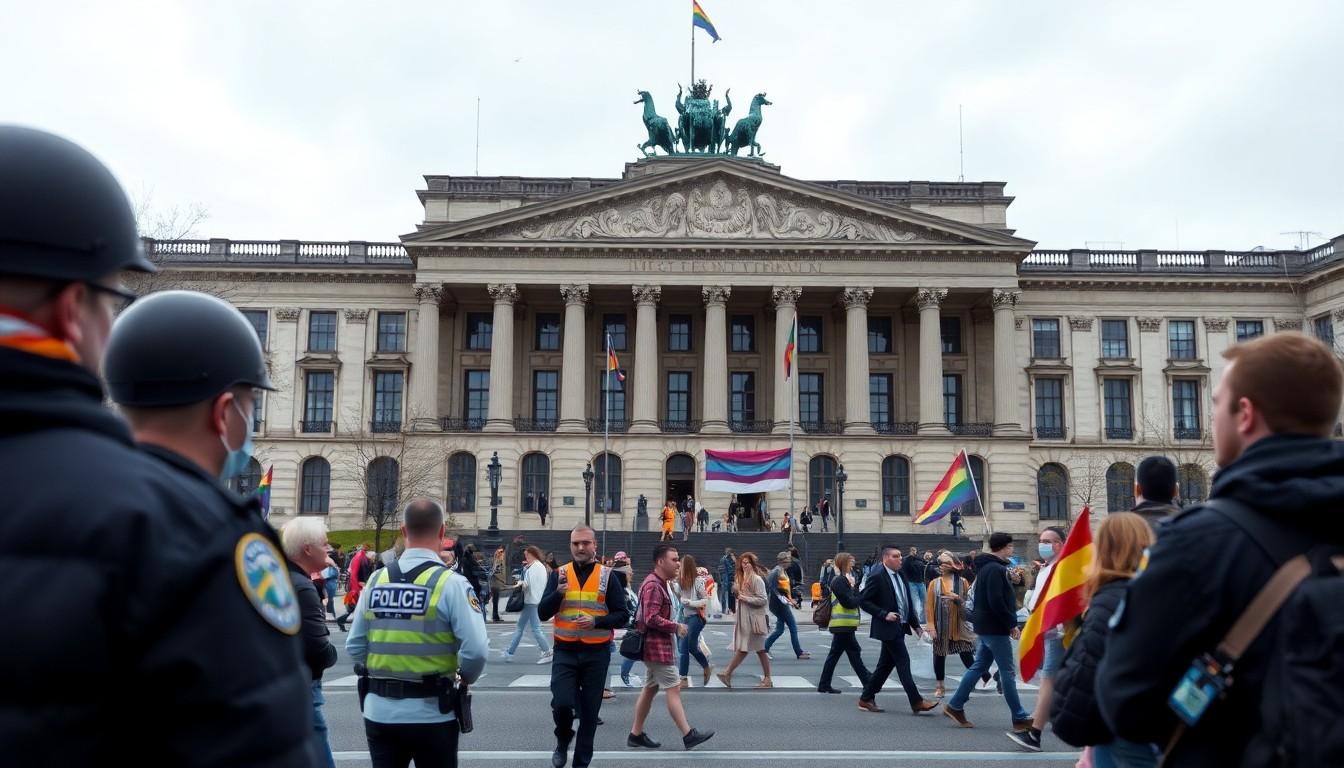
Shoppers are flocking to Berlin’s streets as hundreds of thousands celebrate Christopher Street Day, and the city’s mayoral figurehead turned up , a vivid reminder that Pride remains both festival and political statement, especially with a state election around the corner.
Essential Takeaways
- Big turnout: Hundreds of thousands attended Berlin’s CSD, creating a loud, colourful atmosphere and a strong public show of support.
- Political visibility: Berlin’s Regierender Bürgermeister Kai Wegner joined the parade, saying public “stance” matters amid rising hate and division.
- Senate presence: For the first time the city government appeared with its own float, signalling official backing and visibility.
- Tensions at the edges: Small counter-demonstrations occurred and police monitored suspected right-wing groups, underscoring ongoing threats.
- Cultural impact: The event blends celebration and civic pressure, keeping LGBTQ+ rights and solidarity firmly in public view.
A loud, joyful streetscape , and a political message
Berlin’s CSD felt like a festival you could hear before you saw it, a wash of colour, music and chatter rolling through the city. According to local reports, hundreds of thousands joined the parade, giving Pride a very physical presence that’s hard to ignore. Kai Wegner, the city’s Regierender Bürgermeister, was there and used the platform to stress the need for visible solidarity at a time when hate speech and social division are on the rise. It’s the sort of public optics that matter; when politicians step into the crowd, it signals more than ceremonial support.
Why Wegner’s attendance is more than a photo-op
Wegner’s appearance carries weight because Berlin votes for a new state government in September, and he won’t be running as his party’s lead candidate. His comments focused less on campaigning and more on values , he framed CSD as an assertion of openness and freedom during fraught times. Observers noted the Senate’s decision to field a float for the first time, which reinforces that this was intended as an institutional affirmation as much as a personal one. In short, it’s a mixture of civic duty and PR, but that mix still helps keep minority rights on the agenda.
Counter-protests and security , why organisers keep an eye on the margins
Not everything at CSD was carefree. Police checked a small number of people at Potsdamer Platz from a suspected right-wing group, and a handful of counter-demonstrations cropped up. That tension is a reminder that Pride events are public spectacles where opposing views sometimes collide. Event organisers and the police remain vigilant; for attendees, practical advice is simple , stay with friends, note exits and follow steward guidance if situations get heated. The majority of the crowd stood for inclusion, and that visible majority was the louder statement.
What this means for Berliners ahead of the election
Berlin’s state election looms and public gestures like marching in CSD carry political currency. Wegner’s participation, followed by talk of values and unity, feeds into wider debates about social cohesion and the role of government in defending minority rights. Media coverage suggested the event has a wide reach across communities in the city, and political actors on all sides are watching. For voters who prioritise civil liberties, the parade was a clear reminder of who’s paying attention.
Pride as celebration and civic pressure , the long view
CSD has always been part party, part protest, and this year leaned into both roles. The festival atmosphere , the music, the costumes, the collective exhale , coexists with a sober message: the struggle for acceptance and safety continues. According to reports, this blend gives the event staying power, and the Senate’s float hints at an institutional embrace that may influence future policy conversations. For attendees and onlookers alike, the lesson is straightforward , public gatherings like CSD keep rights visible and make it harder for society to look away.
It's a small change that can make every public show of solidarity count.
Source Reference Map
Story idea inspired by: [1]
Sources by paragraph: