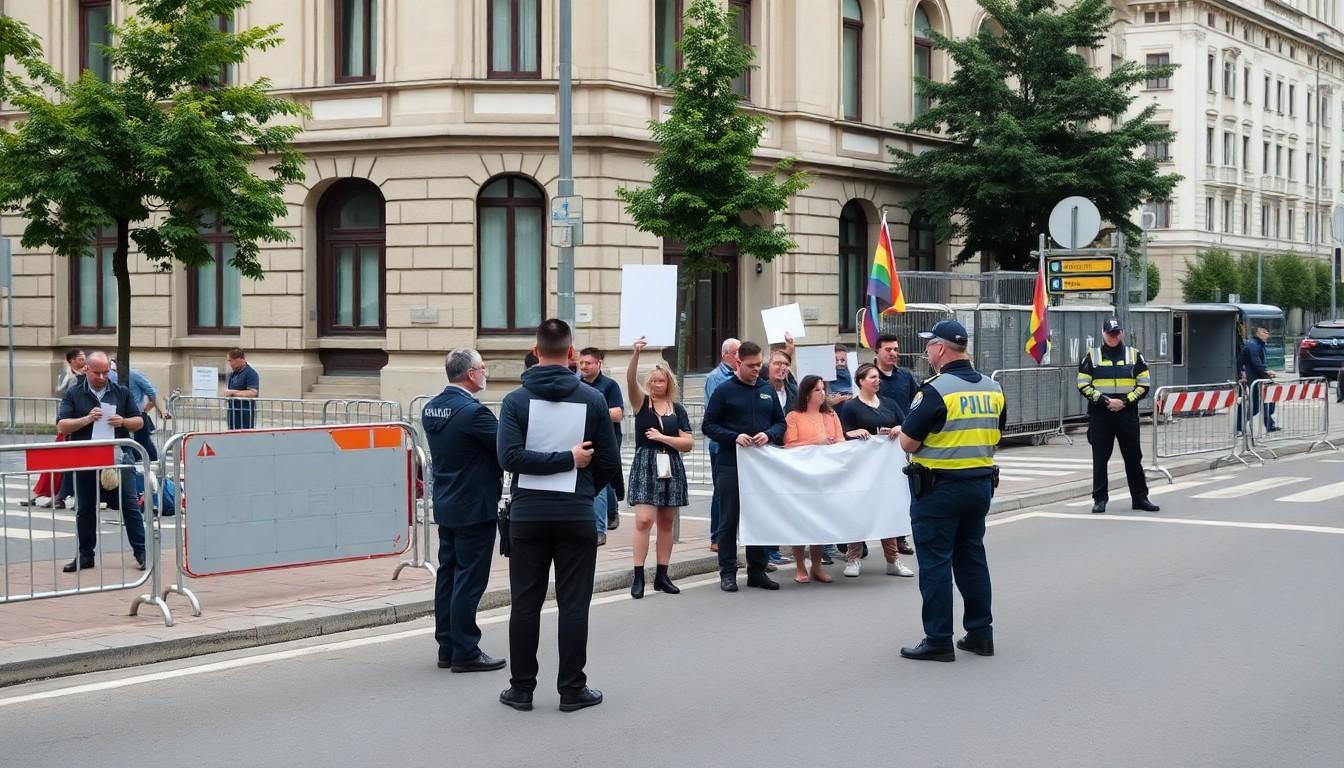
Shoppers, diplomats and campaigners are watching as organisers in Oradea vow to march despite a fourth straight refusal from city hall; the clash matters because it raises questions about freedom of assembly in an EU city and could set a worrying regional precedent.
Essential Takeaways
- Repeated refusals: Oradea city authorities have denied permission for Pride marches four years running, citing technical or logistical reasons.
- Organisers undeterred: Ark Oradea plans an unauthorised march again, saying the denials send the message that queer people aren’t welcome.
- Broader concern: Over 150 organisations from 30 countries and European rights bodies have urged local officials to allow the event safely.
- Diplomatic backing: Several diplomatic missions and Romania’s ombudsman are reported to be involved or planning to attend.
- What’s at stake: Campaigners frame this as a democratic issue , the right to peaceful assembly, not only an LGBT matter.
Why Oradea has become a spotlight for free assembly
Oradea, a western Romanian city of roughly 180,000, has watched its Pride plans blocked year after year, and that pattern now looks less like bad luck and more like a systematic obstacle. The most recent refusal again leaned on technicalities , parks unavailable, routes clashing with events or roadworks , rather than an explicit ban. That dry, bureaucratic language leaves organisers and observers with a sour, tangible feeling that they’re being pushed out.
Campaigners say the cumulative effect is what counts: when authorities repeatedly balk at the same request, it reads as exclusion, and people notice. International attention has amplified that sense, with NGOs and rights groups arguing this is about the fundamental right to assemble, not simply an event on a calendar.
How organisers have responded , persistence and practical planning
Organisers from Ark Oradea haven’t taken this lying down; they’ve submitted dozens, then hundreds, of alternative routes over successive years and still been turned away. Their response has been pragmatic and defiant , hold the march anyway, publicise it, and invite witnesses. Last year an unauthorised march drew several hundred people, and a handful were fined afterwards, a reminder that civil disobedience carries cost.
There’s a practical logic to pushing on: by attempting to stage the event in public, organisers force officials, courts and the public to address the denial directly. It’s a tactic that risks fines and confrontations, but it also keeps the story alive and draws solidarity from allies beyond Oradea.
International pressure and comparisons to other European cities
The situation has drawn the support of more than 152 organisations from about 30 countries and attention from European institutions, which frames Oradea alongside other high-profile cases where democratic backsliding has shown itself through restrictions on Pride. Observers have explicitly compared Oradea to contests in bigger capitals where officials have tried to limit or ban marches, saying such restrictions are an indicator of eroding freedoms.
That chorus of concern matters because it shifts the story from a local squabble to a continental signal. When rights bodies and foreign missions join the conversation, local authorities face reputational costs , which sometimes prompts negotiation, and other times hardens positions.
What this means for people on the ground , safety, solidarity and tactics
For people planning to attend, the key practical questions are safety and consequence. Previous unauthorised marches saw fines imposed on a small number of participants, and organisers say diplomats and the national ombudsman intend to be present this time. That presence can reduce the risk of heavy-handed policing and offers a layer of protection, but it doesn’t erase legal exposure.
If you’re supporting from nearby, sensible steps include staying informed about official statements, turning up in numbers to show solidarity, and following organisers’ guidance on routes and conduct. For organisers in other cities, the Oradea case is a reminder to document every interaction with authorities and to build alliances early , with local institutions, embassies and rights groups , so refusals don’t go uncontested.
Why this is more than a local dispute , a test of democratic norms
Organisers insist this is not solely an LGBT issue but a broader question about whether any community can be repeatedly denied the right to assemble without repercussion. That framing widens the audience and helps explain why groups beyond the queer movement have rallied. If a municipal administration can use administrative reasons to block peaceful gatherings, the principle at stake is the same for trade unions, faith groups or civic movements.
Looking ahead, the outcome in Oradea will be watched for signals: will authorities continue to rely on technicalities, will courts or national institutions intervene, or will international pressure tilt the balance? Whatever happens, the events are likely to be cited in future debates about assembly and rule-of-law standards across the region.
It's a small change that could make every public gathering safer and fairer.
Source Reference Map
Story idea inspired by: [1]
Sources by paragraph: