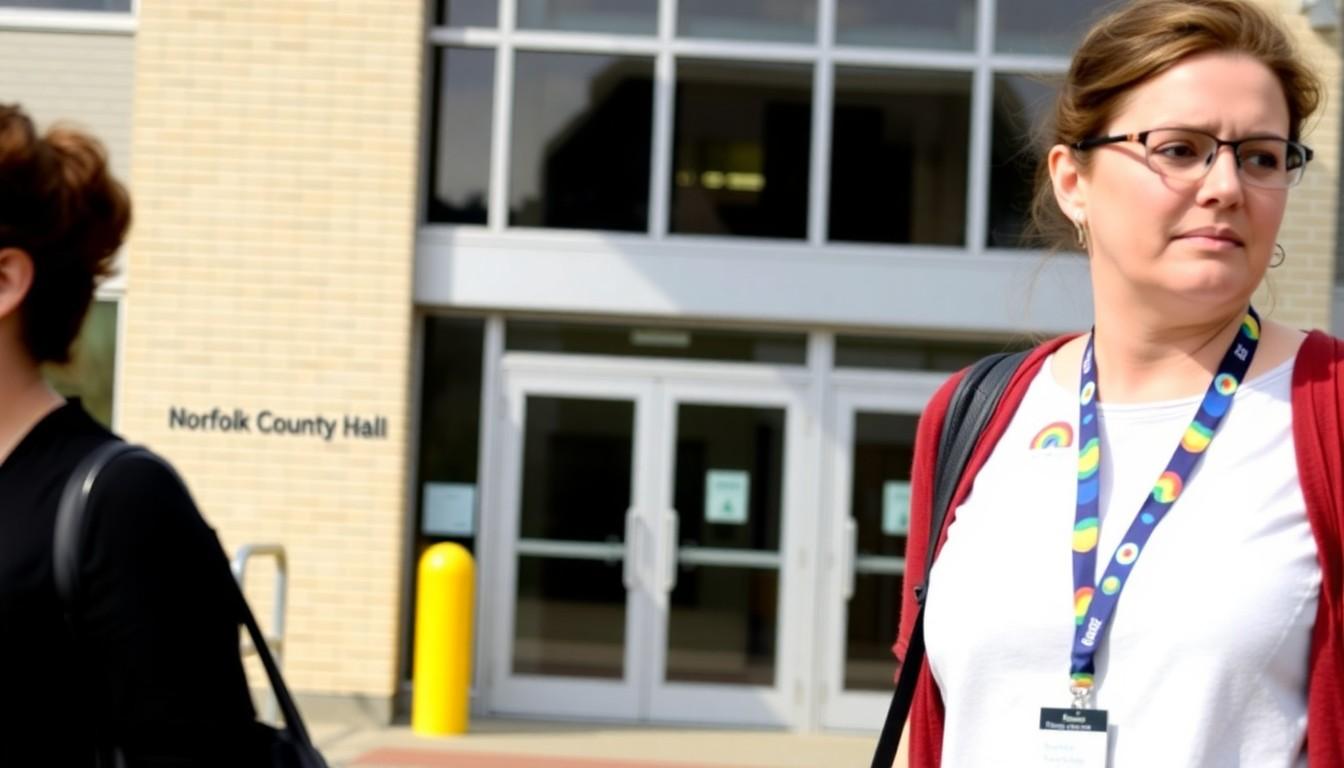
Shoppers are turning their eyes to County Hall as staff and community members stage a colourful protest over a decision that matters locally , the removal of the Progress Pride flag , and to show why workplace solidarity can become headline news. Here’s what happened, who’s involved and what it means for council life in Norfolk.
Essential Takeaways
- What happened: Around 40 demonstrators gathered outside County Hall, handing out more than 100 rainbow stickers to staff and placing Pride posters in windows.
- Who was involved: The crowd included concerned locals, Greens and Liberal Democrats; several Reform UK councillors watched from inside.
- Tactics used: Stickers, window posters, chalk messages and a few staff wearing badges or adding rainbow borders to screens , low-key but highly visible.
- Council response: Facilities staff removed chalk marks afterward and the council emphasised the right to peaceful protest while noting routine clean-up.
- Political heat: The dispute follows Reform UK’s move to stop flying the Progress Pride flag and wider debate about neutrality in public services.
A bright protest with a quiet message , what unfolded at County Hall
The clearest image from the morning was simple: Pride flags covering the gates and steps, protesters handing out stickers to staff with smiles and a few songs echoing up the approach to County Hall. According to local reports, around 40 people took part and more than a hundred stickers changed hands, some tucked under lanyards, others worn with quiet defiance. The scene felt civil but pointed , a visual nudge that flags and symbols still matter to people who work for the council and to the communities they serve.
The action grew out of a row over the Progress Pride flag, which the new administration decided would no longer fly above County Hall. That decision has become the focal point for staff-led pushback, meeting the national conversation about how public bodies signal inclusion. For many employees, small acts , a badge, a rainbow border on a monitor , become a way to show solidarity without breaching workplace rules.
Who’s lining up on each side , councillors, staff and national voices
The protest drew Green and Liberal Democrat councillors who joined members of the public and council staff; Reform UK councillors mostly observed from inside the building. Some exchanges were heated , a newly elected councillor shouted that the flag had “no place” there , while others were more restrained, with protesters choosing to sing rather than heckle.
National figures also chimed in. One high-profile visitor to Norfolk criticised staff who supported the protest, framing civil servants’ neutrality as sacrosanct and rejecting calls to restore the flag. That intervention illustrates how a local rows can attract national attention and sharpen rhetoric, even as staff continue quieter forms of dissent.
Small gestures, big meaning , how staff are responding day to day
Not all resistance has been dramatic. Reports show staff wearing Pride badges, adding rainbow screen borders and accepting stickers from protesters on their way into work. In one bold move, an employee placed protest posters inside a fifth-floor window. These little acts carry an emotional weight: they’re visible, they’re personal and they signal to colleagues and visitors that some staff feel the council should visibly support LGBTQ+ communities.
For employers and managers, this is the tricky bit. It’s entirely reasonable to expect staff to work neutrally, yet forbidding any expression risks appearing tone-deaf. Many organisations opt for a middle way , allowing discrete displays so long as they don’t interfere with duties , and Norfolk’s situation highlights why that balance matters.
Clean-up, communication and council procedure , what happened after the protest
After the event, facilities staff removed chalk markings and took down banners as part of standard practice, the council spokesman said. Officials framed the clean-up as routine and reiterated their respect for peaceful protest. Reform cabinet members pointed to the need for staff views not to disrupt service delivery, while critics argued that restoring the flag is about representation rather than politics.
Practical point: when protests occur on public property, councils tend to follow a predictable script , allow the demonstration, document it, then restore the premises. That sequence is calming, but it doesn’t resolve the underlying dispute about symbolism and policy.
What this means for Norfolk and beyond , politics, workplaces and inclusion
This episode is a snapshot of a broader trend: local workplaces becoming stages for cultural debates. Reform UK’s stance , that Pride is political and should not be promoted by public bodies , clashes with staff and councillors who see visible support as essential to inclusion. The result is an ongoing tug of war played out in symbolic gestures, council chambers and, sometimes, national headlines.
If you’re a manager facing similar tensions, simple steps help: set clear, consistent policies on workplace expression, communicate them openly, and allow compassionate discretion where safety and inclusion are concerned. For staff who want to show solidarity, consider subtle, non-disruptive expressions that respect workplace rules while making a point.
It's a small change that can make every workplace gesture count.
Source Reference Map
Story idea inspired by: [1]
Sources by paragraph: