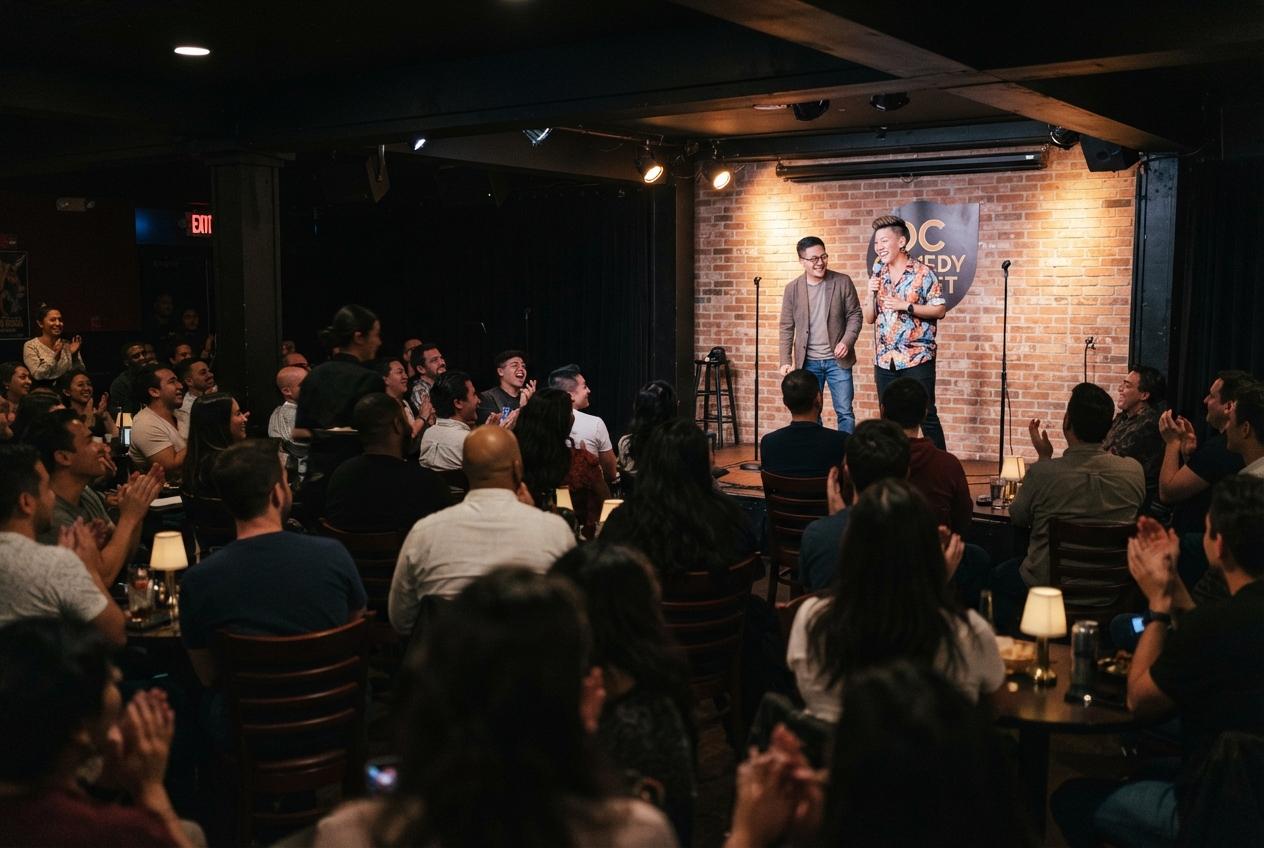
Shoppers are turning their ears to a new wave of stand-ups: queer Asian comedians in Washington, D.C., who are redefining family jokes, identity and community onstage , and proving why representation in comedy matters during Pride and beyond.
Essential Takeaways
- Tight-knit shows: Local queer Asian lineups are small but spirited, with a warm, communal vibe that feels like a shared living-room roast.
- Family fodder: Many sets mine immigrant-family expectations , the jokes land because they’re rooted in recognisable truth and everyday awkwardness.
- Safe creative spaces: Promoters and collectives like Funny Side Up offer free, inclusive slots that showcase new talent and build confidence.
- Identity work onstage: For trans and nonbinary performers, stand-up doubles as personal processing , honest, cathartic and often hilarious.
- Growing but underrepresented: Comics report more visibility at special events, yet queer comics of colour remain underrepresented in the mainstream D.C. scene.
A moment of joy that smells like bar beer and sibling rivalry
The opening hook felt immediate: a packed bar, punchlines about tombstones and parents who clearly didn’t RSVP to their child’s love life. According to coverage in local outlets, audiences laughed loud and long as comics flipped immigrant-family pressure into gleeful self-mockery. The atmosphere was intimate and electric, the sort of room where jokes about culture land harder because everyone recognises the shape of the truth behind them.
Backstory: many performers describe finding each other in scattered scenes rather than a single, obvious community. And that scatter actually fuels the material , it’s what makes the jokes feel fresh and personal.
Why family jokes still rule the set
Family expectations provide a throughline for many acts, from barbs about being “the best gay” to awkward interracial-intro tensions. The humour works because it’s specific: audiences recognise the details , the food, the comparisons, the well-meaning parental questions , and that recognition produces a communal laugh.
Practical tip: if you’re putting together a night or hunting for new comedians, look for performers who turn personal truth into broad relatability; those are the acts that build repeat audiences.
Spaces that welcome new voices , and keep them coming back
Groups and weekly nights have become vital. One local night runs free shows dedicated to inclusivity; another collective grew from a WhatsApp chat into staged gigs at major venues. These platforms let comics test work, meet peers and learn to read rooms that aren’t always designed for them.
Context: industry figures and community organisers say these grassroots initiatives are often what propel comics from hobbyists to touring acts. If you want to support the scene, attend a free night or tip generously , it matters.
Stand-up as identity work and public therapy
For trans and nonbinary performers, the stage is more than entertainment; it’s a place to repackage, process and present identity on their own terms. One comic credited older trans performers with giving them permission to be themselves in public, noting that performing helped during transition.
Comparison: where some creative spaces sanitise queer stories, the queer Asian comedy nights let messy, complicated lives be both funny and humanising.
What’s next for D.C.’s queer Asian comedy scene?
The scene is small and still finding its footprint in the wider comedy ecosystem. Yet the gains , opening slots for visiting headliners, self-produced shows, festival spots , suggest momentum. Promoters and audiences alike are realising that diversifying lineups not only feels right, it’s genuinely entertaining.
Outlook: expect to see more themed lineups, cross-city collaborations and established venues booking these comics more regularly as demand for authentic, intersectional voices grows.
It's a small change that can make every set feel like a little revolution.
Source Reference Map
Story idea inspired by: [1]
Sources by paragraph: