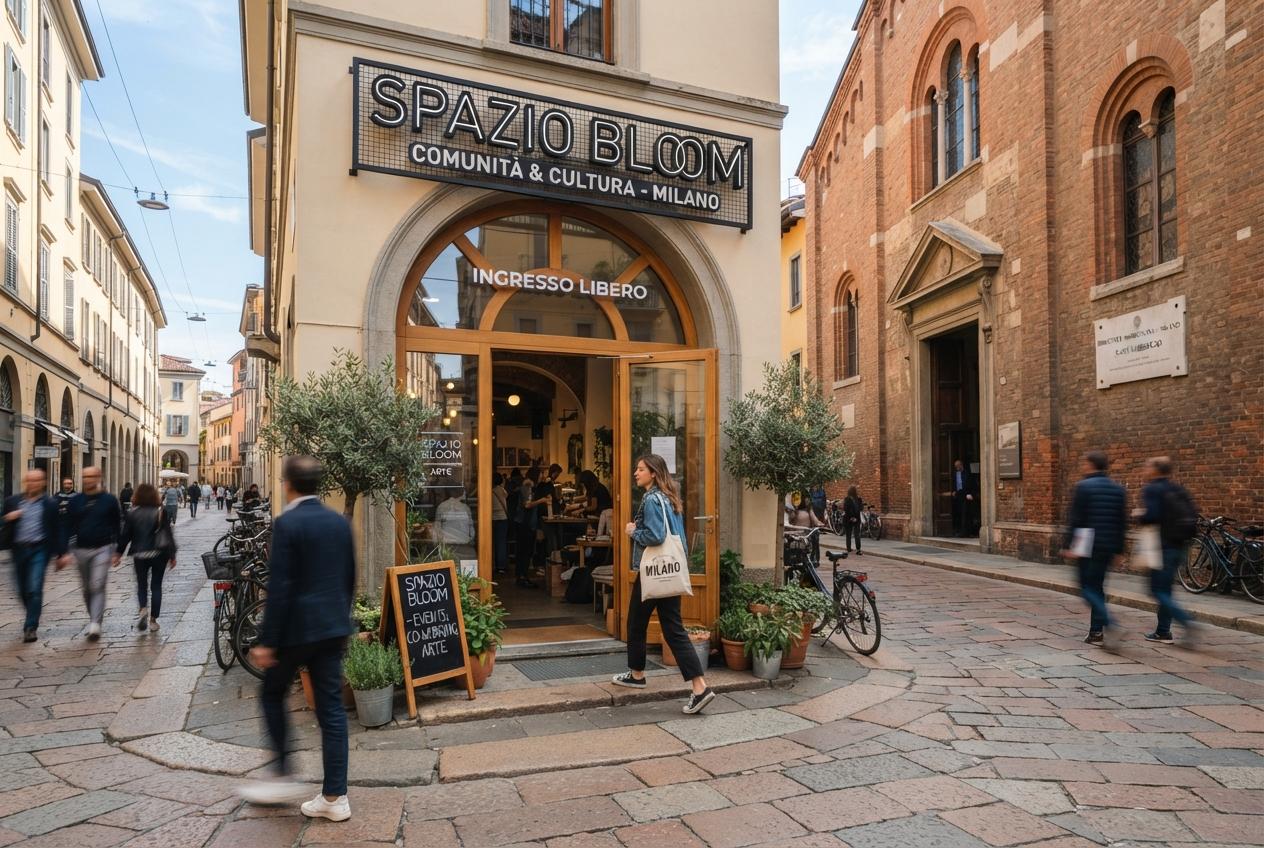
Shoppers and residents are discovering Spazio Bloom , a fresh, participatory public space launched in Milan’s Municipio 6 , designed to make the area around Biblioteca Sant’Ambrogio greener, more playful and openly queer-friendly; it’s a small urban makeover with big community intent.
Essential Takeaways
- Local launch: Spazio Bloom opened outside the Centro civico on via San Paolino 18, offering a new meeting spot in Sant’Ambrogio with mobile seating and shared planting.
- Project backbone: It’s part of The Queer City, led by the Polimi Desis Lab from the Politecnico di Milano and produced with local LGBTQIA+ groups.
- Collaborative pact: The space was realised through a formal Patto di Collaborazione joining the Comune di Milano, Municipio 6, community collectives and the Biblioteca Sant’Ambrogio.
- Design-led approach: Student projects from the Temporary and Inclusive Urban Solutions course informed the layout, blending textile art and community gardening.
- Sensory note: Expect a lived-in, tactile feel , soft textiles, portable benches and pockets of greenery that invite lingering.
A bright new corner outside the library , and it feels intentional
Spazio Bloom sits where a small municipal green once was, now reimagined with moveable furniture, shared planting beds and community art that you can touch. According to the Politecnico’s design unit, the idea was never just to beautify the spot but to make it usable, social and welcoming to everyone. Walk past and you’ll notice the softness of textile installations alongside the scent of newly planted herbs , a deliberate mix to make people stop and stay.
This was born from a simple belief: public space should be co-created with the people who use it. The design team ran workshops and co-design sessions so residents, associations and students could all leave a mark. If you care about pocket parks that actually get used, this is the kind of small-scale intervention that works.
The Queer City , more than a label, a practical framework
The initiative is part of The Queer City, a project overseen by the Polimi Desis Lab that aims to make urban life more plural and accessible. Partners include an impressive roster of LGBTQIA+ organisations and local institutions, which means the project mixes academic rigour with grassroots know-how. That blend helps the space avoid tokenism; instead it supports ongoing programming and a networked approach across Milan’s nine municipi.
For residents who want safer, more inclusive streets, this is promising. The Queer City framework gives Spazio Bloom a clear mission: inclusivity is a design parameter, not an afterthought. Expect events and collaborations that reflect the community’s diversity rather than one-off displays.
How students shaped the look , textile art meets shared gardening
Two student proposals from the Temporary and Inclusive Urban Solutions course guided Spazio Bloom’s physical setup. One focused on green, communal planters; the other on soft, textile installations that make the area feel domestic and approachable. A jury made up of project partners and local stakeholders selected the concepts, and the result is both practical and tactile.
If you’re curious about design that engages people, this is a neat case study: textiles soften the hard city edges and flexible furniture adapts to gatherings of different sizes. For anyone organising a similar initiative, a takeaway is clear , involve learners and local users early, and you can turn academic work into real neighbourhood assets.
The Patto di Collaborazione , partnership in action
Spazio Bloom exists because public bodies, neighbourhood collectives and cultural institutions signed a Patto di Collaborazione to make the idea happen. The Comune di Milano, Municipio 6, the Collettivo Smoll, Il Rasoio and Biblioteca Sant’Ambrogio pooled resources and commitments to ensure the space is activated and maintained.
That kind of formal agreement matters. It moves projects beyond pop-ups to sustainable interventions with shared responsibilities. For community organisers, the lesson is familiar: lasting change usually comes from clear commitments, not good intentions alone.
Why this matters for the neighbourhood , small change, big effect
A few benches and some planted boxes might sound modest, but spaces like Spazio Bloom shift the rhythm of a neighbourhood. They encourage people to pause, neighbours to talk, and local groups to programme activities. The Biblioteca Sant’Ambrogio gains a livelier frontage and a literal extension of its civic role.
Walking by, you can tell it’s already becoming part of everyday life , children playing, students reading, small events popping up. For anyone thinking about urban regeneration, it’s a reminder that inclusive design and cooperation can make public space feel cared for again.
It's a small change that can make every visit to the library , and the street outside it , a bit brighter.
Source Reference Map
Story idea inspired by: [1]
Sources by paragraph: