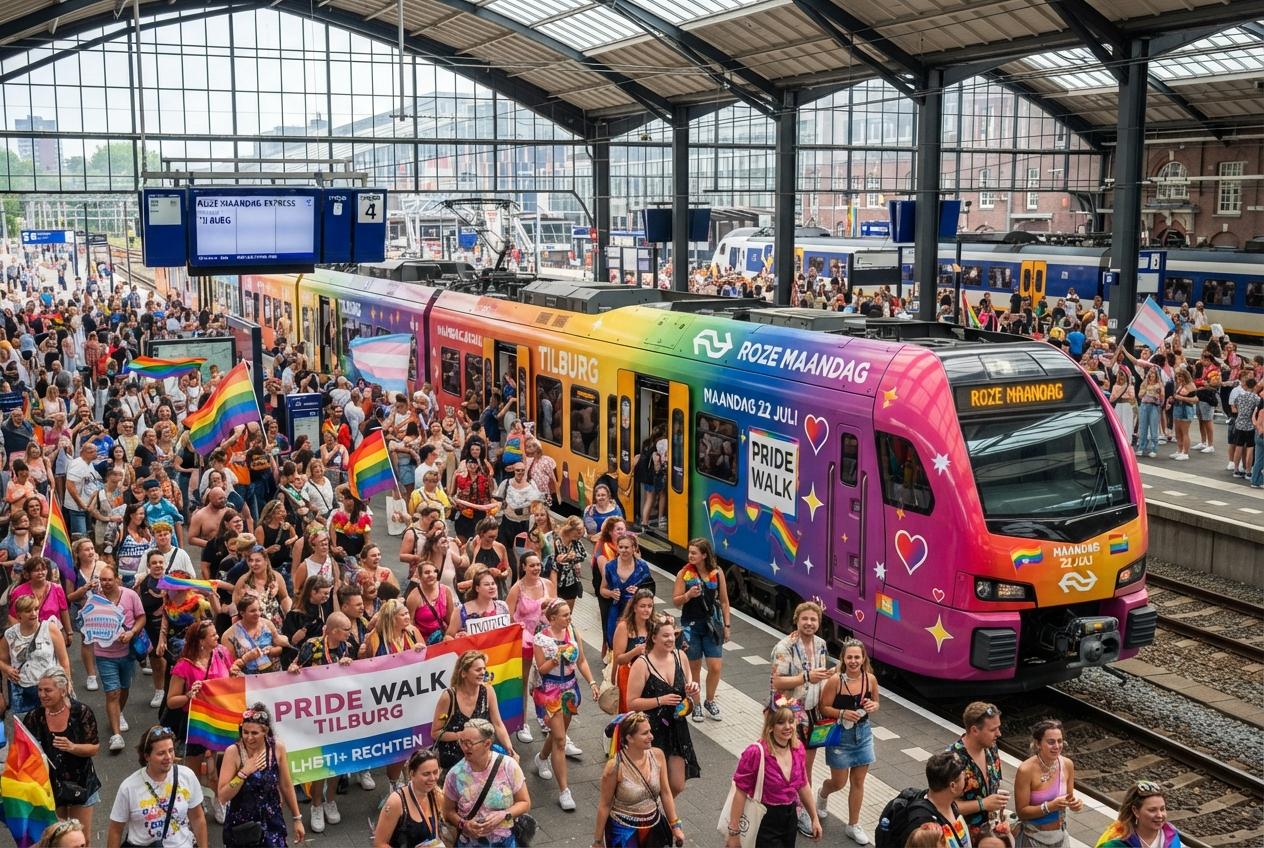
Celebrate on rails: passengers boarded the Roze Maandag Express in Rotterdam and rode a lively, visible parade all the way to Tilburg, led by dragqueen-machinist Ruxy Bonaparte and comedian Richard Groenendijk , a colourful kickoff for Pride Walk and Roze Maandag that mattered across cities.
Essential Takeaways
- Visible celebration: The Roze Maandag Express launched from Rotterdam Centraal, creating a moving party en route to Tilburg.
- Star hosts: Dragqueen-machinist Ruxy Bonaparte fronted the train, joined by comedian Richard Groenendijk and other performers.
- Musical mood: DJs, brass bands and singalongs (ABBA, K3, I Will Survive) kept energy high; passengers danced in carriages.
- Community spirit: Riders emphasised protest and pride , showing up visibly for equality felt both joyful and necessary.
- Practical perks: Stops in Utrecht and ’s‑Hertogenbosch let more people join; there was even a special make‑up room and pink Bossche bollen on board.
A party that starts before the parade
The most striking thing was the noise , and not just the music. The platform at Rotterdam Centraal buzzed with trumpets, sequins and laughter; the local brass band So What! blasted Sweet Caroline and the crowd responded. According to local reports, the Express peeled away just after 11.16am, doors closing on a carriage already thrumming with dance tracks and chatter. It’s the sort of launch that makes you realise Roze Maandag isn’t only an event in Tilburg’s centre, it’s a rolling festival that invites the country in.
Backstory matters: the train was conceived as a visible, mobile welcome to Pride Walk, aimed at broadening reach and giving people who can’t make a full festival day an accessible way to join in. Riders told reporters they felt the ride doubled as both celebration and protest , a reminder that visibility still carries political weight.
Drag at the controls , literally
The image of a dragqueen as machinist is playful and potent. Ruxy Bonaparte steered the narrative and the train, with fellow performers like Harley K. Winn and Willeke Peterse‑Bosje adding theatrical flair on the platform. Organisers wanted more than spectacle; they wanted to normalise queer presence across public space. That’s a small, human kind of activism: flamboyant, cheeky and impossible to ignore.
If you’re wondering why this works, think of visibility as shorthand for safety and recognition. Public performances on public transport reach commuters who might not otherwise attend Pride events, and they flip routine into celebration.
Music, snacks and make‑up rooms , comfy inclusion on board
The onboard mix was clever: DJs spinning ABBA and K3 alongside a brass band gave passengers moments to sing, dance and gather. Reports mention a special make‑up room at Rotterdam, so people could get festival‑ready mid‑journey , practical and joyful. Even small comforts, like pink‑filled Bossche bollen in ’s‑Hertogenbosch, added a tactile, tasty layer to the experience.
For anyone planning a similar trip, pack layers (train carriages get warm), comfortable shoes for hopping between carriages, and a small bag for snacks. If you’re nervous about joining, a make‑up room or friendly face on the platform can make all the difference.
People on the train: memories, protest and community ties
Riders spanned generations. One passenger recalled first protesting in 1976 and said she’ll keep showing up, calling the Pride Walk both a party and a protest. Others spoke of faith communities, family expectations and the necessity to be seen. Their testimony reminded reporters that Roze Maandag still matters beyond a single day of colour: it’s a ritual of belonging and resistance.
Local organisations, including the Tilburg Roze Maandag foundation, framed the train as outreach. They emphasised that events which travel through multiple cities help knit together a national conversation about inclusivity.
What this means for future Pride programming
Mobile Pride events like the Roze Maandag Express point to a trend: bring the festival to people, don’t wait for them to come. According to event pages and regional coverage, the Express stopped in Utrecht and Den Bosch before a final arrival in Tilburg, widening participation and building momentum for the Pride Walk. That makes the celebration more accessible and more visible in everyday spaces.
Expect more creative activations: pop‑up make‑up stations, family‑friendly carriages, and collaborations with local bands and comedians. If you’re organising or attending, think about how simple gestures , music, snacks, comfortable meeting spots , amplify inclusion.
It's a small change that can make every step towards visibility feel celebratory and safe.
Source Reference Map
Story idea inspired by: [1]
Sources by paragraph: