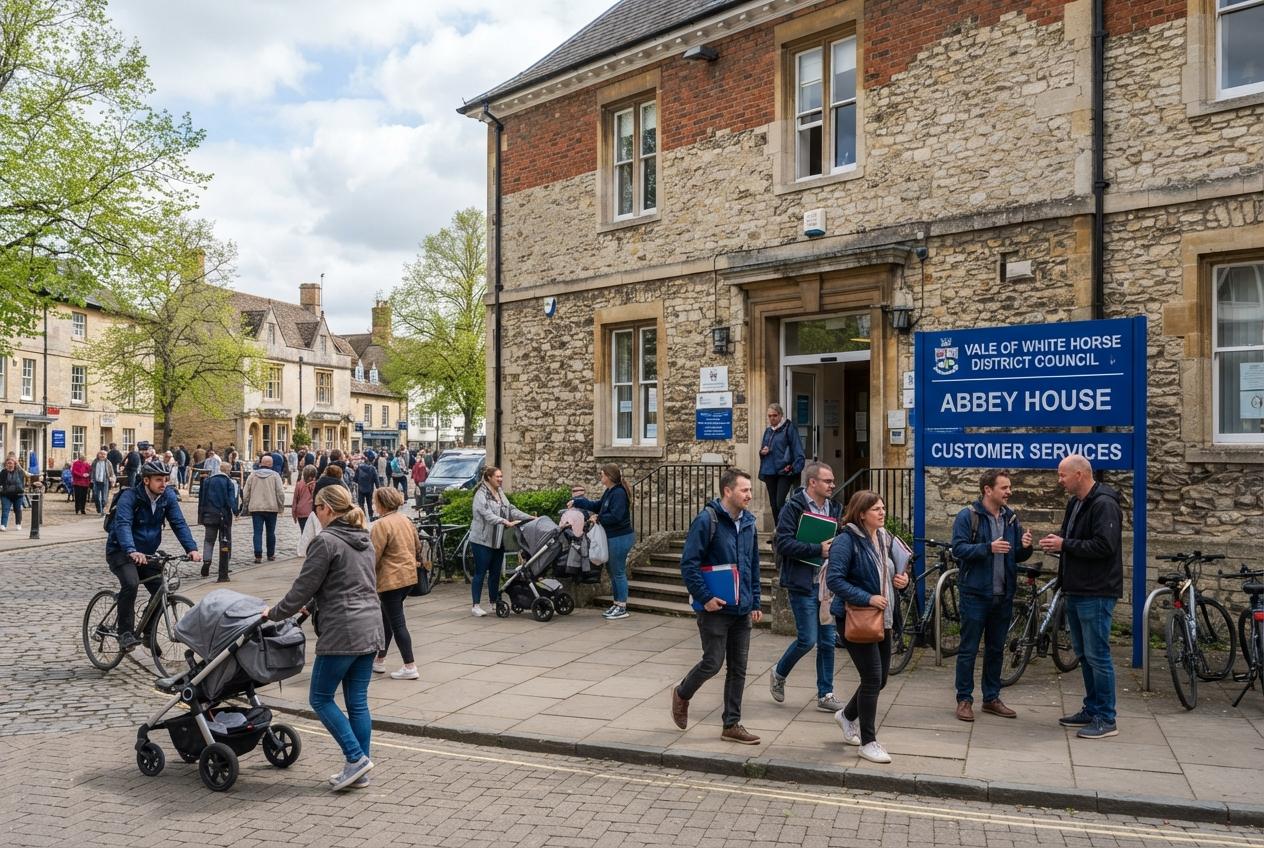
Shoppers and residents have noticed councils preparing to act: Oxfordshire Green councillors are pushing motions in Vale of White Horse and South Oxfordshire to reassure trans and non-binary people after the Equality and Human Rights Commission updated guidance on single‑sex services and spaces. It matters because the guidance has sparked confusion and practical questions for local services.
Essential Takeaways
- Councils moving quickly: Vale of White Horse and South Oxfordshire councils will debate motions in mid‑July aimed at protecting trans and non‑binary residents within the law.
- Local voices: Green councillors argue the updated EHRC code creates uncertainty and extra costs for inclusive services, and are urging clarity and compassion.
- Practical concern: Leisure centres, care services and events are among local provisions flagged as needing careful handling to balance legal duties and safety.
- Staff effort: Council teams are already reviewing how the code affects day‑to‑day services, training and signage, with an eye on reasonable adjustments.
- Wider debate: National guidance has prompted discussion about tensions between single‑sex provision and access for disabled and trans people, so councils want practical, local solutions.
Councillors say the guidance has real consequences for ordinary services
Greens in Vale of White Horse and South Oxfordshire have tabled motions after the EHRC published its revised code on single‑sex spaces, and they’re blunt about the local impact. The councillors describe a “legal minefield” that leaves volunteer groups, charities and small businesses wondering how to behave without risking challenge or expense. That uncertainty shows up in small but tangible ways: changing room signs, staff training, booking systems and policies for events.
Councillors are urging clear local policy so people don’t feel shut out. For staff, the change means more detailed risk assessments and clearer scripts for tricky conversations. Practically, many councils are already re‑examining room layouts and supervision at leisure centres to avoid awkward moments , and to make everyone feel as safe as possible.
What the EHRC guidance actually says , and why it’s causing debate
The Equality and Human Rights Commission updated its guidance to clarify how public bodies should handle single‑sex services while complying with equality law. That’s prompted questions about what counts as a single‑sex service, when exceptions apply, and how to balance competing needs. According to reporting in national outlets, regulators have even concluded regulatory action on some single‑sex policies, underlining the seriousness of the issue.
Critics say the code tightens rules in ways that could exclude or stigmatise trans and non‑binary people, while some campaigners and disability groups warn of potential tensions where privacy and dignity are paramount. So local councils are trying to interpret the guidance sensitively and practically, rather than waiting for a perfect national answer.
How councils can square the circle , practical steps for services
Councils aren’t helpless; several practical measures are already being discussed and trialled. Simple changes like introducing private cubicles, single‑occupancy toilets, and clearer booking options for classes can reduce friction. Training front‑line staff to respond calmly and predictably, and publishing clear, accessible guidance for service users, helps too.
When you’re choosing a service , a gym class, a community group, or council‑run activity , look for policies labelled “inclusive access” or “privacy options.” If something isn’t clear, a quick call to the provider often clears things up faster than getting anxious about hypothetical rules.
Voices from the chamber , councillors stressing legality and compassion
Councillor Katherine Foxhall, proposing the Vale motion, described the guidance as “cruel and unnecessary,” saying it cements exclusion and will cause real harm to trans, non‑binary and gender non‑conforming people. In South Oxfordshire, Councillor Sam Casey‑Rerhaye stressed the council’s duty to follow the law while doing everything possible to maintain safe, welcoming spaces for residents and staff.
Those statements reflect a local‑level approach: acknowledge legal obligations, then use discretion and goodwill to protect vulnerable people. It’s a pragmatic stance that may well become a model for other district councils.
What this means going forward , local politics and everyday life
Expect more councils to bring similar motions, and for local authorities to share practical solutions as they refine policies. National debate will continue, especially about how to balance the needs of disabled people with access for trans people, but local action can soften the edges. For residents, the immediate outcome should be clearer signage, better staff guidance and more options for private use.
It’s the kind of small, sometimes unglamorous council work that quietly improves people’s lives , and it’s happening now, in real time.
It's a small change that can make public services safer and more welcoming for everyone.
Source Reference Map
Story idea inspired by: [1]
Sources by paragraph: