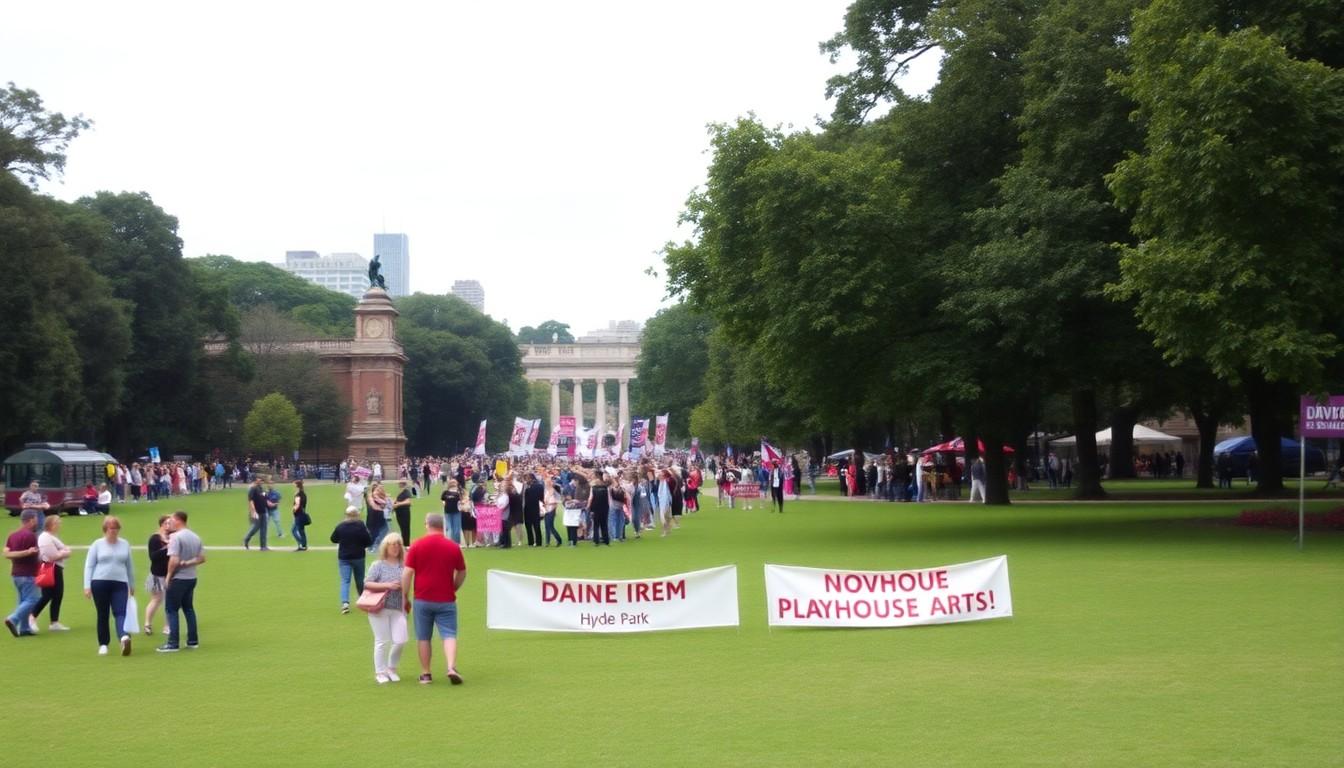
Shoppers, arts-lovers and queer communities have rallied after organisers of Sydney’s new Divine Playhouse said their lease was abruptly terminated, sparking protests and legal fights over an 1842 NSW law that organisers say is being weaponised to shut down an LGBTQIA+ arts space.
Essential Takeaways
- Lease terminated abruptly: Heaps Gay Events says the landlord ended the year-long lease with little notice and no good-faith talks.
- Legal pretext: The eviction relies on an obscure 1842 NSW “offensive trade” rule, historically about smells and waste, now applied to programming.
- Community backlash: More than 17,000 petition signatures, a GoFundMe raising tens of thousands, and planned public actions have followed.
- Events cancelled, artists impacted: Shows were pulled and a fundraiser is being organised to pay cancelled performers and cover legal costs.
- Public actions planned: A peaceful “sing-in” is due in Hyde Park, with organisers framing the fight as about who gets to decide Australia’s cultural stages.
What happened , abrupt eviction and stunned organisers
Organisers discovered their lease at 420 Kent Street had been terminated with minimal warning, leaving a newly opened arts venue empty and artists cancelled, and prompting near-immediate outrage. According to reporting in The Guardian and Rolling Stone AU/NZ, Heaps Gay Events say the notice came by legal letter rather than conversation, a move founder Kat Dopper describes as devastating and unjust. You can picture the quiet of the deconsecrated church, its chairs stacked and lights off , a lot of warmth suddenly gone.
Backstory shows the building has long been a performance space, once a church then a theatre for decades, which makes the sudden decision feel especially sharp to locals who’d watched the venue’s transformation. Organisers argue it’s not just about a single lease but about precedent: if a landlord’s private objections can close a stage, other unconventional or minority-led arts projects could be at risk.
The odd law being used , “offensive trade” explained
At the heart of the dispute is an 1842 New South Wales statute originally aimed at industrial nuisances and bad odours, now being cited to claim the venue is an “offensive trade”. It’s a strange legal contortion that’s raised eyebrows in coverage from The Guardian and The Music Network. For most readers, it sounds almost Dickensian , a law meant for tannery smoke suddenly policing what gets staged in a heritage-listed space.
Legal commentators on the story point out this use is unprecedented in modern cultural disputes, which is why so many artists and supporters are alarmed. Practically, that means organisers are scrambling for lawyers and community support while the clock ticks on deinstallation and evictions.
Community reaction , petitions, protests and a sing-in
Response has been swift and vocal: thousands have signed petitions, tens of thousands have been raised via GoFundMe, and a “sing-in” is planned in Hyde Park to publicly defend the venue. Pedestrian, DNA Magazine and The Pink Times document the wave of solidarity and the tactics supporters are using. There’s a visceral, communal side to this , people showing up to sing in public parks is a low-cost, high-visibility way to turn frustration into peaceful action.
Organisers are emphasising inclusion and free expression rather than confrontation. The Hyde Park event and planned fundraiser shows aim to recoup lost artist fees and keep the conversation about who decides art in public life squarely in the open.
Who’s protesting and why religion is front and centre
Christian groups staged demonstrations after the venue’s opening night, arguing programming mocked religious beliefs and urging withdrawal of a government grant. Coverage in Rolling Stone and The Guardian notes groups such as Fit for the Kingdom and Prodigal Sons led protests, and that concerns from faith communities influenced the landlord’s breach notice. That sequence , opening, protests, breach notice, lease termination , is why many see the eviction as more than a landlord dispute.
For organisers, the moment has become symbolic: it’s about whether private property owners can effectively veto culturally challenging work on moral grounds. That’s a debate that matters beyond one building, touching grant processes, cultural funding and the security of grassroots arts spaces.
Practical tips for supporters and venue operators
If you want to help, organisers suggest lawful, peaceful protest, donating to the legal fund, and backing planned shows that pay cancelled artists. For venue operators, this case is a reminder to check lease clauses around conduct and to document communications; build community allies early; and consider insurance or legal funds for rapid response. Journalists and arts workers are also recommending keeping records of any harassment, protest actions, and landlord correspondence , those details often matter in disputes.
The wider takeaway is simple: small, newly opened spaces are vulnerable to targeted pressure, and community mobilisation often makes the difference between closure and survival.
It's a small change that can make every stage a safer place for diverse voices.
Source Reference Map
Story idea inspired by: [1]
Sources by paragraph: