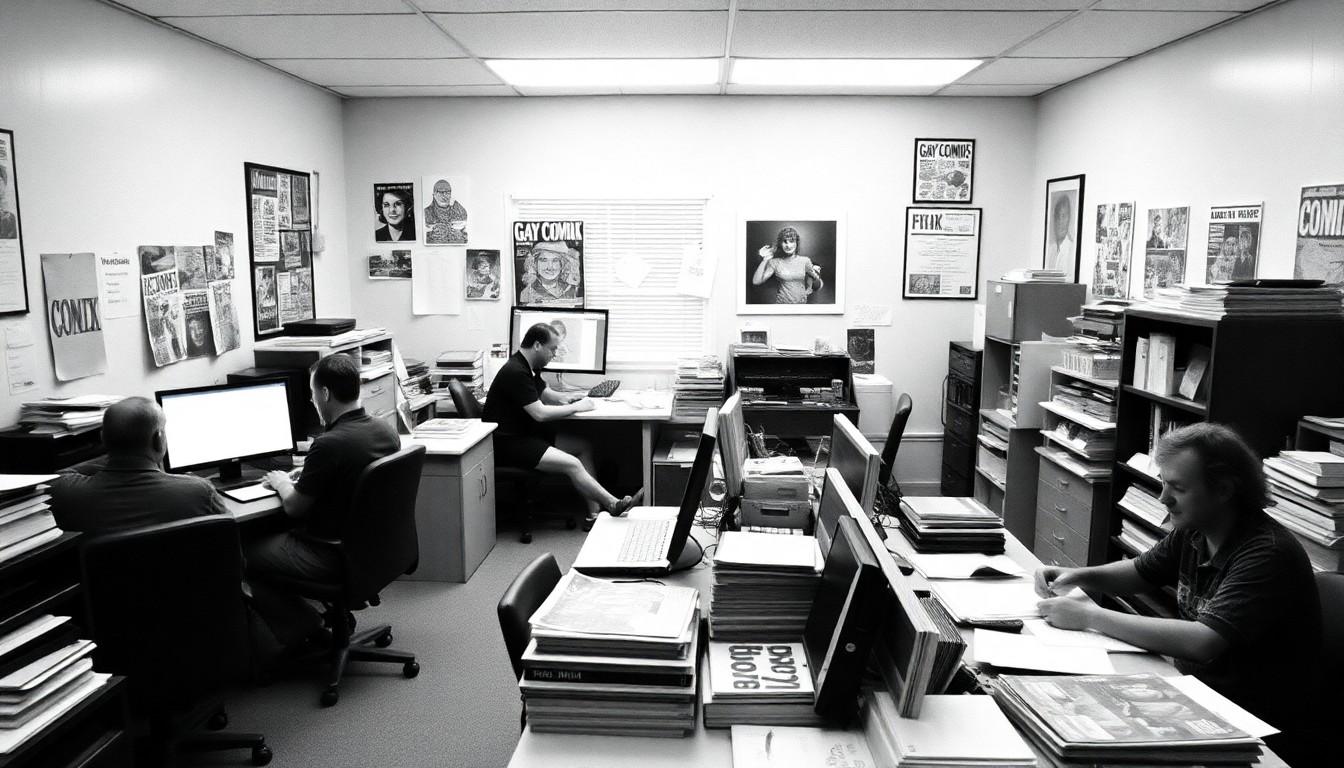
Discover why readers and scholars are revisiting Gay Comix , a groundbreaking, varied showcase of queer voices from 1980–1998 , and what its diverse portrayals of gender, sexuality and race mean for comics today. This piece guides you through key moments, notable creators and how to explore the series for free.
Essential Takeaways
- Historical importance: Gay Comix ran from 1980 to 1998 and gathered just over 100 LGBTQ+ creators, helping build an early queer comics community.
- Diverse storytelling: Contributors used differing styles and tones , from comic memoir to satire , to depict gender, sexuality and race; nonwhite artists added crucial, often under-discussed perspectives.
- Notable creators: Jennifer Camper, Burton Clarke, Roberta Gregory and Ivan Velez Jr. stand out for bringing racially diverse characters and fresh narratives.
- Access and context: The Radical History Review’s article “Reclaiming Diverse LGBTQ+ Comics Histories” offers a free, comprehensive read through September 30, 2026, situating Gay Comix within queer cultural history.
- Why it still matters: Gay Comix set groundwork for the 21st-century surge in queer comics that now cover an even broader LGBTQ+ spectrum.
Why Gay Comix still feels urgent and vivid
Gay Comix arrived at a fraught cultural moment and landed with a distinct, personal voice: comics that felt immediate, intimate and sometimes raw. Readers often recall the tactile sensation of small-press zines and anthologies, the ink-smudged honesty that made those pages feel like a confidant. According to Radical History Review, the series’ patchwork of voices helped create a queer comics ecosystem long before mainstream publishers noticed the market.
The anthology format allowed creators to experiment: one strip could be confessional, the next sharp satire. That mix made Gay Comix readable and risky, a place for both humour and grief. If you want to understand why contemporary queer graphic novels can be so formally bold, Gay Comix is a good place to start.
Who broadened the conversation , meeting the artists who mattered
While the series featured many contributors, certain artists rewired expectations by centring race, class and gender in ways the wider comic world rarely did then. Jennifer Camper’s work often blends queer cultural detail with a puckish tone; Burton Clarke and Ivan Velez Jr. brought urban, racially aware narratives; Roberta Gregory tackled gender and domestic life with a frankness that could be funny and disarmingly sharp.
These creators didn’t simply add diversity as an afterthought , they pushed representation into the foreground. The Radical History Review piece maps how these artists offered alternative queer imaginaries and challenged a predominantly white narrative of gay life.
How Gay Comix influenced later queer comics trends
Think of Gay Comix as a seedbed. Its DIY ethos, range of identities and willingness to depict messy, everyday queer experience anticipated the boom in queer graphic storytelling in the twenty-first century. Collections like No Straight Lines documented four decades of queer comics and show a clear line from small-press anthologies to more visible, varied queer publishing today.
Editors and scholars now read Gay Comix not only as cultural artefact but as influence: today's trans and non-binary creators, memoirists and genre-benders inherit a lineage of experimentation and community-building that began in part with anthologies like Gay Comix.
Where to read and why the new essay matters
The Radical History Review’s essay “Reclaiming Diverse LGBTQ+ Comics Histories” offers the first broad reassessment of the series across its full run, with a focus on how gender, sexuality and race were represented. The piece is free to read through September 30, 2026, which is a rare opportunity for students, librarians and curious readers to explore primary comics and critical context together.
If you want a quick approach: skim the essay to map key issues, then hunt down individual Gay Comix issues or collected reprints to see the pages that prompted those arguments. Buying the special issue supports the scholarship; there’s currently a SAVE30 code for a 30% discount if you want a print copy.
Choosing what to start with , quick tips for new readers
If you’re new to Gay Comix, don’t try to read it chronologically as if it were a single narrative. Dip into issues by contributor or theme: look for pieces by Camper, Clarke, Gregory or Velez Jr. when you want perspectives on race and urban life, or scan for autobiographical strips to feel the era’s personal stakes. Libraries, secondhand booksellers and specialist comic archives are good hunting grounds; some key essays and anthologies summarise highlights if originals are scarce.
Also, notice format and tone. Some strips are polished and comic-book like, others are rough and candid , that variety is part of the anthology’s power. And if you’re teaching or researching, the Radical History Review article gives useful framing and bibliographic leads.
It's a small change that can make the history of queer comics feel fuller and more surprising.
Source Reference Map
Story idea inspired by: [1]
Sources by paragraph: