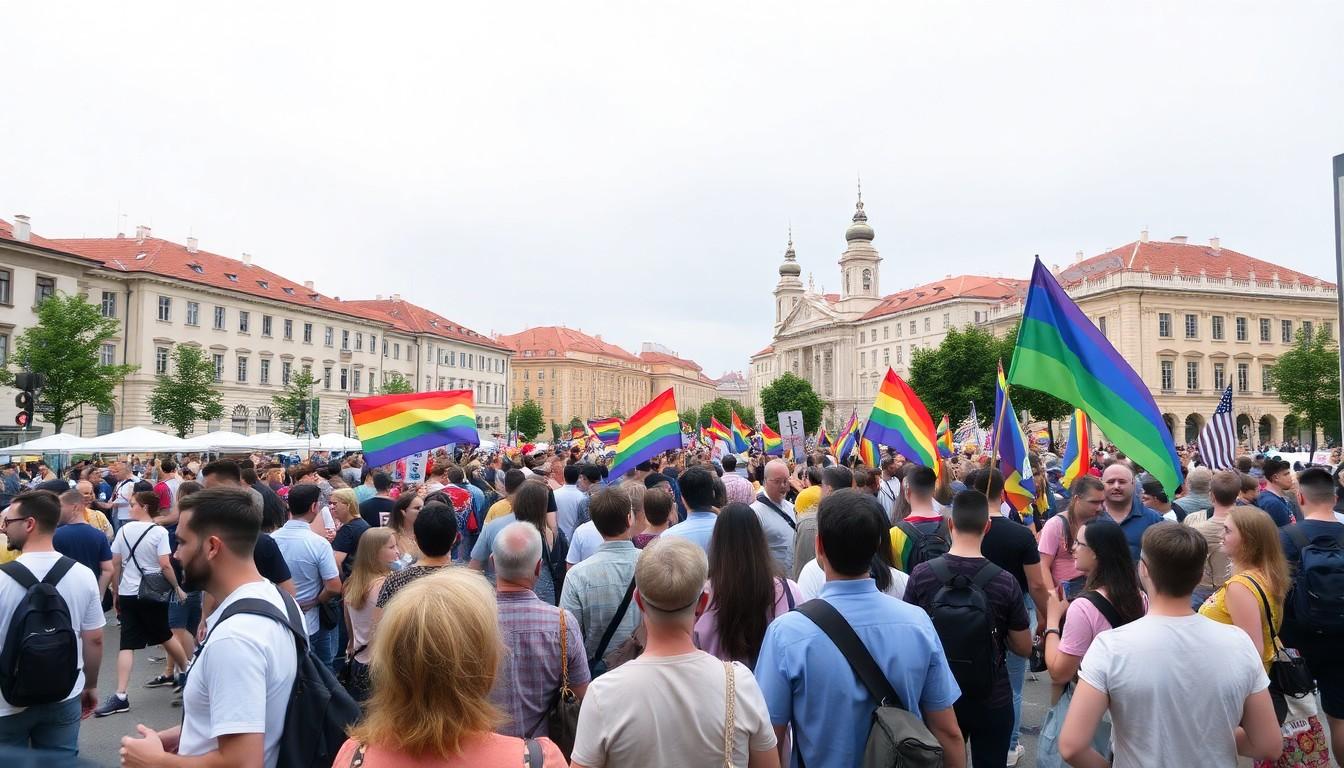
Watchers crowded the capital as two rival marches filled Bratislava’s streets, bringing colour, chants and heavy policing , a vivid snapshot of where Slovakia stands on LGBT+ rights and tradition. The day mattered because it spotlighted safety, free expression and a country wrestling with law, faith and European norms.
Essential Takeaways
- Large turnout: Tens of thousands joined the Dúhový Pride march and a parallel conservative rally, creating a visible, emotional split on the city’s streets.
- High security presence: State and municipal police were deployed along the route and around the square; organisers kept some details secret for safety.
- Historic context: Slovakia’s constitution defines marriage as between a man and a woman, and recent legal changes have stirred debate over recognition of same‑sex unions.
- Local symbolism: Rainbow flags and red “Mama a otec navždy” balloons became shorthand for opposing views , colourful, noisy and symbolic.
- Practical note: Organisers and authorities prioritised route protection and crowd management; expect road closures and heightened checks around similar events.
A vivid city march: what people saw and felt
The strongest image of the day was simple , waves of colour and music cutting through Bratislava’s central streets, the air thick with chants and the tang of suncream and excitement. According to local coverage, Dúhový Pride drew a crowd similar in size to last year, when organisers estimated around 12,000–14,000 people attended. Organisers and speakers framed this year’s event around courage , urging people to be visible and stand up for rights as political and social tensions build.
Organisers intentionally kept parts of the programme and the exact route private for safety. That approach, now common at big public demonstrations across Europe, is meant to limit the chance of clashes and make policing more targeted, and it clearly shaped the feel of the day.
A parallel march for “traditional family” values
At the same time, conservative groups held their 14th National March “Hrdi na rodinu”, carrying red balloons and slogans about marriage and family. Their presence wasn’t a quiet counter‑point but a large, organised demonstration backed by police escort. For many participants, the march is an annual ritual , a visible expression of faith and cultural values in a country where the majority identify with the Catholic Church.
Media outlets covering the conservative event highlighted familiar talking points: protection of children, marriage as a union of a man and a woman, and the preservation of traditional social norms. The scene underlined how public life in Slovakia still contains strong, organised forces arguing for different visions of society.
Law, politics and the EU: why the marches mattered beyond the street
This year’s events landed against a backdrop of legal and political decisions that have strained Slovakia’s relationship with EU norms. Parliament added language to the constitution emphasising national identity and legal primacy in cultural and ethical matters, and Prime Minister Robert Fico has suggested laws should bar recognition of same‑sex marriages performed abroad. That stance clashes with a recent Court of Justice of the European Union ruling requiring member states to recognise such marriages.
Human‑rights groups say these shifts mark a worrying weakening of LGBT+ protections, while authorities insist the country respects rights. The marches therefore served as a public theatre of that debate , not just a festival or protest, but a moment when law, sentiment and European obligations collided.
Safety, logistics and what visitors should expect next time
Police presence was pronounced, and transport restrictions were put in place around the government square and along the march route. Organisers learned from previous years; keeping route details under wraps and coordinating with law enforcement helped avoid the kind of confrontations that made headlines in the past.
If you plan to attend future events, expect road closures, staggered start times and security checks. Carry ID, follow organisers’ social channels for last‑minute updates, and be mindful of mixed crowds , people come for celebration, others to protest. Comfortable shoes and a clear meeting point help if the crowds swell.
What this means for Slovak society and public life
Bratislava’s Rainbow Saturday felt like more than two demonstrations passing each other on a map , it was a snapshot of a country negotiating identity. For many, the Pride march was a hopeful, noisy assertion of belonging; for others, the family march was a defence of long‑held cultural anchors. Both felt sincere, and both were policed heavily to keep the peace.
Looking ahead, these public expressions will likely continue to shape debates in parliament, courts and living rooms across Slovakia. The images from the day , flags, balloons, speeches and police lines , are reminders that questions about rights, recognition and national identity remain very much alive.
It's a small change in public ritual that keeps bigger questions in the open.
Source Reference Map
Story idea inspired by: [1]
Sources by paragraph: