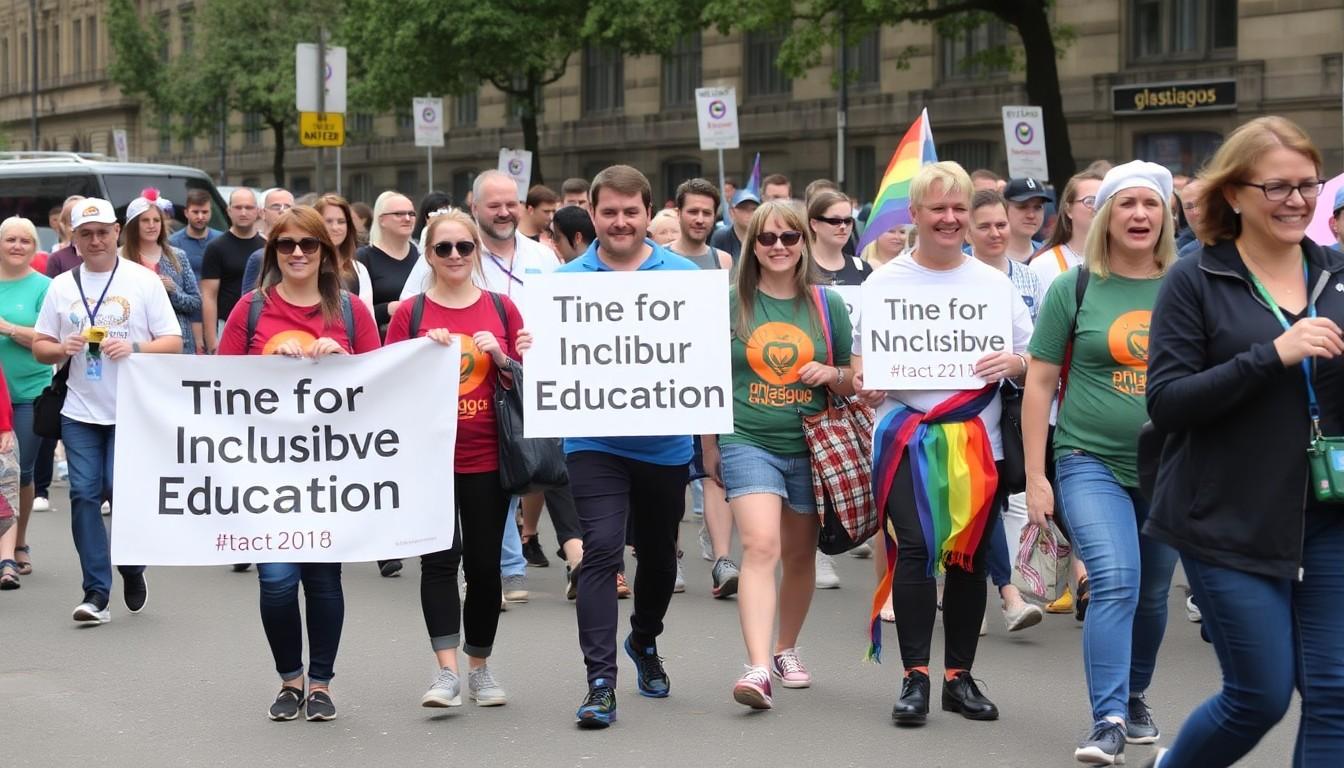
Celebrate the colour, music and politics , Nicola Sturgeon joined thousands at Glasgow Pride, marching with the TIE (Time for Inclusive Education) campaign as the city marked the 25th organised Pride parade, a lively reminder that Pride remains both party and protest.
Essential Takeaways
- High-profile support: Nicola Sturgeon marched with the TIE campaign, showing public backing for LGBT-inclusive education in Scotland.
- Milestone event: Glasgow marked its 25th organised Pride, a parade that began in 1996 as a protest for LGBTQ+ rights.
- Festive atmosphere: The route along the Clyde featured music, dancing and headline acts, with a family-friendly, celebratory feel.
- Controversy on sponsorship: Organisers faced criticism for partnering with Coca-Cola, prompting calls from the Scottish Greens for a boycott and BDS-aligned sponsorship rules.
- Visible community presence: Multiple corporate and civic backers joined the march alongside grassroots groups, while a small counter-protest highlighted continued tensions around global politics.
Sturgeon on the march , what it felt like
The strongest image from Glasgow Green was the sea of banners and the steady beat of music as people walked along the Clyde, a brisk, colourful stretch of the city that felt both jubilant and purposeful. Nicola Sturgeon, the former first minister, walked with the Time for Inclusive Education campaign, adding political weight to a parade that’s as much about rights as it is about celebration. According to on-the-ground photos and reports, the mood was warm and loud , think glitter, megaphones and a healthy sense of solidarity.
This Pride is rooted in history. The first Glasgow march in 1996 was organised as a protest for LGBTQ+ rights, and that spirit persists even as the event has grown. For many, seeing a national figure like Sturgeon takes the moment from local to national, signalling support for inclusive schools and the next generation.
Why the TIE campaign matters here
Time for Inclusive Education delivers Scotland’s LGBT Inclusive Education programme, and its presence at the parade put classroom issues centre stage. Inclusive education is a tangible policy area: it shapes how children learn about identities and diversity, and it affects safety for LGBT pupils. Sturgeon’s appearance offered affirmation for teachers, parents and young people campaigning for comprehensive inclusion in schools.
For anyone wondering whether high-profile endorsements make a difference, they often do , they attract media attention, nudge policymakers, and give grassroots causes a louder platform. If you care about school policies, look for local council and education authority commitments to inclusive curricula and training.
The party line , acts, atmosphere and corporate names
Glasgow Pride’s line-up read like a pop-friendly festival: headline slots from the likes of Liberty X and Ultrabeat, plus variety acts and tribute performances that kept the crowd dancing. The parade route from Glasgow Green along the river is well suited to a day of music and movement, and reports described a family-friendly energy with plenty of colour and noise.
Corporates such as Lumo, AG Barr and Scottish Water were visible sponsors, reflecting a trend where large businesses increasingly attach themselves to Pride events. That corporate presence helps fund big stages and logistics, but it also raises awkward questions about authenticity and values.
The sponsorship row , why Coca-Cola drew fire
Not everyone was happy with who funded the party. Pride organisers faced criticism after a partnership with Coca-Cola drew condemnation from the Scottish Greens, who argued the company should be boycotted over its position in the Middle East. Holly Bruce, the party’s Glasgow Southside MSP, said Pride began as a protest and should not be used as a branding exercise.
These arguments are familiar to anyone who follows modern activism: money makes big events possible, but it can also bring in moral complications. If you’re organising or attending an event, ask what the sponsorship rules are and whether they align with your values. For organisers, transparent policies and engagement with community groups help avoid last-minute rows.
Protest, pride and the wider political context
Pride in Glasgow kept one foot in celebration and the other in politics. Alongside the thousands enjoying the parade, a counter-protest called No Pride in Genocide set up on Glasgow Green, underscoring how international conflicts can ripple into local events. That tension is part of the story of contemporary Pride , it can’t be apolitical when communities around the world are calling for solidarity.
The appearance of a prominent politician like Sturgeon also prompts reminders of recent Scottish political history and debates. For many attendees, the march was an opportunity to celebrate progress and press for further change at local and national levels. For critics, it was a chance to push organisers to be clearer about values and funding.
It's a small change that can make every march both safer and more meaningful.
Source Reference Map
Story idea inspired by: [1]
Sources by paragraph: