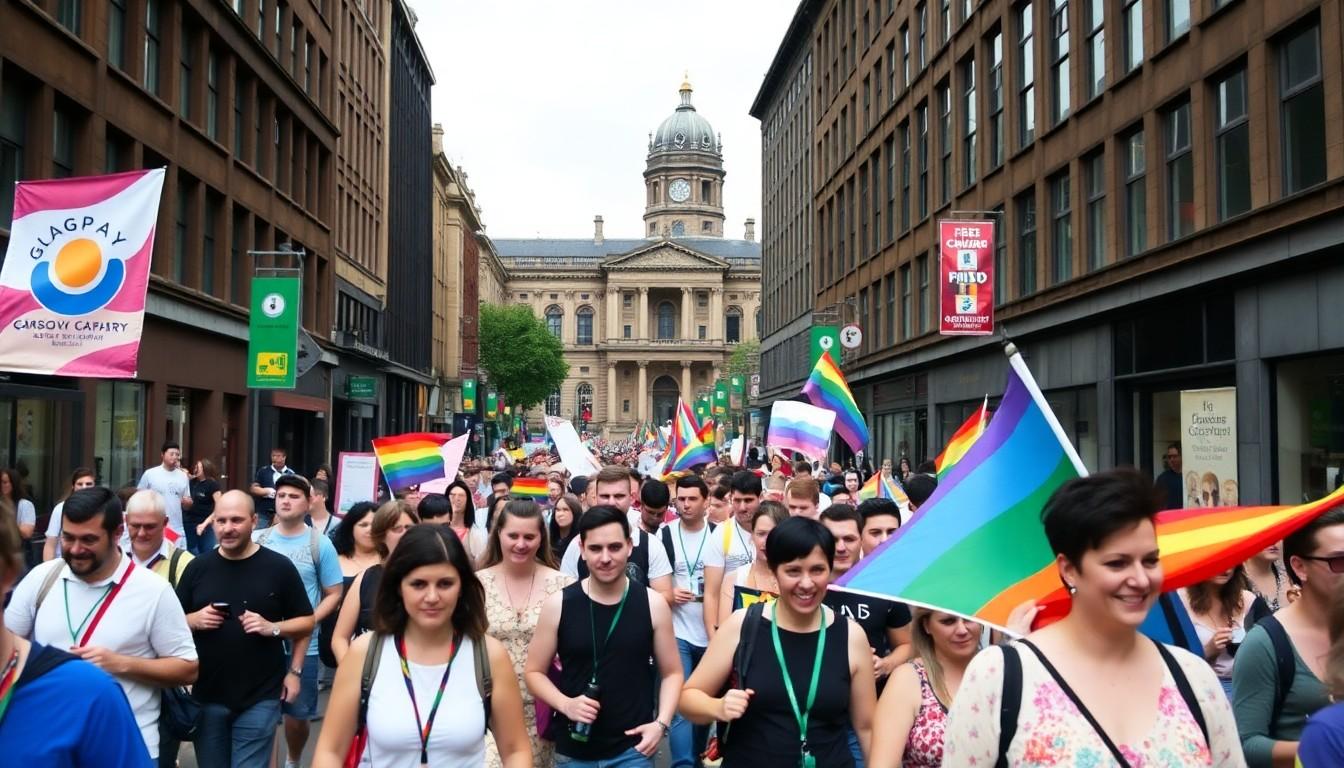
Crowds flocked to Glasgow Green as thousands marked three decades of Pride, with Nicola Sturgeon among marchers celebrating LGBTQ+ rights and supporting Time for Inclusive Education (TIE); the former first minister’s appearance drew attention amid recent parliamentary rows and ongoing public interest.
Essential Takeaways
- Big turnout: Thousands gathered at Glasgow Green for Glasgow Pride’s 30th-anniversary celebrations, with a lively procession along the Clyde.
- Notable presence: Nicola Sturgeon joined the march and appeared cheerful, walking alongside performers and campaigners.
- Cause spotlight: The parade supported Time for Inclusive Education (TIE) and featured day-long performances and family-friendly activities.
- Sponsorship row: The Coca‑Cola partnership prompted criticism and a counter-protest over solidarity with Palestine; some groups urged a boycott.
- Festival feel: Music, dancing and headline acts gave the route a festival atmosphere, with sunshine and colourful banners all along the city centre.
A sunlit march with a familiar face
Glasgow Pride looked like a proper street party, bright banners, music and that slightly sticky sweet smell of festival food in the air. Thousands met at Glasgow Green before setting off, and among them was Nicola Sturgeon, who walked the route and chatted with marchers. According to reports, she joined the procession supporting Time for Inclusive Education, and seemed in good spirits despite recent media attention. For many onlookers, seeing a former first minister on the march added an extra human note to the celebrations.
Why this year felt like a milestone
This year marked three decades since Glasgow’s first Pride march, and organisers leaned into that sense of history with nostalgia and spectacle. The event was billed as the 25th organised Pride March in the city, reflecting how a protest movement has become a mainstream celebration while still carrying political purpose. A mixture of performances, speeches and campaigning stalls reminded people why Pride began as protest, not just a parade.
Music, performers and a festival route
The day’s line-up read like a pop-tinged throwback and a modern club bill all at once: Liberty X, Ultrabeat, plus tribute acts and local performers kept the crowd moving. There were family-friendly pockets and late-afternoon dancefloors; the organisers had clearly thought about flow and variety. If you’re planning to go next year, pack comfortable shoes and a small reusable bottle , the route’s long, lively and perfect for people-watching.
Sponsorship sparked debate , corporate cash versus principle
Not everything was celebratory. Glasgow Pride’s partnership with Coca‑Cola drew criticism from the Scottish Greens and grassroots groups who argued the festival should reflect solidarity beyond its own community. A counter-protest and calls for clearer sponsorship rules underlined a familiar tension: big events need funding, but who pays can shape perceptions. Organisers here face the tricky balance of funding logistics while honouring the movement’s roots.
Political headlines followed the march
Sturgeon’s attendance came days after she publicly rejected claims made about her in Parliament and amid continued scrutiny over the conviction of her estranged husband. She’s said she felt “deceived, misled and betrayed,” and her presence at Pride offered a softer, public-facing moment amid hard politics. For some supporters it was a reminder that public life mixes the personal and political; for critics the timing invited comment. Either way, it added a layer of real-world drama to a day that was mainly about celebration.
It's a small, colourful moment that shows how Pride still manages to be both joyful and politically charged.
Source Reference Map
Story idea inspired by: [1]
Sources by paragraph: