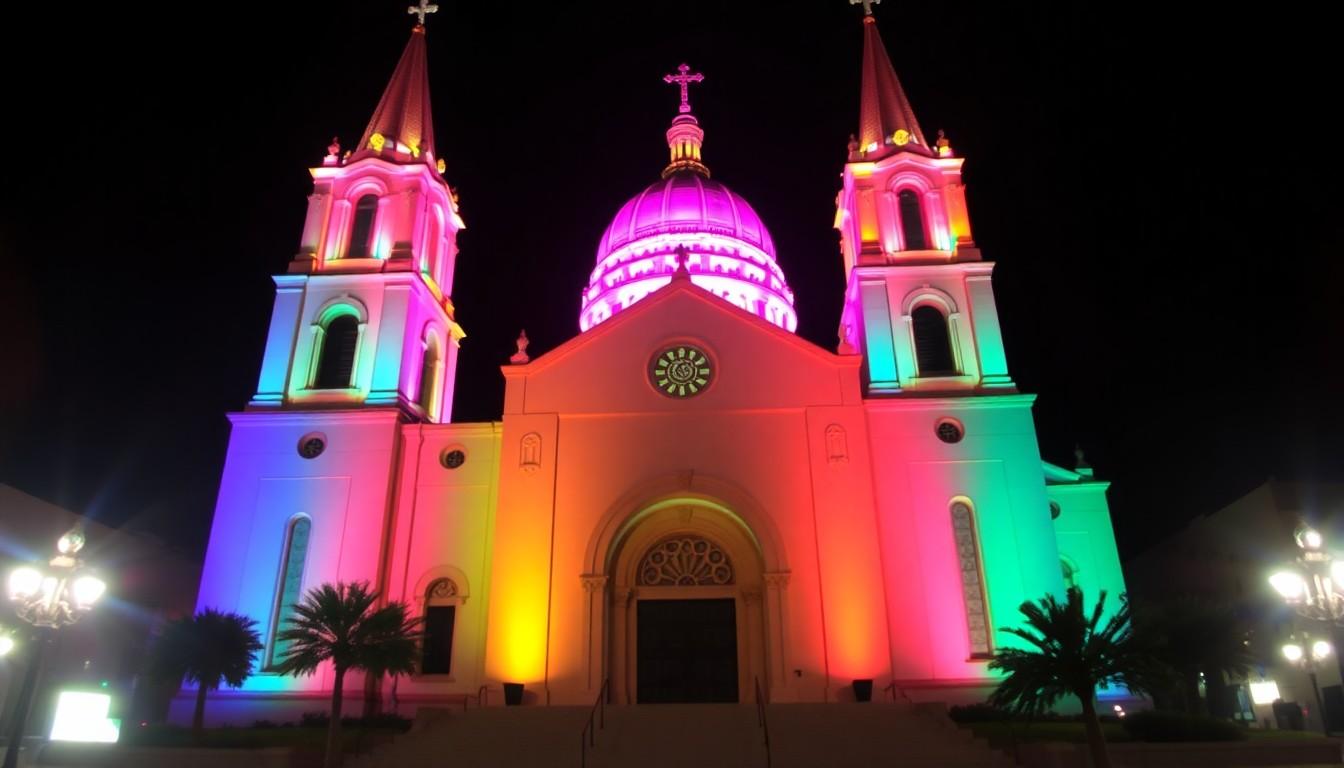
Shoppers and spectators turned out as dozens of faith leaders filled St. Paul’s Cathedral to bless Pride week, cast the building in rainbow light and offer public apologies for past harm , a vivid, interfaith display of inclusion that matters to LGBTQ+ San Diegans and the wider community.
Essential Takeaways
- Large turnout: Hundreds packed St. Paul’s Cathedral for the annual Light up the Cathedral interfaith service, which dates back over a decade.
- Interfaith presence: More than 40 clergy from Christian, Jewish, Muslim, Buddhist, humanist and other traditions participated, offering prayers and blessings.
- Historic shift: This year’s service proceeded without its founder, the recently retired Very Reverend Penny Bridges, showing the ritual’s resilience.
- Emotional tone: Clergy apologised for religious discrimination and reclaimed scripture as messages of inclusion , the atmosphere felt both consoling and catalytic.
- Community recognition: Awards honoured local groups, including Santee United Methodist Church for its public support of LGBTQ+ people in East County.
A kaleidoscope of faith and colour , what stood out
The cathedral looked surreal, drenched in rainbow light and filled with music, two choirs and a pop‑up symphony; the sensory mix made the evening both celebratory and intimate. The event has become a visual marker for Pride week in San Diego, signalling that the city’s queer culture belongs in public, sacred spaces. Organisers at San Diego Pride list the service as a highlight of the season, and frankly, it’s hard not to be moved when piano and psalm meet neon wash.
Why it mattered this year , continuity after a key departure
This was the first Light up the Cathedral without Very Reverend Penny Bridges presiding, yet the service carried on with the same conviction, which says a lot about institutional momentum. Traditions survive when communities invest in them, and the interfaith mix suggested this moment had become bigger than any single leader. For anyone wondering whether such rituals can outgrow founders, this was your answer: rituals survive when they’re rooted in people’s lives.
Apologies, reclaimed scripture and a balm for old wounds
Several clergy offered explicit apologies for the harm religious institutions have inflicted on LGBTQ+ people, and passages like 1 Corinthians 13 and Psalm 139 were read as messages of welcome rather than exclusion. Hearing familiar lines reframed as assurances felt like mercy for many in the room , comparable to the comfort you get from a supportive friend showing up at exactly the right moment. If you’ve ever been told religious texts have no place for you, seeing those same texts reclaimed is quietly radical.
Brother Yusef Miller’s address , tough love and a hopeful posture
A Muslim leader, Brother Yusef Miller, gave the main address, urging people to stand in love while confronting hate. His framing , that unresolved anger corrodes from within , landed hard in a space where many carry fresh trauma. Miller’s call to both open palms and extended hands offered a practical ethic: don’t let injury calcify you, but don’t minimise the need for safety and accountability either. It’s a hard balance, but one that felt vital to hear in a public, multifaith setting.
Local stories, broader impact , Santee UMC and the ripple effect
The ceremony also recognised grassroots courage, notably Santee United Methodist Church, which publicly supported a trans woman during protests in 2023 and later baptised her. Acts like that change community narratives; they’re the small, local decisions that alter what’s considered acceptable. For readers thinking about supporting inclusion in their own neighbourhoods, this highlights a useful truth: public solidarity can prompt private relief for people under attack.
Closing line
It’s a small change that can make every welcome feel a little more real.
Source Reference Map
Story idea inspired by: [1]
Sources by paragraph: