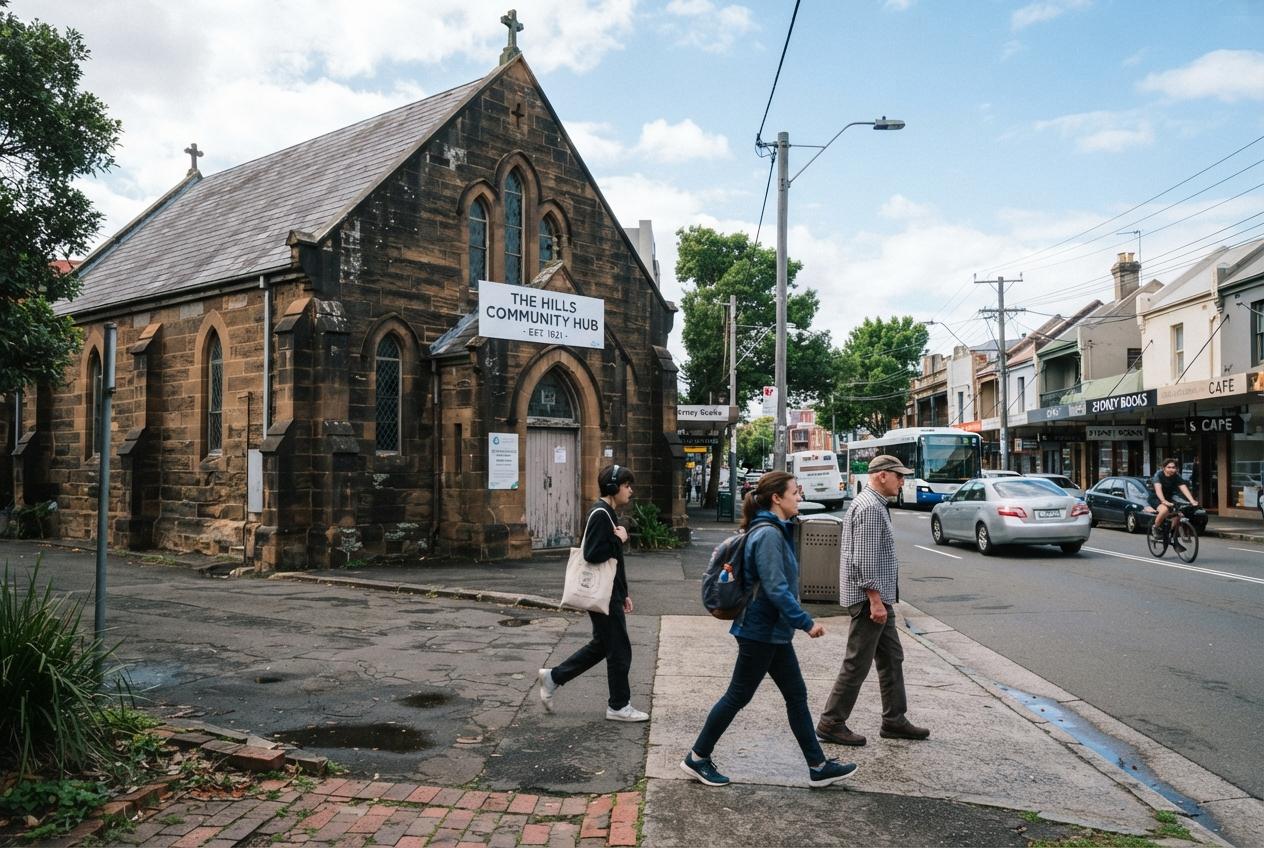
Shocked locals and activists converged in Sydney after a short-lived LGBTQIA+ pop-up called the Divine Playhouse was forced to close; the dispute over a former church turned venue has raised questions about free expression, landlord rules and how cities balance respect for religion with creative nightlife.
Essential Takeaways
- Venue closed after landlord action: The building’s owner issued a notice to cease what it called “offensive trade”, prompting cancellation of events and the venue’s shutdown.
- Protests were visible and vocal: Up to 70 Christian and other faith-based demonstrators rallied outside, expressing that some performances mocked sacred symbols.
- Authorities and activists weighed in: Local officials defended creative expression while organisers said they acted in good faith and did not intend offence.
- Social media and bookings affected: Organisers reported message and account removals on some platforms, and events were pulled from schedules.
- Practical fallout: The incident highlights lease risk for pop-ups, sensitivities around repurposed religious spaces, and the need for clear venue policies.
What happened , a pop-up venue shuts after faith-based protests
The headline act here was abrupt: a new LGBTQIA+ pop-up calling itself the Divine Playhouse was told to stop trading and all events were cancelled after the landlord intervened. Witnesses say the move followed a week of vocal protests outside the building, where some performances used religious imagery in ways that few faith groups found funny. According to reporting, organisers say they meant no offence and were surprised by the landlord’s notice. For anyone planning short-term venues, this is a reminder that lease terms and community sentiment can close a project faster than ticket sales.
Why repurposed churches always carry extra baggage
Old churches carry history and meaning, even after deconsecration, and that made this site especially sensitive. The building has operated as a theatre for decades, but when events play with sacred symbols , whether drag, parody or performance art , reactions can be strong. The Guardian and ABC coverage both note protesters framed it as mockery, while organisers argued for artistic freedom. If you’re considering a creative event in a formerly religious space, think about consultation and programming that anticipates community reaction.
The legal and commercial mechanics: leases, grants and platform moderation
This episode exposed a tangle of practical levers: landlords can enforce lease clauses about “offensive trade”, local governments can be asked to rescind grants, and social media platforms can suspend accounts amid disputes. Reports show the group had sought public support and even financial backing, and that platforms removed some event-related profiles. For event managers, that means checking lease clauses, insurance, and what your grant or sponsorship contracts require if controversy flares.
Voices on both sides , culture war or legitimate complaint?
Coverage captures a cultural clash rather than a simple criminal case. Protesters described praying against perceived mockery and urged respect for symbols they hold dear. Meanwhile, supporters of the pop-up defended freedom of expression and the right of LGBTQIA+ artists to make bold work. Politicians and columnists weighed in, with some arguing Australia is not a Christian nation and others defending the right to protest. The takeaway for readers is nuance: public spaces and expression often collide, and both artists and communities have stakes to be acknowledged.
Practical tips for organisers and venue owners
If you run pop-ups or book experimental acts, do these three things: check your lease for conduct and “offensive trade” clauses, consult neighbours and community leaders early, and prepare a communications plan in case protests or platform moderation hit. Likewise, landlords and councils should spell out expectations in advance so creative projects aren’t blindsided. It’s a pragmatic way to protect art, minimise harm and keep venues open.
It's a small civic moment with big lessons for culture, commerce and community , choose your venue and your messaging carefully.
Source Reference Map
Story idea inspired by: [1]
Sources by paragraph: