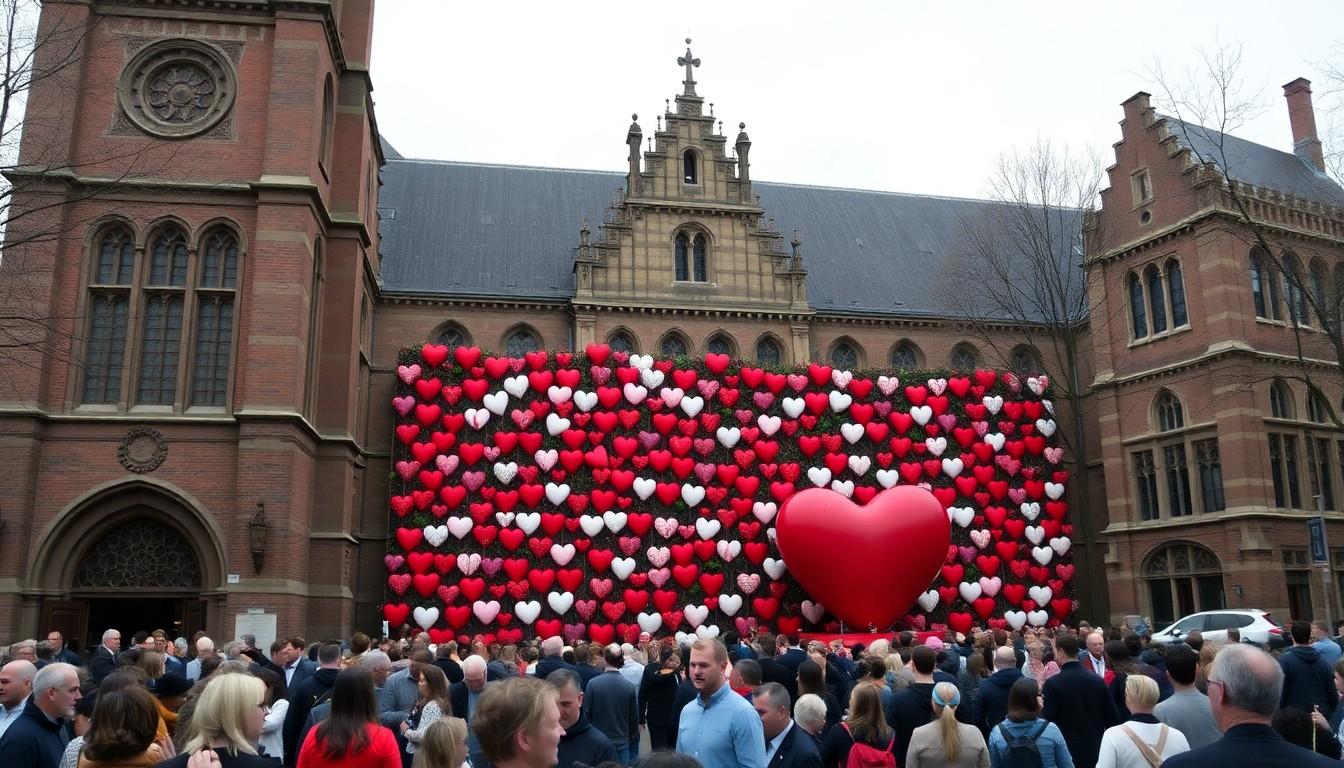
Shoppers and visitors are flocking to a travelling installation that turns photos into a living show of solidarity for LGBTQIA+ people, making tolerance literal and tactile across the Netherlands and beyond. It matters because public, visual allyship can comfort, confront hurtful theology, and build community where it’s needed most.
Essential Takeaways
- Origins: Began as a commission for Dordrecht’s 450th freedom celebration and launched by artist-activist Jarko De Witte van Leeuwen.
- Scale: Expanded from 123 personal photo-hearts to more than 3,500 from 99 countries; it travels to pride events, churches and town squares.
- Format: An interactive sculpture plus a “wall” of colourful photo-hearts , visitors add a Polaroid or upload a digital portrait and short message.
- Access: The project is nonprofit, installed free for invited events; participation is simple via Instagram or email.
- Impact: Creates visible allyship that comforts LGBTQIA+ people and challenges exclusionary religious language with faces and stories.
A striking start: how a local commission became a global embrace
The project began in Dordrecht as part of a 450th-anniversary celebration linked to the First Assembly of the Free States, a moment tied to the Netherlands’ long-held values of tolerance and freedom. The artist built a sculpture and an accompanying interactive wall that literally fills a room with colour and human faces. Visitors describe it as both comforting and confronting, a tactile reminder that words matter when translated into action. According to local coverage, what started as a local exhibit has been embraced across the region. (Dordrecht municipal reporting, Dordtcentraal)
From 123 hearts to thousands: the wall’s unexpected growth
Originally populated with 123 images from family and friends, the wall quickly became more than a one-off. The response at live events , from Pride celebrations to museum shows , multiplied participation, and organisers in multiple towns reported steady growth. Regional media note the installation’s reach has extended well beyond the Netherlands, collecting thousands of hearts from dozens of countries and changing how spaces feel when it’s present. (RTV Dordrecht, Ad.nl)
How it works: simple, tactile, and emotionally direct
Participation is straightforward: at live events the artist takes Polaroids and visitors write short messages; online contributors send a digital photo and a line of support. Each portrait becomes a heart-shaped panel that joins the growing wall, creating a mosaic of beliefs and backgrounds. The format deliberately mixes people of faith and those without faith side by side, so the wall is less about doctrine and more about visible human solidarity. Local announcements explain organisers can invite the project for cultural, religious or civic events. (Dordrecht.net, Rodi)
Why this matters now: art as a response to harm
The project was conceived partly as a “critical mirror” to the ways religious language can wound LGBTQIA+ people, but it also shows that religious communities can be sources of safety and acceptance. With populist politics sharpening hostility in some places, the wall’s public, image-led solidarity becomes an urgent act of care , a counterweight to exclusionary rhetoric. Visitors often say seeing faces and messages in public can make a real emotional difference. (Good Faith Media, Ad.nl)
Where you can see it , and how to get involved
The Growing Wall of Love tours churches, museums, town halls and Pride events; an upcoming highlight is an installation at Westerkerk during WorldPride in Amsterdam, with linked human-rights programming and talks on “artivism.” Because the project is nonprofit and installed free for invited events, community groups and event organisers are encouraged to reach out. For individuals, joining takes a photo and a short line; the artist posts the created heart to the project’s Instagram and often includes it in future displays. (Good Faith Media, Dordtcentraal, Dordrecht.net)
It's a small gesture that becomes enormous when thousands join: a public, beating reminder that love can be made visible.
Source Reference Map
Story idea inspired by: [1]
Sources by paragraph: