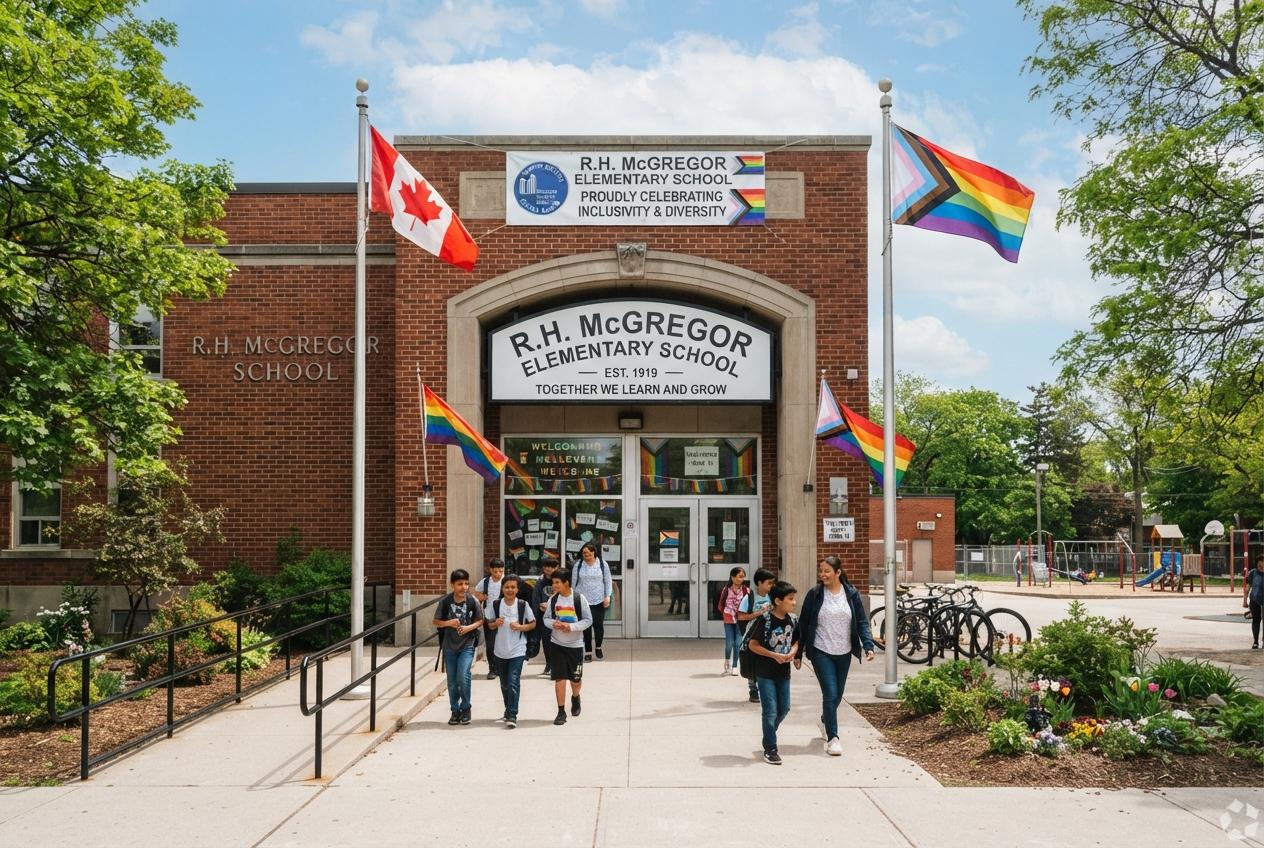
Shoppers are turning their neighbourhood compassion into action after a student-made Pride display at RH McGregor Elementary was set on fire , parents, kids and neighbours have rebuilt the message with flags, signs and a push for a permanent rainbow crosswalk to show love beats hate.
Essential Takeaways
- What happened: A Progress Pride flag mural made by RH McGregor Elementary students was deliberately burned, distressing the school community.
- Community reaction: Neighbours, parents and children returned to the fence with Pride flags, ribbons and supportive signs; the mood is defiant but hopeful.
- Calls for permanence: Local organisers launched a petition for a rainbow crosswalk and have received supportive comments from Mayor Olivia Chow’s office.
- School response: Principal Denise Colby affirmed the school’s commitment to inclusion and plans to replace the mural so it reflects community values.
A burned mural, and a neighbourhood that won’t look away
The most striking image from East Toronto this week was a chain-link fence once stitched into a bright Progress Pride flag, its colours intentionally matched by grade level, now scorched and singed. The sight hit parents and kids hard because this wasn’t a polished art installation , it was tiny hands and classroom spirit translated into colour. According to local reports, participation stretched from kindergarten to grade five, and that made the act of vandalism feel especially personal.
CityNews and other outlets picked up the story quickly, and you could feel the tone shift from shock to solidarity as residents came back to the fence. People brought flags from their homes, bought ribbons and fashioned signs with messages like “You can’t burn love.” It’s the sort of grassroots repair that says the values the mural embodied are not only intact but being actively defended.
Why a school project mattered so much
This display was more than bunting on a fence , it was a lesson in inclusion made visible. Parents involved in organising the project told reporters the flag was intentionally intersex-inclusive, a deliberate teaching moment for young students about diversity and belonging. For families at RH McGregor, watching children learn about community respect made the destruction sting that much more.
Denise Colby, the school principal, reassured families in a letter that the school remains committed to being “welcoming, inclusive and respectful.” That commitment is exactly why the community’s reaction has been strong: people see the mural as part of the school’s moral curriculum, not just decoration.
From clean-up to crosswalks: the movement toward something permanent
Outrage quickly turned into proposals. A petition urging Toronto’s mayor for a rainbow crosswalk near the school has been circulating, arguing a permanent civic symbol would counter acts of hate with lasting visibility. Mayor Olivia Chow’s office told CityNews the vandalism is “unacceptable” and that she’s working with local officials on permanent measures.
There’s a practical logic to the crosswalk push. A painted crosswalk or other municipal artwork is more durable than fabric tied to chain-link fencing and signals city-level backing. It also creates a place-based statement that queer people belong in public spaces , not just in classrooms but on neighbourhood streets.
What this says about community response to visible hate
This episode fits a familiar pattern: a symbolic act of intolerance sparks collective repair. People don’t just grieve; they return, they rebuild, and they ask for institutional steps to prevent repetition. Parents and neighbours at RH McGregor have modelled that response: calm resolve, public witness, and a desire for structural change.
And there’s a softer side to the reaction worth noting. Children who helped make the flag returned to add more fabric and flags, turning a moment of damage into a teaching one about resilience. That kind of lived lesson , of standing up and rebuilding , can be as formative as any classroom talk about kindness.
Practical ways neighbours and schools can respond
If you want to support a school after a similar incident, simple actions matter: donate replacement materials, join supervised rebuilds, or add supportive signage. Consider starting a petition for a permanent, city-approved installation if you want a longer-term remedy. Schools can document the project, involve local councillors early and talk with law enforcement about preventive measures that don’t escalate tension.
It’s also worth thinking about education: follow up with age-appropriate lessons about community, respect and how to respond to hurtful acts. Those conversations can turn outrage into understanding and, ultimately, prevention.
It's a small, public stance that makes it clear this neighbourhood plans to be louder and more colourful than the hate it faced.
Source Reference Map
Story idea inspired by: [1]
Sources by paragraph: