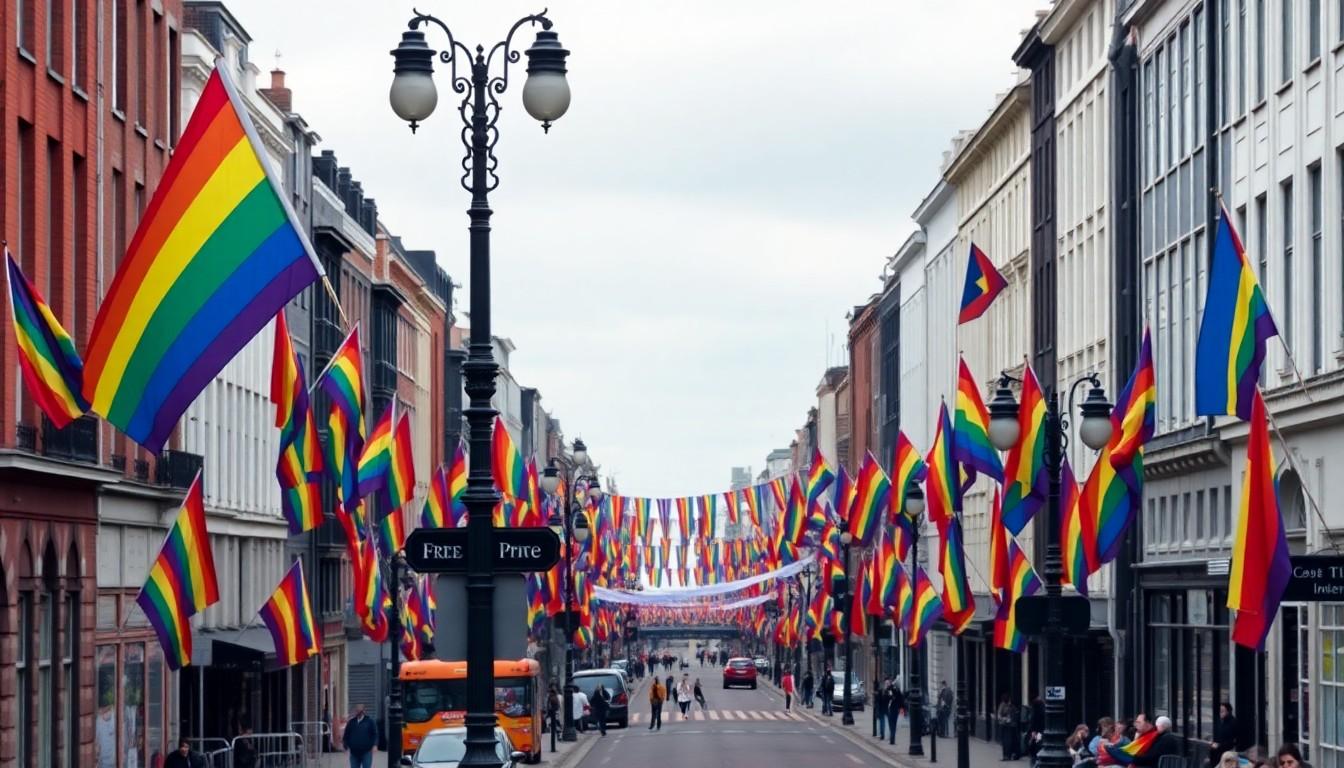
Shoppers and neighbours in Amsterdam-Zuid are doubling down on visibility: Churchill Pride residents and businesses keep hanging hundreds of pride flags after recent vandalism, showing why community display matters and how a neighbourhood can turn attacks into solidarity.
Essential Takeaways
- Community response: Neighbours in the Rivierenbuurt replace vandalised flags quickly and increase the number displayed.
- Scale of display: Last year the street-wide effort grew to some 550 pride flags, creating a striking visual presence.
- Escalating attacks: In recent weeks two business flags were forcibly removed, with previous incidents including flags set on fire.
- Civic meaning: Burnt and damaged flags have been retained for exhibitions as a statement against polarisation.
- Practical result: The initiative’s organisers advise more flags, not fewer , more visibility is their chosen deterrent.
Why Churchill Pride keeps re-hanging flags despite attacks
The opening fact is simple and stubborn: when a couple of pride flags were vandalised on the Maasstraat and Churchilllaan, neighbours didn’t hide them away , they hung more. The founder of the initiative says the gesture feels tangible, almost tactile; hundreds of small, colourful banners now flutter in the wind and in shop windows, a quiet but visible hum of defiance. According to local reporting, one recent attempt even tried to wrench an entire flag holder from the façade, which underlines the physicality of the threat and the literal repairs the community keeps making.
The backstory matters. Churchill Pride began after an early incident sparked a collective reaction: what started as a single flag became a block-wide statement. Over the years that informal solidarity has hardened into tradition; during Amsterdam Pride the Rivierenbuurt looks like a festival of flags, not only signalling support but also reducing the symbolic impact of any single act of vandalism.
How more flags become a strategy, not just decoration
You might expect vandalism to make people stop displaying flags, but locals have chosen the opposite. The rationale is practical: when the visual field is filled with hundreds of identical symbols, the damage to any one flag is less effective and less symbolic. That’s one reason the neighbourhood now counts roughly 550 flags during Pride, and why damaged flags are replaced quickly , sometimes the very next day.
This approach mirrors a wider trend reported elsewhere, where communities respond to attacks on Pride symbols by amplifying displays. It's an emotional strategy as much as a logistical one; neighbours report feeling stronger and safer when the street is awash with colour.
What authorities and communities elsewhere have experienced
Incidents in Amsterdam are not isolated. Reports from the US and beyond indicate spikes in vandalism against Pride flags at businesses, public monuments and homes, and those patterns have prompted police inquiries and community actions. According to international coverage, the vandalism ranges from flags being slashed or stolen to more extreme cases of arson at memorial sites.
Locally, Churchill Pride has worked with cultural partners too: a flag that was set alight in a previous attack was later included in an exhibition, converting a painful object into a piece of civic memory. That choice , turning vandalism into conversation , echoes how other cities have tried to reclaim the narrative after attacks.
Practical tips for neighbours and small businesses
If you’re a resident or shop owner wondering what to do, there are simple, practical steps. Use secure, well-mounted flag holders and check them regularly; replace or repair damage promptly to deny vandals the symbolic victory they seek; photograph incidents so police can investigate; and consider coordinating with neighbours so displays are uniform and visible.
There’s also a safety angle: larger collective displays make it harder for an individual to single out a solitary flag, and organising quick mutual replacement sends a clear communal message. And if you want to make a statement, preserving a damaged flag for a public forum or exhibition can turn harm into history.
What Churchill Pride’s reaction tells us about civic resilience
At its heart this is a neighbourhood story about refusal , refusal to be intimidated, refusal to shrink public visibility. The mood described by organisers is resolute: it hurts when flags are destroyed, but the community insists on responding with more care, more colour and more presence. That optimism is contagious; when a street becomes a forest of flags, the act of vandalism feels smaller than the collective show of support.
Looking forward, the message is clear: visible solidarity is a deliberate tactic against polarisation, and small civic rituals , installing a new flag, replacing a broken holder , add up to a robust, human answer.
It's a small change that can make every display safer and every neighbour feel less alone.
Source Reference Map
Story idea inspired by: [1]
Sources by paragraph: